
Low Cost Munitions, Higher Quantity Ships
Are we ready for the future of warfare?


In the latest edition of Defense Tech and Acquisition we cover:
DoW awards contracts to many non-traditionals for low-cost munitions
DoW and Service leaders have many FY27 budget hearings on the Hill
Insightful commentary on challenging decades of legacy biases
The Army is connecting more systems and scaling autonomy.
The Navy’s big Shipbuilding plan outlines the future Fleet
Air Force changes course on E-7 and advances new MQ-9 program.
Space industrial base is growing but needs serious government help
Golden Dome forms ecosystem hub and debates estimates with little info
Taiwan passes budget, allies want ITAR reform and NATO needs infrastructure

The Future of War Arrived. We Aren’t Ready
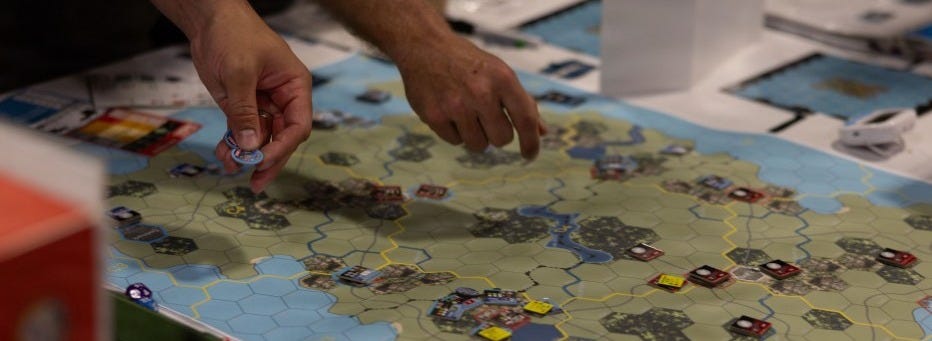
BLUF: Every OPLAN in every military headquarters in the world is now obsolete. The hedge strategists said this day would come. It has arrived. The question is no longer whether to change — it is whether our institutions can move fast enough to matter.
Every OPLAN, CONPLAN, and campaign design was built on assumptions that are no longer true. The target sets have changed. The kill chains have changed. The very physics of the battlefield have changed.
The planning processes, the acquisition timelines, the risk aversion baked into a system designed for a slower world: those were the problems. And they are the same problems now rendering every OPLAN on every classified server obsolete.
Ukraine compressed the kill chain to minutes. EW became an hourly contest.
Companies once treated as peripheral (Anduril, Palantir, Shield AI, and dozens more) are no longer future capabilities, but present tense operational realities.
Most OPLANs reflect a world that existed 5-10 years ago. They are built around force employment models designed for the platforms we have had for decades.
You do not get promoted for declaring the OPLAN obsolete.
Rewriting the plans from first principles means questioning much of what sits upstream. But that is precisely what needs to happen.
“The question that every combatant commander, J5, service chief should be forced to answer is: If you were designing the operational plan today, using today’s tools in today’s operating environment, what would you build?”
The answer is not in any OPLAN currently on file.
Rewrite plans from first principles.
Move money at visible scale. Shift real dollars from legacy programs whose operational logic is eroding toward autonomous systems, software-defined capabilities, and commercial defense companies that are already moving at battlefield speed.
Rewrite doctrine. Neither service has a doctrine for rapidly deploying the kind of protection and survivability infrastructure that a drone-saturated battlefield now demands. This is unglamorous work, but it is the foundation for everything else.
Put different people in the room. Too many senior planning processes are run by officers trained and promoted in a pre-autonomy world. They were selected and promoted for mastery of planning frameworks that are now obsolete.
Our Take: For all the senior leaders who subscribe to this Substack, read Lorin’s article. Share it with your senior (and junior staff). Reflect on it this weekend. On Monday review your OPLANs, investment strategies, doctrine, and staffing model. Ask yourself and your team the tough questions: Do these reflect the current and future operating environments we’ll face? Then act upon them. Involve more mid-career professionals. Get some quick wins in a few months by doing something different.
10,000 Low-Cost Cruise Missiles In Three Years Procurement Plan Laid Out By Pentagon
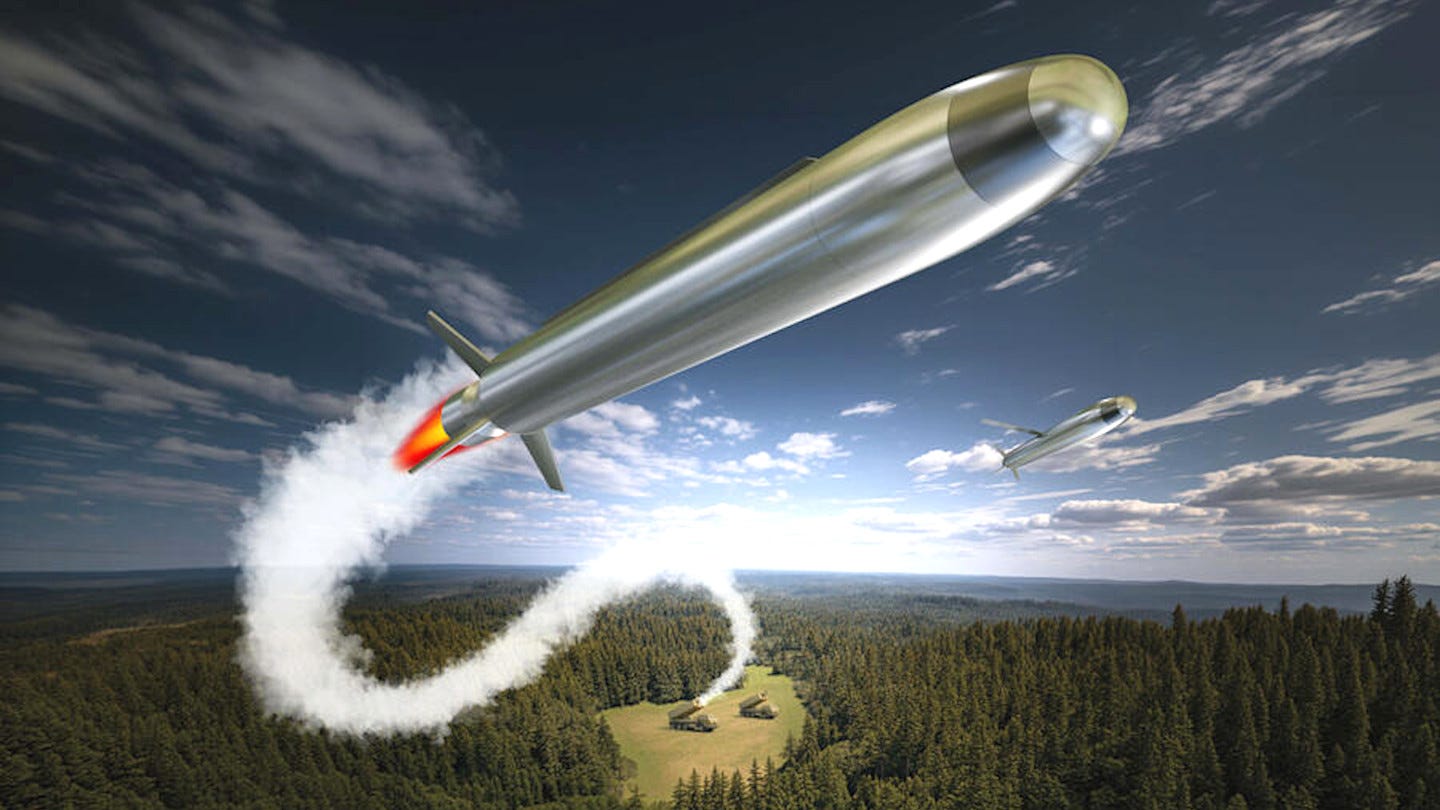
BLUF: The Pentagon has outlined plans to acquire at least 10,000 lower-cost cruise missiles over the next three years, as well as a similar number of relatively cheap Blackbeard hypersonic missiles.
The DoW reached new framework agreements with a slate of disruptive new entrants to aggressively expand the U.S. military’s lethal cruise missile and hypersonic missile strike capabilities.
Low-Cost Containerized Missiles (LCCM) Program:
Anduril Industries | Surface launched version of Barracuda-500M. Plans 1,000/year for the next three years.
CoAspire | Ground launched GHOST based off RAACM-ER.
Leidos | 3,000 Air-launched larger variant of AGM-190A Black Arrow.
Zone 5 Technologies | Air launched missiles scaling FAMM program.
Low-Cost Hypersonic Missiles:
Castelion | Blackbeard two year for at least 500 per year. Seeking authority and appropriations to acquire over 12,000 within five years.
The new frameworks for LCCM will drive a fast-paced experimentation and assessment campaign that will culminate in a Military Utility Assessment by the sponsoring Service Components.
Designed to move at the speed of commercial industry, the agreements establish the terms for future firm-fixed-price production contracts.
This effort positions the Department to procure over 10,000 low-cost cruise missiles across these portfolios in just three years, starting in 2027.
The Department is creating a pathway for rapid and repeatable production of high-volume, lethal strike capabilities.
“Today’s announcement is the latest sign that our Acquisition Transformation Strategy is delivering on its promise to rebuild the Arsenal of Freedom. We are moving beyond the traditional prime contractors to expand our industrial base, accelerating testing timelines, and sending a clear, long-term demand signal to innovative new entrants.” Michael Duffey, USW(A&S)
Related:
Pentagon signs deals with industry to rapidly field 10,000 low-cost missiles
DoW Enhances Lethal Strike Capacity Through Partnership with New Entrants
Pentagon expands missile arsenal with 10,000 cruise and 500 hypersonic weapons
The Pentagon and Five “New Entrants” Ink Low-Cost Missile Deal
Our Take: This is exactly what is needed to expand the industrial base, fuel competition, invest in low-cost, high-quantity capabilities for a high-low mix. Leveraging FFP contracts and enablers for stable and scalable production.
Deal Team Six: Finally, the Pentagon Makes Defense Contractors an Offer They Can’t Refuse
BLUF: Secretary of War Pete Hegseth released a video that introduced Deal Team Six, a cadre of private-sector negotiators embedded inside the Pentagon's newly formed Economic Defense Unit. Their mandate is direct: end decades of cost overruns and delivery failures by requiring contractors to fund their own factory expansions.
Thirty years on Wall Street gives you a finely tuned ear for this kind of language. This is how serious capital allocators talk. For five decades, the DoD operated as a passive checkbook, rewarding contractors who charged once to build the factory and again for every unit that came off the line.
The Economic Defense Unit, led by George Kollitides, former head of defense at Cerberus Capital Management, is not another blue-ribbon panel generating reports.
The Pentagon is specifically targeting Goldman Sachs, Morgan Stanley, JPMorgan, and Bank of America for a 30-person team tasked with deploying up to $200B over three years into companies critical to national security.
The Pentagon's old contracting system penalized the taxpayer for the contractor's failures, then handed out renewals anyway.
The real scorecard is whether Deal Team Six delivers weapons on time and on budget. Early indicators look promising. Companies that execute get predictable, long-term revenue streams — the kind that justify capital investment without a government subsidy as the backstop. Companies that miss get shown the door.
A leaner, accountable defense enterprise redirects resources toward actual combat power instead of overhead and consultants.
Deal Team Six will not fix every problem overnight. Entrenched interests never surrender without a fight, and the defense-industrial complex has had decades to perfect protecting the status quo.
Our Take:
Infusing battle-tested business leaders into the Pentagon to drive expert analysis, tough negotiations, and real capital discipline is exactly the kind of shake-up the defense enterprise needs right now. Deal Team Six has the potential to reset decades of dysfunctional incentives across the Pentagon, industry, and Congress.
Real and lasting impact will not come from simply concentrating authority in a small group of smart outsiders operating in a closed room. The greater opportunity and responsibility is to use this initiative to establish and embed new best practices that the broader defense workforce can adopt, scale, and sustain long after the current team rotates out.
Success should be measured not just by the first wave of deals closed, but by whether the team actively mentors and trains the next generation of acquisition and program professionals. Are the people who will ultimately execute these programs part of the process, learning what “right looks like”? Are authorities being iteratively delegated back to the Services and Agencies as competence is demonstrated? Or will the system revert to the old ways the moment key leaders depart?
Done well, Deal Team Six becomes a catalyst for permanent cultural and procedural change. Create a leaner, more accountable defense enterprise that rewards performance and delivers real combat power.
Promotions
Patrick Weaver has been appointed Deputy Chief of Staff for the DoW
Matt Dobson has been appointed Senior Advisor to the Secretary of War.
Tami Radabaugh has been appointed Senior Advisor to the Secretary of War.

"In less than 40 days of major combat operations, USCENTCOM forces systematically dismantled what Iran spent four decades and tens of billions of dollars building.

The capabilities on which the regime relied to threaten our forces, coerce our partners, and project power across the region have been substantially degraded. Combined with the damage Operation MIDNIGHT HAMMER inflicted on Iran’s nuclear program, USCENTCOM assesses that Iran can no longer project power across the region, nor pose the persistent threat to the U.S. or our partners that it did prior to Operation EPIC FURY.
Today, Iran can no longer attack with that mass and scale. With 90% of its defense industrial base destroyed, Iran won't be able to reconstitute those weapons for years."
- ADM Brad Cooper, CENTCOM Commander
Related: CENTCOM Commander Says Epic Fury Crippled Iran, Enhanced Military Partnerships in Region

Strategic Capabilities Office (SCO) Director Lays Out Focus Areas
BLUF: SCO Director Jay Dryer outlines three portfolios and eight focus areas.
The SCO aims to rapidly prototype and transition game-changing, high-tech solutions to address near-term challenges, is executing a $1.7B budget this year.
The SCO partners with the combatant commands and the military services to meet their operational needs, including repurposing or enhancing existing programs of record, scaling existing concepts, and accelerating the maturation of government and commercial tech.
SCO has three portfolios:
Long-Range Fires. Kinetic systems for offensive and defensive purposes.
Autonomy and AI. The human decision-making and the C2 aspects.
Special and Enabling Capabilities. Cyber, EW, space, and special ops forces.
SCO’s eight focus areas across those portfolios include:
Precision fires and lethal effects
Contested and contesting logistics
Novel employment and collaborative systems
Deception and surprise
Advanced kill webs
Countering adversary or “red” kill chains
Extended reach and survivability
Cost-effective air defense
Example SCO projects include: Ghost Fleet USVs, a Hypervelocity Gun Weapon System for air defense, the Hurt Locker effort to demonstrate the launch of various missiles from containerized launchers, and the Pele program to develop a nuclear power plant.
“It starts with what does the warfighter need? What’s that operational problem that we’re trying to solve? What’s that opportunity that we’re trying to take advantage of? The formula is really kind of simple: start with the problem, look at a trade space of solutions, and then because of where we sit and who we are, that allows us to think service-agnostic and cross-domain.” Jay Dryer, SCO Director
Robot Dogs with Shotguns, Grenade Launchers Head to Trials

BLUF: The DoW awarded Australian defense firm Skyborne Technologies a $6.5M contract to deliver advanced robot dogs and modular weapons payloads for use in low-intensity conflicts. Skyborne’s Controller-Operated Direct-Action Quadruped (CODiAQ) armed unmanned ground system.
The $6.5M firm-fixed-price RDT&E contract is set around Skyborne’s CODiAQ armed unmanned ground systems. The package includes 14 quadruped robotic platforms and 28 modular weapon payloads for evaluation by SOCOM and a partnered foreign ally.
CODiAQ is a ground-based robotic system designed to support remote, direct-fire operations using modular weapon payloads and AI-assisted targeting software.
The system integrates Skyborne’s modular payloads, including HAVOC 40mm and CHAOS 12-gauge weapon systems, along with an onboard Targeting Electronics Optical Box (TEOB).
Drone Swarms Packed Into Unassuming Containers Sought By DARPA
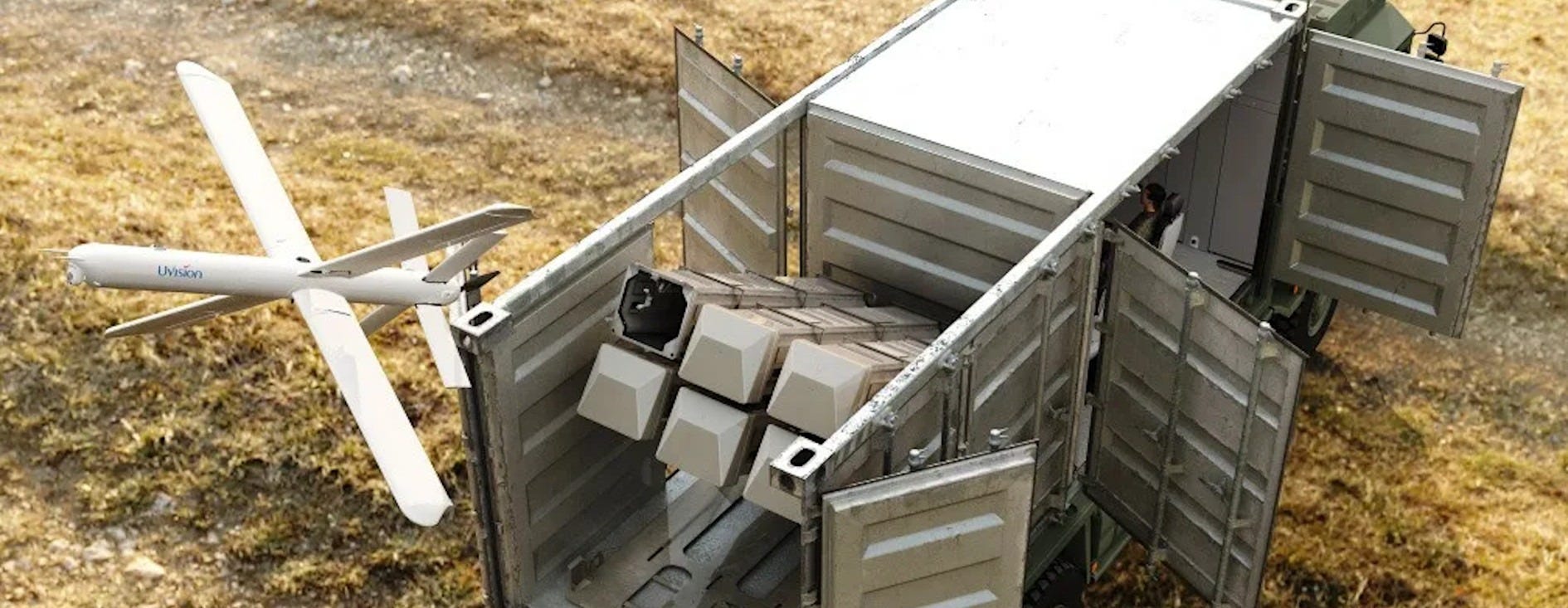
BLUF: DARPA’s TTO is asking for concepts for drones with a high degree of autonomous operation, as well as remotely-operated containerized systems to launch, recover, and otherwise support them.
What DARPA is really interested in is a pairing that can be employed as part of a largely self-sustaining “autonomous constellation” capable of supporting networked swarms consisting of as many as 500 drones at once.
DIU put out a very similar call for proposals earlier this year.
Existing commercial, airborne Group 1-3 platforms are limited in endurance, payload capacity, and onboard electrical auxiliary power. When operated as constellations, they typically require substantial infrastructure and basing area for deployment and recovery.
These constellations typically require human involvement to recover, recharge/refuel, and launch again, lacking full autonomy necessary to achieve sustained operations spanning days or longer.
DARPA has identified an exigent need for highly deployable, versatile-SWaP Group 1-3 platforms, operating in autonomous constellations that are stored within, deployed from, recovered in, and managed by a fully autonomous container, to support a variety of payloads and missions in GPS-denied environments.
Constellation populations may comprise up to 500 platforms (number may vary as a function of payload type). Each platform will be equipped with a subsystem or independent payload system with the potential to achieve high operational availability for the combined system over multiple-day periods.
Dzyne Technologies Unveils Mass Producible Kamikaze Drone

BLUF: Dzyne Technologies unveiled an expendable Group 1 category attack drone named Blitz. This one way attack drone is aimed at delivering affordable mass capabilities and is engineered for adaptability, and autonomous operations.
Blitz is engineered to address the defense community’s urgent need to field low cost, mass-producible expendable platforms with a degree of on-board intelligence.
Blitz is powered by a battery based electric propulsion system. It has an approximate range of 80–150 km, an endurance of 1-2 hours, a speed of 75-139 km/hr, a gross weight of 6.8 kg and a payload capacity of 2.2 kg.
Electric propulsion also enables Blitz to have a low acoustic as well as infra-red signature, delaying detection.
It is runway independent and can be launched by hand, by rail launchers or from an ISO container named BlitzBox. The ISO container can carry around 12 Blitz drones, enabling swarm operations.
How the Pentagon Should Define Affordable Mass
BLUF: The DoW lacks a standard for what qualifies as affordable mass, and there is no common or useful understanding of what it even means.
The Air Force, Army, and Navy are all pursuing low-cost, high-volume buying efforts to augment the force of the few and exquisite with the affordable and plentiful, and the Pentagon is requesting $54B to dramatically expand autonomous drone warfare efforts.
The Air Force calls this affordable mass. Some call it a high-low mix, while others use phrases like precise mass and attritable mass.
When affordable mass is left vague, people default to the easiest interpretation: buy more things that are cheaper.
Affordable mass is the condition in which a force can replace its combat losses as fast as it is likely to take them. A force meets that standard when three things hold at the same time:
Its systems are numerous enough to absorb initial losses.
Its inventory can cover near-term demand.
Its industrial base can replenish losses at a rate that prevents combat power from declining over time.
Affordable mass is a rate problem, not a budget problem.
Attrition has three interrelated dynamics:
Expendability is the willingness to commit a capability in risk.
Replenishment is the ability to replace losses through available inventory.
Reconstitution is the ability to restore through production and procurement.
Production determines whether replacement can keep pace with expected losses. Low cost and high volume are only meaningful if they translate into the ability to regenerate combat power at the rate war consumes it.
Balancing magazine depth with breadth means not only incorporating an objective-based cost-per-effect methodology, but doing so without sacrificing operational suitability and operational effectiveness standards — areas that new defense companies tend to overlook.
DoW and industry must fully embrace the principles of design for cost, design for manufacturing, and design for assembly, as well as the associated industrial engineering required to manage the resultant throughput.
It also requires designing around production realities: supplier depth, lead times, takt, and the mechanics of surge capacity.
Affordable mass force design means engineering peacetime consumption that is strong enough to preserve industrial capacity, yet flexible enough to respond to wartime surge.
Recommendations
Tightly couple analysts and acquisitions.
Match loss rates against inventory and production capacity.
Resource sponsors shift emphasis from unit cost to replacement capacity.
Treat production as a core element of force design.
Our Take: Fully agree with Paco here! This requires in-depth discussions and rethinking norms across operations, budgets, acquisition, and industry leaders.
AIRO’s VTOL Drone Aims to Solve Resupply Issues

BLUF: AIRO unveiled new dual-use VTOL drones the JC250 cargo variant and the JX250 ISR variant with slowed-rotor architecture and hybrid-electric propulsion.
The JC250 cargo variant and JX250 ISR variant were developed as a dual-use platform for defense, government, and commercial missions.
The aircraft is being developed and manufactured in Canada, with first flight expected by the end of the year and certification to follow.
As a mid-size cargo aircraft, the range as roughly 300-500 nautical miles, with the potential to stretch to 1,000 nm because of its hybrid-electric propulsion.
A key to the drones is what the company calls slowed rotor technology, a patented design intended to combine helicopter-like vertical lift with more efficient forward flight.
The architecture enables 15 to 18 hours of endurance on this aircraft for ISR missions, something no VTOL aircraft can do today.
“Hybrid provides us capabilities, not only for range, but also for going to remote areas where there may not be electrical charging available. That provides a lot of flexibility going into rural areas or battlefield conditions.” John Uczekaj, AIRO Group President and COO
Raytheon’s Modern Radar to Offer Faster, More Affordable Advanced Surveillance Capability

BLUF: Raytheon’s SharpSight is a platform-agnostic, multi-domain surveillance radar designed for both manned and unmanned platforms.
Blue Raven awarded Raytheon a contract to produce 120 SharpSight radars, marking the largest single order to date for the new system and a key step in expanding its availability to customers worldwide.
These radars can enable critical missions such as anti-surface warfare, border protection, coastal monitoring, search and rescue, and long-range surveillance.
To support anticipated growing demand, Raytheon is increasing production capacity and building radar systems in bulk to enable larger monthly output and reduce contract to delivery timelines.
These initiatives align with the company’s broader focus on accelerating production, shortening lead times, and bringing critical capabilities to customers faster and more affordably.
Steve Blank Was Hacking for Defense Before It Was Cool. How His Stanford Class Changed Defense and Silicon Valley

BLUF: Amid wars overseas and a Silicon Valley defense tech gold-rush, this Stanford class could be the most important business program in America right now.
The H4D program, which began at Stanford as the brainchild of veteran-turned-entrepreneur Steve Blank, but has steadily spread to nearly 70 other universities and become something of a farm system for defense tech talent.
Almost 4,000 students having participated across more than 1,000 projects, and 78 startups having formed as a result. There are now spin-off programs in the U.K. and Australia as well.
Andrew Powell enrolled in H4D to learn how to build for national security. Over 10 weeks and across more than 100 stakeholder interviews, Powell and his teammates explored how software tools including AI could supercharge the Air Force’s training methodology. His class project evolved into a startup, Ethos, for which he raised a $4M seed round during his second year of business school and closed a $30M Series A two years ago.
Silicon Valley seems to be catching up with the non-consensus bet Powell says he made by taking defense tech seriously before the zeitgeist made it trendy.
Steve Blank met Pete Newell who ran the Army’s REF and partnered to adapt the lean methodology to the military’s innovation needs through a new Stanford course that they piloted later that year: Hacking for Defense.
The success of a few next-gen defense tech startups as of late may have started a flywheel spinning. From just a capitalist perspective, even just a handful of success stories that break through and defy the odds can boost sector-wide buy-in among both founders and investors.
Our Take: Having collaborated with Steve, Pete, and the BMNT team, they are national treasures in fueling top talent to tackle priority national security challenges. Working with H4D student teams and alumnus provide an exciting source of energy for NatSec. We strongly encourage defense leaders to offer insights to H4D teams and for anyone with college aged family members or colleagues to find a H4D program near you.
High-tech Defense Manufacturing That Offers Precision at Large Scale Set to be Accelerated
BLUF: Autonomous Resource Corp (ARC) will deploy advanced manufacturing equipment organized into seven production nodes.
Oak Ridge National Laboratory (ORNL) announced a MOU establishing a strategic public-private partnership to accelerate high-tech defense manufacturing.
The MOU seeks to accelerate the on-demand manufacture of qualified, mission-critical components for U.S. national security applications.
The Exascale Foundry partnership will combine ORNL’s computing and manufacturing capabilities with ARC’s ARCNet distributed manufacturing platform to create a closed-loop system for AI-enabled materials and manufacturing qualification and autonomous production at defense-relevant scale.
ARC will deploy advanced manufacturing equipment organized into seven production nodes connected to ORNL via ARC’s secure ARCNet infrastructure. ARC will expand capability through ORNL’s high-performance computing (HPC) resources.
“The U.S. faces an urgent need to rebuild its manufacturing capacity for critical defense components. By combining ORNL’s world-leading computational, materials science, and manufacturing capabilities with our autonomous production infrastructure, we can compress manufacturing and qualification timelines from years to months and deliver manufactured parts at the volumes the warfighter needs.” Bryan Wisk, ARC CEO
New S&T Chief Supplies Update on DOD’s Pilot Program for Free Tech Patent Licenses
BLUF: More than 50 applications are under review for the DoD’s new pilot program offering small and medium-sized businesses free, two-year commercial evaluation licenses for hundreds of curated.
“So far, we’ve had nine of these patents signed out. We have six more applications pending. It takes a few months for them to get legally reviewed. Of last count, we’re up to 52 applications in various states of progress, and 180 conversations where different entities have explored this.” Joe Jewell, ASW(S&T)
Other Defense Tech News:
Pentagon Chooses Sites for Directed Energy C-UAS Pilot Program
DoW Selects Applied Intuition to Build Enterprise Autonomy Pipeline

“The President’s budget supports the Department’s goal of recharging the defense industrial base, and the national industrial base; those small mom and pop manufacturing companies that are out there in your districts that help us generate combat capability and combat capacity, to ensure that we’re globally integrated, and properly armed and ready, when, and if, our nation calls on us.”
Gen Dan Caine, CJCS
War Department Multiyear Purchases Spur Industrial Base Investments
BLUF: War Department investments in the FY26 budget and promised in the FY27 budget have heartened companies within the defense industrial base to invest in their own capabilities and to grow their capacity to produce.
Private industry partners worldwide invest in their own capacity when they are confident in the sales they will make and the available income.
Many private sector companies that provide weapons and systems for the War Department have, in the past, lacked that kind of confidence because the U.S. government is often an unreliable customer.
“By supercharging our industrial capacity and transforming how the department does business, we are restoring American commercial dominance at a pace unseen in generations, transforming the defense industrial base from the broken, slow-moving systems of the past.”
Anduril Raises $5B Series H at $61B Valuation
BLUF: The round is one of the biggest of the year to date, exceeded only by OpenAI ($122B), xAI ($20B), and Waymo ($16B).
A big portion of the cash money will go to hiring—the company is currently at about 8500 employees and plans to hire thousands more for those new facilities, with an emphasis on engineers.
The company would be bringing in lots of new machinery, infrastructure, and equipment to bring production from low to high-rate.
“This financing reflects that shift, and it gives us the ability to continue investing aggressively in manufacturing capacity, research and development, and the infrastructure required to build and field advanced defense systems at scale.” Anduril CEO Brian Schimpf
Working Outside the Lines to Scale Production Isn’t Working
BLUF: DIU’s approach has been to build workarounds but systemic reform is now needed to achieve the ambitious outcomes needed.
The challenge is no longer simply innovation, it is production.
America outsourced manufacturing to its “greatest strategic competitor.”
The consequences now show up in shipbuilding, aircraft delivery delays, vehicle readiness, workforce shortages, and vulnerable lower-tier supply chains.
A promising drone, sensor, software, or autonomous system does not solve the warfighter’s problem if it cannot be acquired at scale, certified quickly, produced reliably, exported to allies, and supported through a resilient supply chain.
DIU’s success needs to translate into broad, lasting reform of how the DoD buys, tests, certifies, scales, and sustains military capability.
Anduril to Deliver Battle Management Solution for Missile Defense in the Western Pacific
BLUF: Anduril has been awarded a contract by the Army to develop a Battle Manager prototype, an integrated C2 platform designed to defend against a variety of air and missile threats.
Through its Lattice software, the Army will be able to integrate information from existing joint missile defense systems, turning large volumes of data into a single, coherent operating picture for comprehensive battle management.
The modular, open systems architecture fuses data across disconnected sensors and effectors into a joint track picture.
Modeling and simulation technologies further enhance this capability by providing mission-realistic models that help test validate and optimize the system in a high-fidelity environment.
Blue Water Autonomy Unveils Multi-Partner Manufacturing Model to Scale Next-Generation Shipbuilding
Blue Water Autonomy announced strategic partnerships to scale the production of its next-generation, autonomous vessels, combining proven industrial capacity with AI-native, software-enabled manufacturing capability.
The announcement builds on the company’s recent introduction of its Liberty Class, a 190-foot autonomous ship designed for the U.S. Navy, currently under construction at Conrad Shipyard.
At the core of Blue Water’s model is a network of best-in-class partners across critical shipbuilding components and manufacturing infrastructure:
Tulip powers Blue Water’s AI-native manufacturing execution system.
Caterpillar Defense provides marine diesel engines that power its vessels.
Precise Power Systems designs and manufacturers fully integrated containerized engine modules designed to operate autonomously.
Valstad develops advanced manufacturing automation systems, including modular structural panel kits and robotic fabrication cells.
“Traditional shipbuilding doesn’t scale, and pure software approaches don’t deliver hardware. We’re doing both. Integrating proven marine systems with AI-driven manufacturing and operations to fundamentally rethink how ships are built. By distributing and parallelizing work across proven partners, we’re creating a production system that can move at the pace required for a modern maritime industrial base.” Rylan Hamilton, CEO of Blue Water Autonomy
Heaviside Emerges from Stealth with $28M Series A
BLUF: Heaviside came out of stealth with a $28M Series A.
The company has been quietly building autonomous precision munitions for the US and allied forces for about two years.
The goal is to take expensive, super-exquisite precision munitions and make them lower-cost, faster production, with the same precision and performance.
“We started the company to focus on closing the gap between price and precision for autonomous precision munitions. Our focus is on being able to hit a sub-one-meter target at a very affordable price point.” Heaviside CEO Phillip Walker
Related Article: HavocAI Raises $100M to Accelerate Multi-Domain Push

Fixed-Price Contracting Works. But Not If the Government Outsources Ambiguity
BLUF: The model works. But it fails predictably when agencies treat fixed-price as a contracting form rather than an operating model.
If agencies treat fixed-price as a paperwork change rather than a management discipline, they will recreate the same failures under a new contract type.
Lessons
Don’t treat fixed-price as a procurement decision.
Don’t ask a vendor to fix-price ambiguity.
Don’t confuse fixed price with frozen scope.
Don’t penalize the vendor who tells you the problem isn’t ready.
Techniques
Curate the problem before writing the SOW.
Make discovery a paid phase, not unpaid guesswork.
Pay for outcomes, not artifacts
Use short, option-priced phases.
Our Take: Brian gives some really succinct but powerful advice on how to construct fixed-price efforts without either getting the government or industry partners into an untenable position where the warfighting capability can’t be delivered on time.
Houston, We Have a (Weapon System Readiness) Problem
Moshe Schwartz, Anthony Di Stasio, and Arzoo Dawoodani
BLUF: Weapon system operational readiness has been on a steady decline over the last two decades.
Without enough skilled maintenance personnel, sustainment does not get done.
An aging maintenance infrastructure, legacy equipment, and outdated processes lead to insufficient capability to keep up with maintenance requirements.
The organic industrial base can significantly increase readiness with facility upgrades and improved use of technology.
Three drivers of spare parts shortages are:
Insufficient communication with industry/the organic industrial base
Poor data management/IT systems, and
Outdated acquisition processes
Plan Sustainment early: Design systems for faster or more cost-effective sustainment and identify the Department’s IP needs early in the process.
Implement FY26 NDAA Sect 1803 on lifecycle management, product support.
Leverage IT: Implement predictive analytics capabilities to identify Mx, parts before they break and modernize IT infrastructure to expedite readiness.
Improve DoW IP Management to include IP asset schedules in contracts and implement FY26 NDAA Sect 805 on centralized IP license record keeping.
Invest in the Workforce and Contractor - resource and train, experiment with remote contractor maintenance assistance
Watchdog Recommends ~100 Ways for Agencies to Save Tens of Billions
BLUF: GAO released its annual report highlighting duplicative federal programs and opportunities to promote effectiveness and efficiency across agencies.
MDA & SDA may save $3.8B from FY23-29 by avoiding the risk of inefficient duplication and overlap arising from two agencies developing similar capabilities.
Navy shipbuilding could achieve cost savings by improving its acquisition practices and ensuring that ships can be efficiently sustained.
Army could reduce costs by tens of millions of dollars over the next 8 years as it fields the Integrated Battle Command System.
By consolidating DOD’s cybersecurity service providers and reducing overlap of similar cyberspace training courses, DoW could save millions of dollars.
On F-35, we found the structure of delivery incentives allowed the contractors to deliver aircraft and engines late and still earn fee. If DoW better aligned contract incentives fees, it could generate more cost savings.
For launch, improving coordination of payload processing services and capturing costs, DoW could better manage fragmentation and recoup tens of millions.
Improving coordination on ship industrial base investments, the Navy could prevent inefficient duplication and overlap and save tens of millions of dollars.
Defense Acquisition Professionals
As the DoD undergoes major transformation, we’re working to enable acquisition professionals to deliver capabilities at speed and scale.
To do this effectively, we’d like to understand your current tools, training, and environment — along with your biggest challenges and opportunities.
If you work in a program office, PAE portfolio, or other acquisition organization, we invite you to share your perspective. The survey is anonymous and takes 5 minutes.


Army to receive thousands of Barracuda-500M cruise missiles in Anduril deal
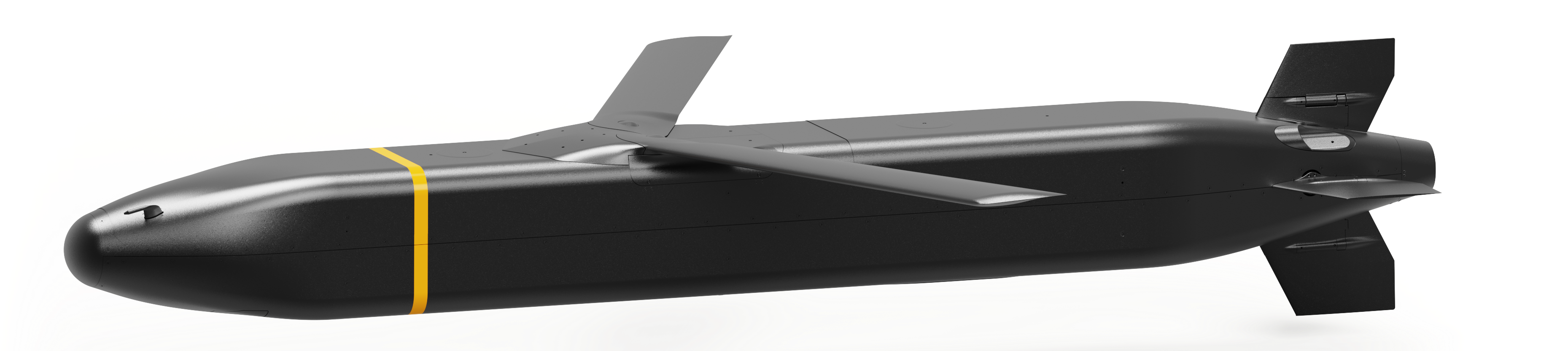
BLUF: Anduril is slated to deliver at least 3,000 surface-launched cruise missiles to the Army beginning in 2027, part of an effort to quickly advance affordable munitions procurement at scale.
Over the course of the three-year framework agreement, Anduril will supply the Army with a minimum of 1,000 surface-launched Barracuda-500Ms per year.
The munitions are built into standard 20-foot shipping containers that can be loaded with up to 16 all-up rounds.
An operator can use Anduril’s AI-enabled Lattice software or other fire control tech to select targets, munition combinations and coordinate launches.
The simple design of the missiles, meanwhile, permits a 30-hour assembly using only 10 common hand tools, furthering the ease of large-scale production.
“The massive drones we’re seeing be produced around the world — we need to drive down that cost curve so we can make sure we have the lethal means at a lower cost.” LTG Matthew McFarlane, I Corps CG
Army Unveils NGC2 Battlefield Network Connecting Helicopters, Drones and Troops
BLUF: The 4th Infantry Division tested distributed battlefield operations designed to keep combat units coordinated under cyber and electronic attacks.
During Exercise Ivy Mass at Fort Carson, CO, soldiers from the 4th ID used a digital command network that linked AH-64 Apache helicopters with ground forces and logistics units across a contested combat scenario.
The May 12 exercise focused on the Army’s NGC2 system is designed to replace older command networks with faster, cloud-enabled software that can move battlefield data between units in near real time.
Army leaders have pushed for these upgrades as modern warfare becomes increasingly shaped by drones, cyberattacks, EW, and long-range missile strikes.
Instead of operating from large, centralized locations, units worked through smaller, more mobile positions spread across the area.
The exercise also supported the Army’s broader push toward multidomain operations. That strategy combines ground combat, aviation, cyber warfare, EW, and space-based systems into a single operational framework.
Related: Army Tests Next-Generation Battlefield Network Linking Apache Helicopters and Ground Forces
Anduril Wins Army Contract for Prototype C2 Missile-Defense System
BLUF: The system will use Anduril’s Lattice software, where it will allow the Army to collect and combine information from separate, existing missile-defense systems and transform that data into a comprehensive operating picture.
The Army awarded Anduril a contract to develop a Battle Manager prototype as an integrated C2 platform aimed at defensing against various air and missile threats across the Indo-Pacific theater.
The integrated portion of the system comes from Anduril’s Lattice software, which would allow the Army to collect and combine information from separate, existing missile-defense systems and transform that data into a comprehensive picture.
In order to break apart such data silos, the Lattice software assigns sensors on various weapons systems a specific observation of data-collection tasks, so human operators can know when, where, and how to engage systems against inbound missile threats.
By having all this data together, commanders are able to have a constantly-updated threat picture.
Army’s Autonomy Office Looks Beyond Drone, Robot Platforms to Packages of Capability
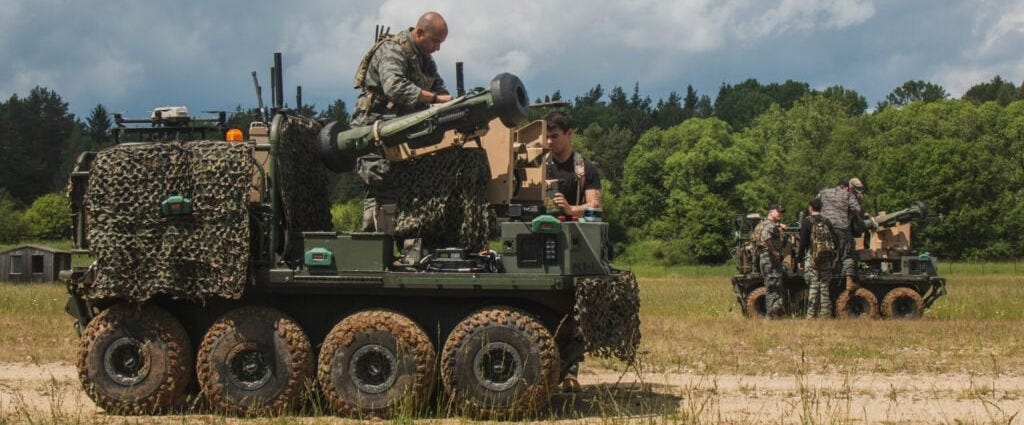
BLUF: The Army established CPE Mission Autonomy to interconnect all unmanned operations in the Army from drones to robots.
“The new office won’t build or acquire them but will integrate such systems into packages of capability that can be tasked by commanders depending on the mission.” BG Anthony Gibbs, CPE Mission Autonomy’s leader
The initial focus will be to develop such autonomy packages in three areas: combat engineering, where sappers traditionally have been called upon to shape the terrain in the breach prior to ground assault, considered one of the most dangerous jobs in the military and ripe for autonomy; as well as fires and logistics.
Its goal for these mission autonomy packages is to be able to interpret commander’s intent, then plan, execute, and adjust as battlefield conditions change.
Because CPE Mission Autonomy’s charge cuts across so many mission areas and user communities in the Army, prioritizing is a big challenge.
TRADOC (now T2COM) is helping CPE Mission Autonomy look across user communities and determine where the new organization should focus.
Autonomous combat engineering for mobility and counter-mobility operations, as well as replacing, displacing, and shaping obstacles.
Fires, starting with connecting systems the Army already fielded, including automated target recognition and call-for-fire algorithms.
Sustainment, especially resupply at echelon and casualty evacuation.
Drone Warfare Is Breaking the Economics of the Tank
BLUF: There is a modern economics inverse on the battlefield; one is deployable rapidly fire and forget tool that cost nothing. While the other is a long-term investment in supply chain, crews and life cycle.
Drones that cost $1000 on average are flying and hitting armor platforms like tanks. It takes on several drones to soften the target and finish it off leaving an asset costing millions destroyed. Now the lives of a tank crew seem more like a liability than an asset. M1 Abrams tanks cost $8-10M each.
Gen David Berger transferred all Marine Corps 452 tanks to the Army in 2020. He replaced them with rockets and drones. The Army did not get the memo.
The Abrams modernization program continues under new war doctrine as of 2026. The response to the M10 Booker cancellation was not to stop building tanks, it was to redesign the Abrams with a remote turret and better drone protection.
The front lines of today have already given the answer between Drone vs Tank. News spoiler, drone wins.
Procurement pipelines have constituencies. Military officers built careers on armored doctrine. The contractors who build tanks lobby. The congressional delegations that represent tank-producing districts vote. Nobody walks into Fort Hood and tells the armored branch their primary platform is a liability.
Billions keep moving toward modernization programs that the battlefield has already rendered obsolete, and the soldiers who crew those vehicles in the next war are the ones who should worry most.
Nations serious about defense modernization should look beyond legacy platform conventions and procurement models built for another era.
Leidos to Streamline Hypersonic Weapon Joint Program for Army and Navy
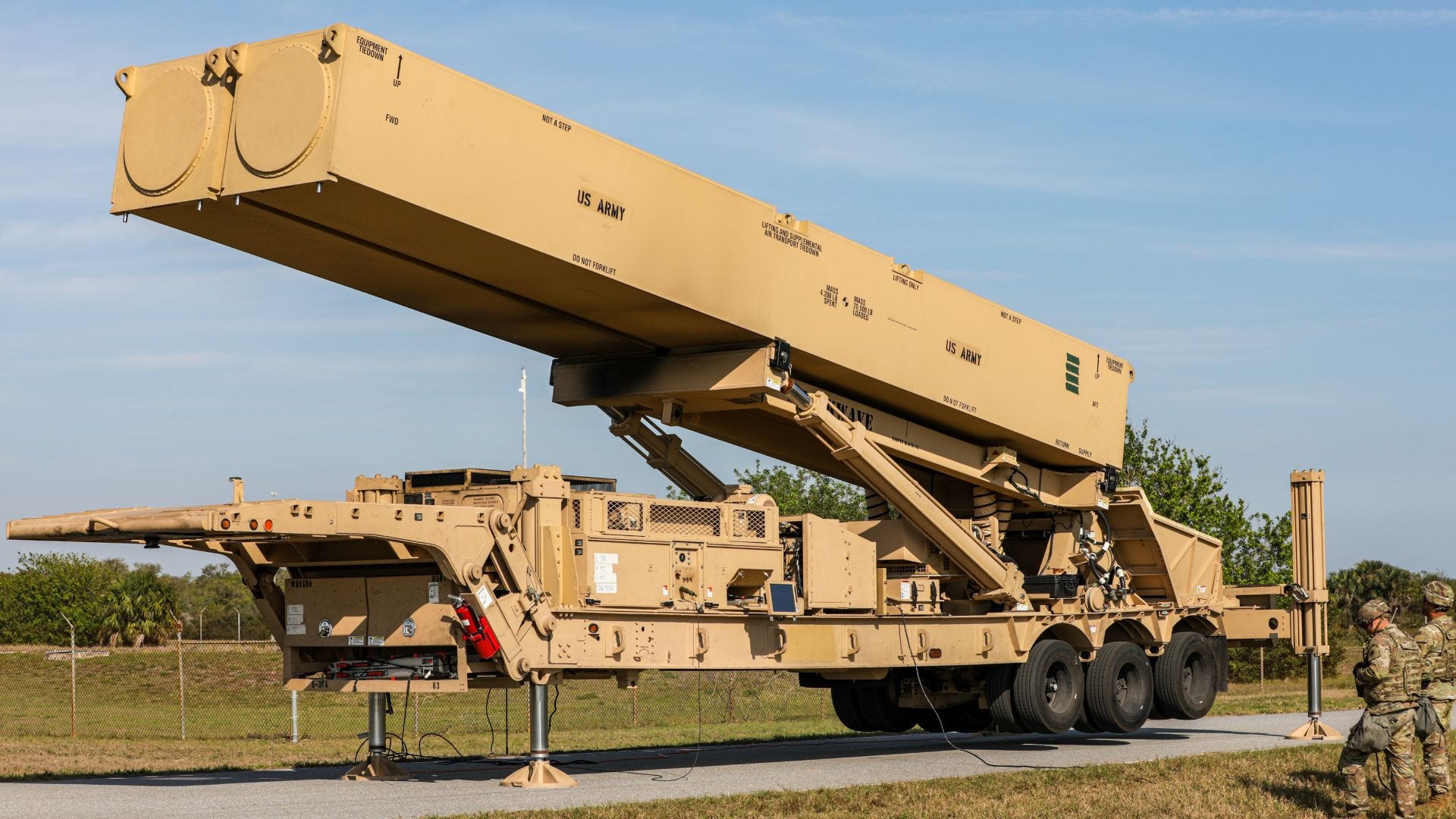
BLUF: The DoW awarded a $2.7B contract to Leidos for advancing hypersonic weapon system development from prototyping to production stage, for joint service weapon programs.
This contract merges the Thermal Protection Shield (TPS) and Common Hypersonic Glide Body (CHGB) programs. Leidos has been the prime contractor on both the CHGB (since 2019) and TPS (since 2021) programs.
The major aim of the combined contract is to streamline development and transition the programs into a production-ready phase, enabling at scale delivery of hypersonic boost glide weapon systems.
The Army`s Long Range Hypersonic Weapon (LRHW) also known as Dark Eagle and the US Navy`s Intermediate-Range Conventional Prompt Strike (IRCPS) programs utilize common sub-sytems. The primary among them include two stage rocket boosters and Common-Hypersonic Glide Body (C-HGB) subsystems.
The C-HGB is probably a bi-conical shaped projectile which is capable of traveling at speeds in excess of Mach 5 as well as execute evasive maneuvers utilizing its tail fins. It is housed within the All-Up Round (AUR).
Both these systems are aimed at delivering strategic strike capability for neutralizing high-value, time-sensitive targets such as hardened command and control nodes, integrated air defense systems, and critical infrastructure facilities.
Other Army News:
Army Uses Ground Robots and Combat Vehicles in First Assault Warfare Test in Morocco
Army flexes additive manufacturing capabilities during Flytrap counter-drone exercise


This Shipbuilding Plan is our roadmap. It is built on three clear, enduring principles:
Change How We Do Business: We are shifting from a slow, compliance-based bureaucracy to an accountable, warfighting enterprise.
Enhance Maritime Dominance: We will build a larger, more lethal, and more balanced fleet — a high-low mix giving our commanders the combat mass and flexibility to win any fight, any time.
Revitalize Our Industrial Base: Through a stable, long-term demand signal, we will unleash private investment, expand our manufacturing capacity across the nation, and create thousands of high-skill American jobs.
Today, across shipbuilding as a whole, roughly 10% of work is performed at distributed sites, with a goal of reaching 50%.
We must fundamentally transform how we deliver capability to the Fleet. Speed is no longer a preference; it is a requirement. To enable this transformation, we are aligning acquisition directly to warfighting priorities and enforcing a culture where accountability is paramount and schedule discipline is non-negotiable. Schedule will be the driving force behind shipbuilding execution.
The Navy is transforming its warfighting requirements and implementing processes to prioritize speed to capability.
Acquisition strategies will be structured around iterative development cycles to deliver capability to the fleet faster and align with evolving mission needs.
The DoN’s PAEs oversee portfolios of major programs and critical capabilities to enable quicker development and procurement decisions, more effective risk management, and more direct communication with Navy, Marine Corps, and industry leaders.

Aide from the LSMs, the Navy struggles to deliver 10 battle force ships/year to outpace planned retirements. In FY31, if all goes to plan the Navy will have 11 battle force ships, the same number of Aux ships, and finally get some UxV quantities.
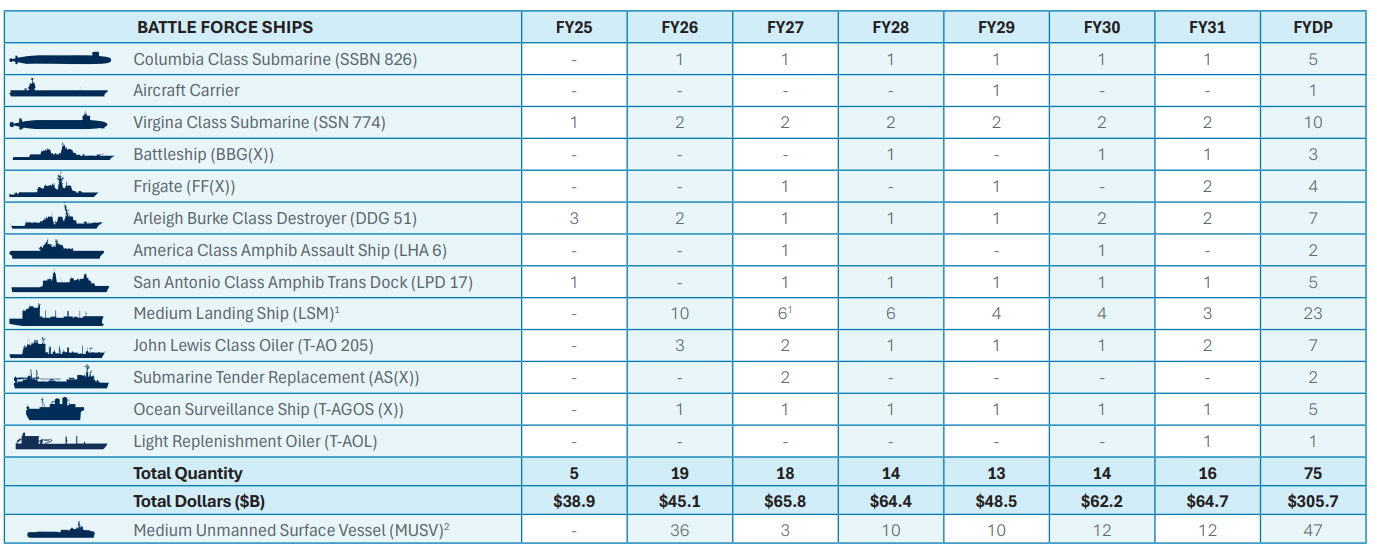
The future fleet will leverage robotic and autonomous maritime vessels and systems, alongside other forms of asymmetric technological offsets.
This High-Low Mix Strategy will initially pair unmanned vessels with the main battle force to enhance the agility, responsiveness, and flexibility of naval forces, increasing fleet resilience and lethality to meet any threat without the need for lengthy and expensive refits.
“I’ve observed firsthand how Robotic Autonomous Systems deliver a wide array of capabilities that swing the advantage in conflict. The Commander’s ability to tailor these forces to meet unique security demands is essential.”
ADM Brad Cooper, CENTCOM Commander


The USV FoS strategy outlines a rapid, competitive path to deliver affordable, scalable, and adaptable unmanned surface capabilities in response to rapidly evolving Navy requirements to
Augment the Main Battle Force
Create Strategic Complexity and Deterrence
Strategic Industrial Base Revitalization
In the U-RAS FoS, XLUUVs are pier-launched vessels with a modular design that can accommodate a variety of payloads.
Analysis of Shipbuilding Plan
We Have a Shipbuilding Plan | CDR Salamander
Battleship will be Nuclear-powered, Carrier Design is Under Review
US plans to deploy more than 80 UxVs to counter China’s naval dominance
The Navy Has Ambitious Plans. Shipbuilders Must Catch Up
BLUF: The Navy aims to enlarge and upgrade its fleet in a challenging time frame, but the US shipbuilding industry’s production rate is lagging. Two measures can help the gap.
Currently, the Navy is receiving just half of the annual ship production it needs, creating threats to both national security and economic resilience.
One proven solution is modular construction—splitting the overall project into smaller pieces that facilities can build in parallel at offsite locations before final assembly.
Another key element is design discipline—increasing productivity and efficiency by limiting the number of variants and changes that shipbuilders must make.
Together, these two measures will do more than deliver more ships within a specified time frame. They will also unlock billions of dollars in new revenue for the industry, create jobs, and help revitalize domestic manufacturing in the US.
Navy Unveils Three New PAEs
PAE Aviation: VADM John “Doc” Dougherty
PAE Mission Systems: Jim Day
PAE MS integrates elements from the following organizations: PEO C4I, PEO Digital, PEO IWS, PEO MLB, DRPM Overmatch, LRNFO, MILE, PMA-290, NAVWAR, NAVSEA, NAVAIR, MCSC.
PAE Munitions: Paul Mann
“The needs of the warfighter demand that our acquisition system move faster in order to outpace the threat. The establishment of these PAEs today will accelerate acquisition efforts in three key portfolios.” Jason Potter, PTDO Navy SAE
“This is not just a name change, but a critical step toward streamlining and simplifying the Navy’s acquisition process. The three new PAEs are designed to align authority and accountability, reduce process overhead, equip program managers to execute more effectively, and deliver operational capability to the Navy and Marine Corps with speed and scale.” ADM Jim Kilby, Vice CNO
Our Take: We’re very excited and optimistic to see the Navy complete deployment of the 10 PAEs to shape the future of Naval acquisition. We invite the new PAEs to read our 10 New Years Resolutions piece and our related portfolio management products.
Virginia Subs Will Hit 2-A-Year Build Rate in 2030s
BLUF: Shipbuilders are on track to deliver two Virginia-class attack submarines per year in the early 2030s.
Based on the current investment in the submarine industrial base and workforce and the expansion of distributed construction, Caudle estimated that builders General Dynamics Electric Boat and HII’s Newport News Shipbuilding will hit the two-a-year delivery rate for the attack boats by 2032.
The Navy’s requirement to increase the submarine production rate to at least one Columbia-class and two Virginia-class submarines per year remains the top industrial base priority, with a near‑term focus on stabilizing the supply chain and growing the skilled workforce needed until full production rates are achieved.
Currently, the delivery rate for Virginia-class submarines is about 1.3 a year.

Navy Eyes a Mothership With Drones for Future Oceanographic Surveys
BLUF: The Navy’s oceanographic survey assets capture crucial information about the world’s oceans — and maritime threats that lurk in them.
The Navy has a new plan to identify commercially available vessels and mothership designs, existing oceanographic survey platforms, and other mature technologies that map the ocean floor, analyze the marine environment, and maximize undersea warfare capabilities.
The Next Generation Oceanographic Survey Ship (T-AGS(X)) is envisioned to replace the aging T-AGS 60 Pathfinder class of ocean-surveying vessels that will reach the end of their service lives in the 2030s.
The new capability will be designed to operate worldwide and will integrate manned and unmanned survey systems to increase survey speed, coverage, and persistence.
The ship will function as a mothership for unmanned underwater, surface, and airborne survey vehicles and will support rapid data processing and dissemination to fleet and joint users.
Unmanned Underwater Vehicle That Can Detect Mines, Conduct Surveys
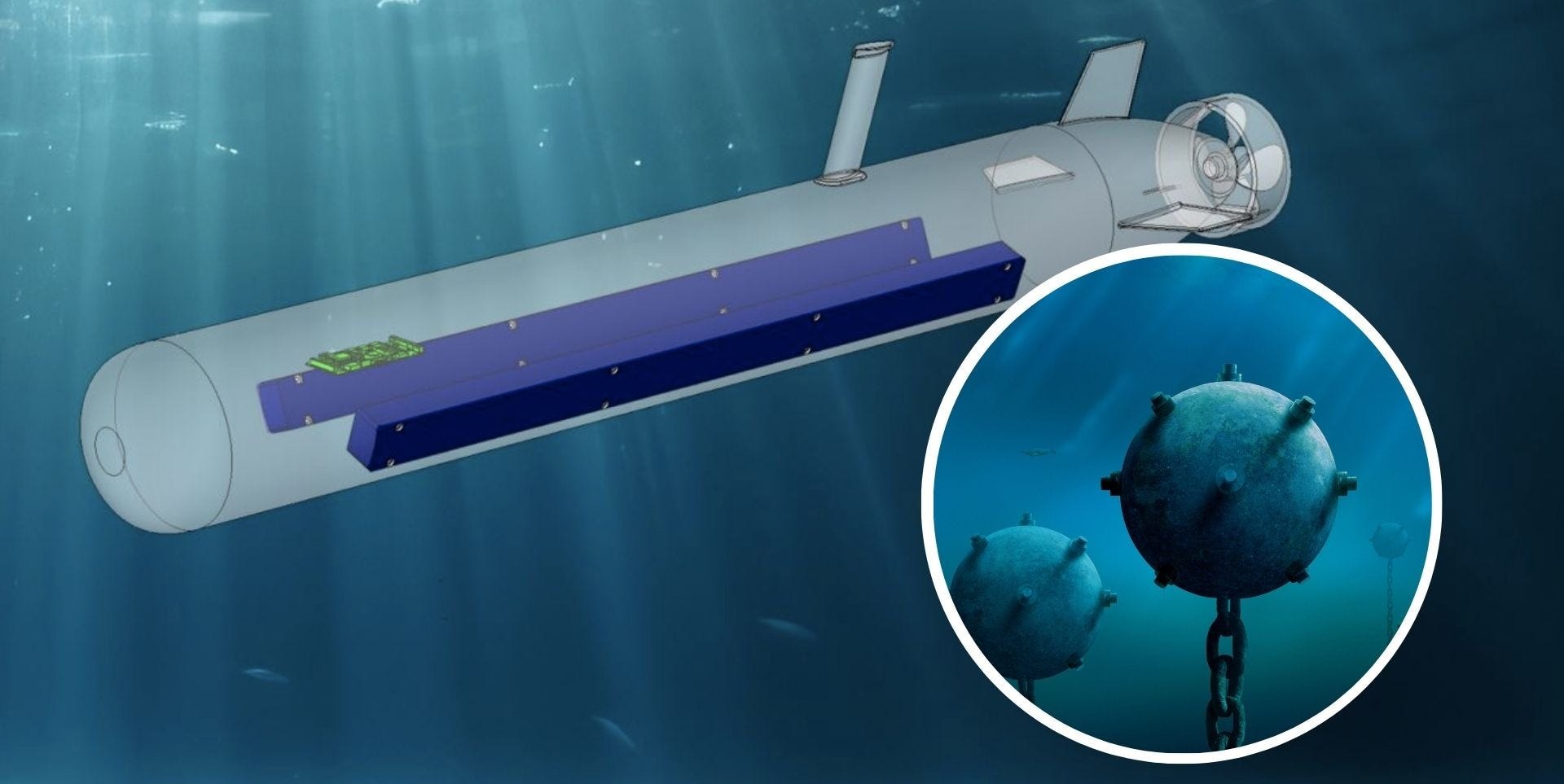
BLUF: The MANTIS UUV delivers consistent, high-resolution sonar imagery across changing survey ranges.
Developed by Klein Marine Systems, MANTIS combines high-quality imaging with a compact payload architecture. The vehicle is designed to support mine countermeasures, search and recovery, hydrographic and geophysical survey, offshore infrastructure inspection, and environmental mapping missions.
The vehicle is built for UUV platforms where space, power, speed, and data handling are critical.
With advanced processing for dynamic focusing, multiple-look processing, and adaptive beamforming, MANTIS delivers consistent, high-resolution sonar imagery across changing survey ranges and speeds (6-8 knots), creating a strong foundation for machine learning and AI-assisted analysis.
UUV swarms utilizing synthetic aperture sonar in combination with AI enabled target recognition algorithms can detect, classify, and identify mine-like objects in real-time, reducing the need for manned mine countermeasures vessels.
A Four Ocean Navy: A Wrong Solution to the Right Problem
“Whether you build a Navy for high consequence, low probability or low consequence, high probability scenarios — in either case you’re left with an over or undersubscribed force that’s sub-optimized to address specific use cases which may never come to bear.” —ADM Daryl Caudle, CNO
Professor Derek Reveron’s “Why America Needs a Four-Ocean Navy,” diagnosis of the Navy’s central problem is essentially correct: a globally dispersed force trying to do everything with a shrinking number of expensive multi-mission ships is a formula for strategic incoherence and operational exhaustion.
He proposes replacing the Navy’s current theater-oriented fleet structure with four ocean-based fleet commands for the Atlantic, Pacific, Arctic, and Indian, each with its own commander, budget, and procurement priorities.
Reveron’s proposal rest on a foundation that is missing its first and most essential element: a strategy that disciplines the demand for naval forces before it designs the force to meet that demand.
CNO noted: What I find now is I end up having to use carrier strike groups and amphibious readiness groups in places where I believe I could tailor a force package and be more suited to the threat.
He does not identify what winning looks like against a named adversary, by when, under what theory of victory, or how his proposed C2 structure and tailored forces connect to a national strategy for prevailing.
Reveron’s organizational redesign assumes that assigning specific forces to specific ocean fleet commands will concentrate those forces on their assigned missions. This assumption has never survived contact with the actual source of naval demand.
Forces optimized for specific theaters in peacetime cannot be rapidly reallocated in general war. The Navy fights globally when it matters most, not theater by theater in neat sequence.
The U.S. lacks the shipbuilding capacity, workforce, and sustained funding to build multiple differentiated fleets given that it is already unable to produce a single adequate one.
The Navy’s institutional culture drives every platform toward high-end, multi-mission capability. That logic is not irrational. It is, however, incompatible with the affordable, differentiated fleet.
Other Navy News:
Navy to develop new long-range anti-submarine weapon for quieter underwater threats
Davie Defense Finalizes $3.5B Coast Guard Arctic Security Cutter Deal

HII, MetalCraft Marine Deliver ROMULUS-25 USV Prototypes for U.S. Marine Corps

BLUF: HII, in partnership with MetalCraft Marine, delivered and sea tested two ROMULUS-25 USVs awarded in a DIU contract for smaller form factor autonomous boat prototypes for the Marine Corps.
The ROMULUS-25 is a 27-foot high-speed interceptor vessel designed to deliver up to 1,000 pounds of payload with a range of up to 1,000 nautical miles.
Fully capable of autonomous operation, the vessel is powered by HII’s Odyssey AI-based autonomy system, which integrates multiple sensors and effectors to enable coordinated, cross-domain maritime operations in support of the U.S. Marine Corps, as well as U.S. and allied navies.
Odyssey autonomy has been deployed on more than 30 platforms, accumulating over 12,000 hours of successful at-sea operations. Its modular open systems architecture (MOSA), service-based design enables integration with the HII Minotaur targeting network, enhancing mission-level operations and edge capabilities through AI-based contact recognition and identification.
“The ROMULUS-25, powered by our Odyssey autonomy suite, builds on thousands of hours of successful at-sea operations and demonstrates how scalable, AI-enabled unmanned systems can extend the reach, endurance, and effectiveness of naval forces.” Andy Green, EVP of HII and President of HII’s Mission Technologies division.
Marines and Philippine Navy Test Firestorm Tempest Drone for Distributed Littoral Warfare in Indo-Pacific
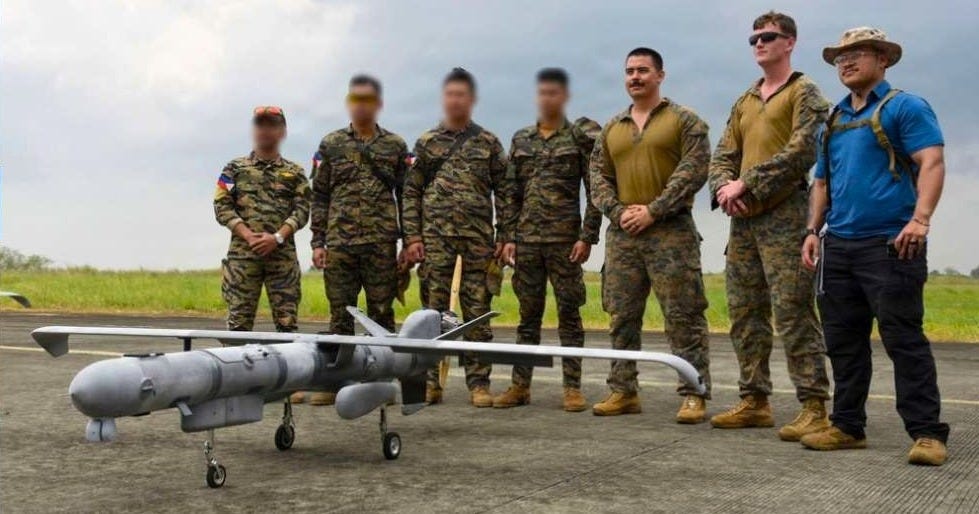
BLUF: The U.S. Marine Corps and Philippine Navy tested the Firestorm Tempest drone during Exercise Balikatan 2026 in northern Philippines.
Placing a long-range unmanned system inside one of the Indo-Pacific’s most strategically sensitive maritime corridors.
The deployment matters because it strengthens distributed littoral warfare concepts near the Luzon Strait, where allied forces are preparing for contested surveillance, sea-denial operations, and resilient targeting networks against increasingly capable anti-access threats.
The Tempest combines roughly 400 miles of range, six hours of endurance, and modular ISR or strike configurations with forward-deployable xCell microfactories that can rapidly build and repair drones near combat zones.
For Marine Littoral Regiments operating from austere island positions, the system expands reconnaissance reach, supports naval targeting and coastal defense missions, and reinforces a broader shift toward attritable unmanned systems and expeditionary logistics designed to survive high-intensity warfare in the Indo-Pacific.

Air Force Tests APKWS Laser-Guided Rockets on MQ-9
BLUF: The Air Force and General Atomics Aeronautical Systems have successfully tested firing laser-guided APKWS rockets from an MQ-9A Reaper drone including against aerial targets,
APKWS is a low-cost, semi-active laser-guidance system made by BAE Systems and sized to modify 2.75-inch, or 70mm, aerial rockets.
It can fly up to nearly seven miles, and detonate with an explosive warhead, white phosphorus, or an illuminating round.
It has become the Air Force’s primary air-to-air weapon against Iranian drones in the Middle East in recent years.
APKWS runs $25,000 to $40,000 per shot. The target it’s designed to kill: Iran’s Shahed one-way attack drone, is also priced at roughly $30,000.
Related Article: The MQ-9 Gets Cheaper Teeth
Air Force Greenlights Requirements for MQ-9A Reaper Drone Replacement
BLUF: The Air Force has finalized requirements for a drone to replace the MQ-9A Reaper, and in the near term is looking to replenish combat losses of the aircraft.
The new unmanned aircraft must consist of open architectures, be easily mass produced and have a higher tolerance for attrition.
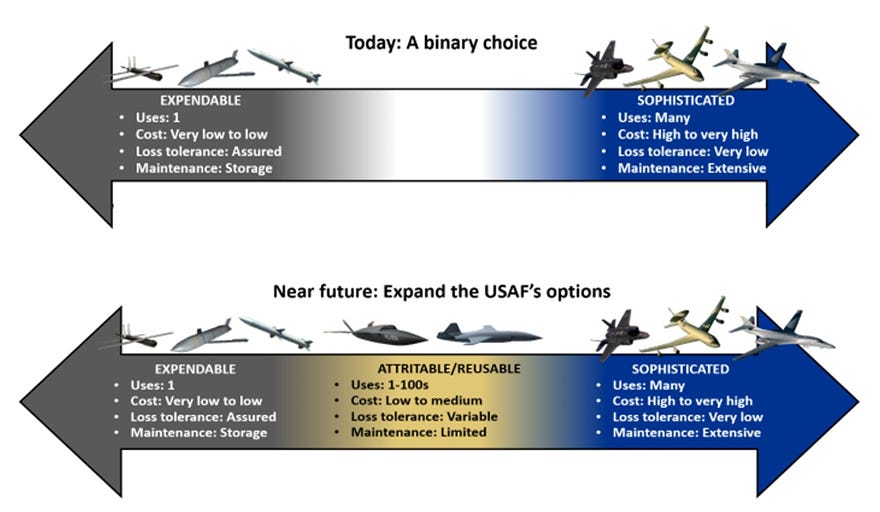
“The MQ-9 is serving us well over in the conflict that’s ongoing in the Middle East but depending on what sensors are on that, can cost up to $50M a copy. So by getting something that’s more modular, we think we could take advantage of an opportunity if you knew that aircraft was going to operate in a high-threat environment of taking off those packages, that would drive that cost to a much lower price point.”
Our Take: This is a good development because the Air Force has needed a lower cost version of the MQ-9 for awhile. At $50M a copy, it’s getting too close to an F-35 to be justifiable especially given the survivability rates. It appears that at least 10 MQ-9s have been lost in Epic Fury to date. If you’re in this business, take a look at the RFI for a detailed rundown of the KPPs (with thresholds and objectives).
Related Article: Air Force greenlights requirements for MQ-9A Reaper drone replacement
F-35 Delays Drove Boost to Air Force’s F-15EX Buy
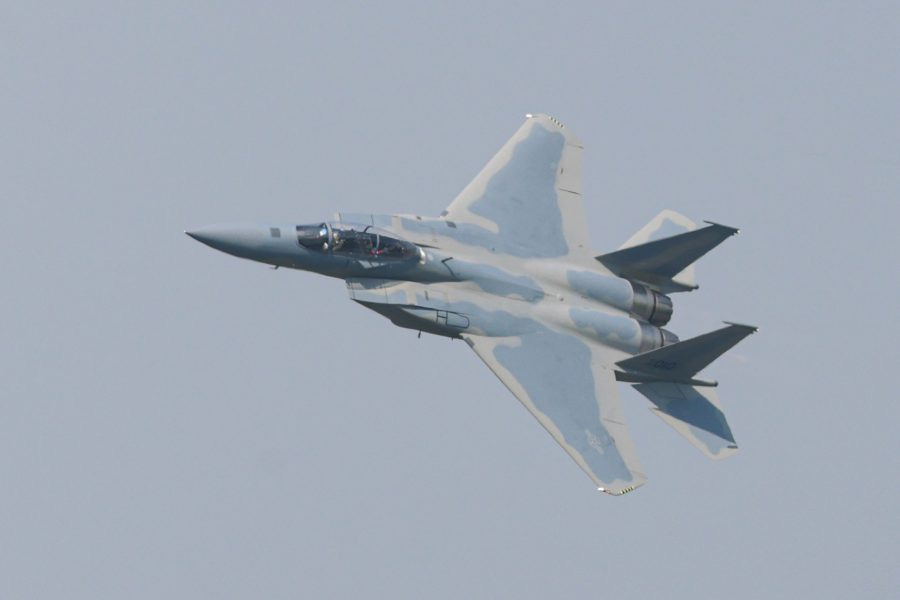
BLUF: Repeated delays to critical F-35 upgrades helped drive the Air Force to more than double its planned fleet of F-15EX Eagle II fighters.
When the budget was released in April, the Air Force said it needed to buy both F-15EXs and F-35A Joint Strike Fighters to have a balanced fighter portfolio.
The F-35’s delayed Technology Refresh 3 and Block 4 upgrades were a factor.
The fact that the F-15EX production line is already up and running is also a way to allow the service to replace some of its older F-15Es.
Boeing is not yet able to produce two F-15EXs a month on its single production line, as required under contract, but has a roadmap to get there.
That plan includes standing up one or two additional production lines.
Our Take: The fact the Air Force bumped the numbers up from 144 originally to 267 is a huge signal that the F-15 is not going anywhere for a long time.
Pentagon’s Mindset On E-7 Radar Aircraft It Tried to Axe Has Completely Changed

BLUF: The Pentagon is working to amend its proposed FY27 budget to request new funding for E-7 Wedgetail aircraft to replace the Air Force’s aging E-3 Sentry jets. The original version did not ask for any money for E-7
As of April, the Air Force had awarded contracts to Boeing for a total of seven developmental E-7s.
The SECWAR acknowledged in congressional testimony that the administration is going to provide a budget update and that it questions whether space-based capabilities will replace E-7 roles in the near-term.
The Wedgetail is arguably the best airborne look-down sensor platform anywhere in the world at present, which is especially valuable for spotting long-range kamikaze drones, as well as cruise missiles.
Our Take: We’re glad to see the Air Force change its course here since the E-7 is a critical enabler for airpower for at least the next decade while all the kinks are worked out on the space domain providing those capabilities in a way that is secure and resilient long-term. The fact that DoW changed course a month after releasing a late budget is fairly surprising - not sure there is a precedent there.
C-5 Galaxies Now Slated to Keep Flying Until 2050 As Readiness Plummets To 37%
BLUF: The Air Force says it does not expect the last of its huge C-5M Galaxy cargo planes to be replaced by a Next-Generation Airlift (NGAL) platform until FY50 - five years later than planned last year.
One NGAL aircraft will replace one C-5M aircraft until the entire C-5M fleet is retired. Then, the C-17A fleet will be replaced by NGAL at a one-for-one swap.
“NGAL is projected to fully replace the C-5M fleet tentatively in FY 2050 and maintain the Strat Air [sic] program floor of 223 C-17 aircraft and 52 C-5 aircraft.” FY27 Budget Documents
Our Take: Given the current sustainment costs and readiness levels, this feels like a huge mistake. It also seems to neglect to account for the fact that in a Pacific conflict, there will be a need to expand production of cargo delivery assets - and neither the C-17 nor C-5 has an active production line. The military should have an active cargo aircraft production line for strategic airlift both for supply chains and resiliency.
New Version of Bomber-Launched ARRW Hypersonic Missile Is a Ship Killer
BLUF: The ARRW missile was being cancelled just three years ago but is now being ordered for operational use with an Increment 2 being planned.
The “Increment 2” ARRW is set to feature an all-new seeker, which would give it a moving target engagement capability.
A version of the AGM-183 able to strike enemy ships at sea could be especially relevant in a future high-end fight against China in the Pacific.
The Air Force is asking for over $296M to support work on the new ARRW variant.
ARRW is known as a boost-glide hypersonic weapon which uses a rocket booster to get an unpowered glide vehicle to an optimal speed and altitude.
To date, the Air Force has disclosed plans to integrate ARRW onto its B-52 and B-1 bombers, but other aircraft could potentially carry these weapons.
ARRW’s prime contractor, Lockheed Martin, is developing an anti-ship-optimized version of the Precision Strike Missile (PrSM) ballistic missile for the Army.
The Air Force demonstrated the networks that would be required to close this long-range kill chain in a simulated ARRW strike during Exercise NE 2021.
Our Take: The Air Force also needs to look to the next generation of hypersonic missiles that will be cheaper and more scalable than this first generation of weapons. The Army is already working with Castelion on new lower cost versions that can be fired from HIMARS launchers.
Related Article: Air Force wants to develop follow-on to ARRW hypersonic missile
Air Force Plans to Set New Goal for B-21 Fleet Size in 2028 Budget
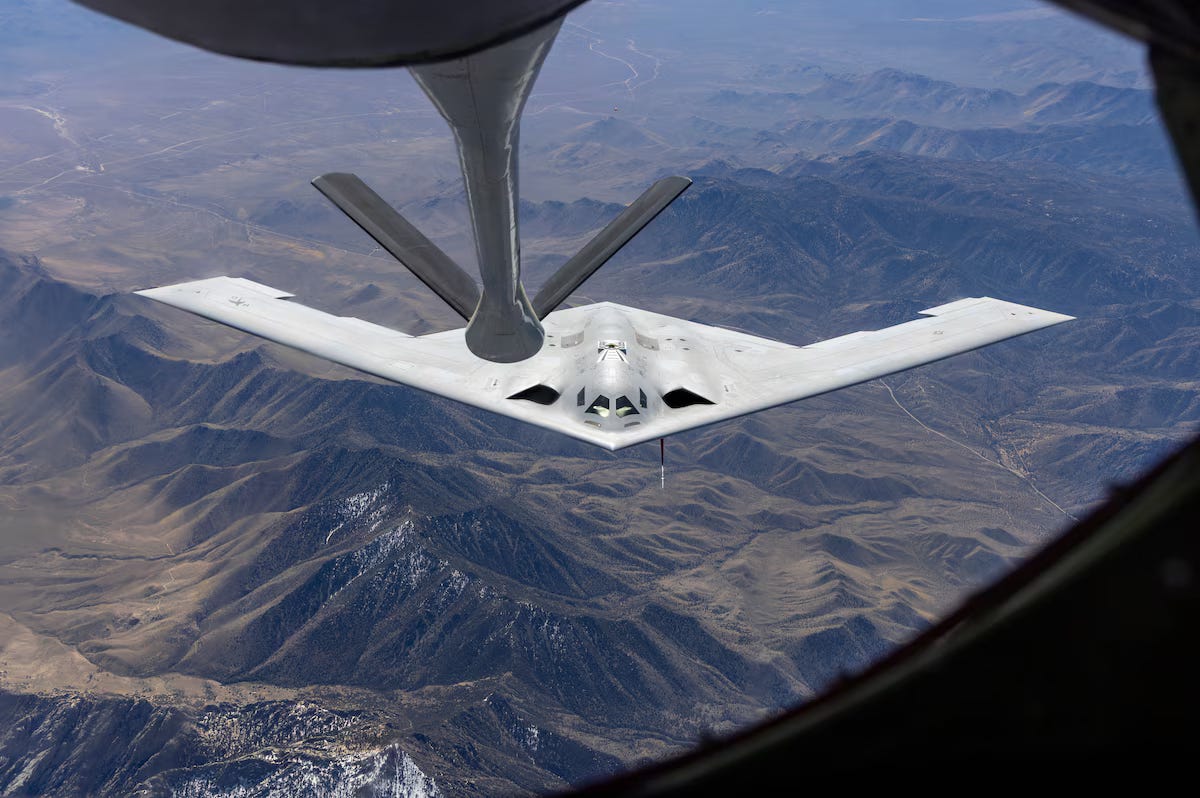
BLUF: The Air Force is working new numbers for the total B-21 production quantities. It’s unclear what the new number will be, but some experts have called for over 200.
Other Air Force News:

Inflection Points: The Space Economy in 2026
Matt Kaplan and David Rothzeid
BLUF: With the Artemis launch and SpaceX IPO, there hasn’t been this much excitement about space since humans were last on the Moon. There are many companies leaping ahead with new technology to support national security.
SpaceX reduced launch costs 6-7x and Starlink got $11.8B in revenue last year.
In 2025, Firefly Space became the first commercial company to land on the moon.
Starfish Space established the satellite disposal market when it won an end-of-life services contract from the Space Development Agency (SDA).
Companies like Apex, K2 Space, and mPower are solving bottlenecks in the supply chain that lower costs and time to orbit dramatically.
Five Frontiers of Commercial Space
Autonomy
Maneuverability
Power Beaming
Alternate-PNT
Reentry
There is no precise playbook for building a space business, but there are several traits promising companies in these categories often share.
First, space companies need to meet a near-term government priority to fund capability development and derisk tech for commercial applications.
Second, these companies must pursue medium-term, immature commercial markets as they begin delivering value to the government.
Third, building space systems that make money is hard enough; startups must reduce risk when they develop products that require engineering execution rather than technical invention.
The next generation of promising space capabilities will similarly take what was once exquisite and government-only and make it cheap, routine, and commercial.
Our Take: This is really a first-class breakdown of some of the key mission sets that will be commonplace in space in a decade and the companies that are working hard to see them become commercialized. What remains undecided is how fast the Space Force will adopt them. The promise is there and the number of industry partners is growing to support - and China is definitely going to pursue all of them. The FY27 budget is a promising start for the Space Force, let’s keep the momentum going.
State of the Space Industrial Base
BLUF: There are several issues that remain with space policy in the U.S. and there are some clear corrective actions that can be taken.
Recurring Themes
The U.S still lacks a unified, enforceable mission authorization framework for novel space activities under Article VI of the Outer Space Treaty.
Acquisition cycles remain slow when compared to commercial innovation. Overclassification and requirements processes still favor incumbent primes and limit new entrant participation.
DoD’s heavy reliance on a small number of providers—most notably SpaceX for proliferated LEO communications—creates strategic and operational risk.
Cape Canaveral and Vandenberg are operating beyond their original design with aging infrastructure, commodities constraints, workforce shortages, and community level housing and services pressure.
The space workforce has grown rapidly, but domestic production of talent (engineering, trades, data/AI roles) is not keeping pace with demand.
China is aggressively pursuing large constellations and holds key positions in standards bodies (e.g. ITU-R, 3GPP).
Recommendations
Establish a coherent mission authorization framework for novel space activities.
Complete and regularize export control modernization for space.
Articulate and resource “North Star” architectures for SML and hybrid SATCOM Architectures.
Reduce excessive dependence on any single commercial provider for critical services.
Modernize launch and spaceport infrastructure, including NEPA processes.
Develop and professionalize a space logistics corps.
Scale workforce pipelines through regional consortia and work-based learning, leveraging successful programs, such as Pathways to the Stars.
Fund and participate in industry-led standards bodies for hybrid satellite architectures and Space, Mobility and Logistics/ISAM.
Treat space relevant infrastructure and workforce as national security priorities.
Our Take: If you are the space business, this is worth a thorough read to understand some of the deeper findings.
Space Force to Overhaul Key Early Warning, Surveillance Radars Around the World
BLUF: The Space Force plans to overhaul eight legacy missile warning and space surveillance radars located around the world, taking them from analog to digital operations.
Under the Ground Based Radar Digitization project, or GBRD, the service will install new hardware and software on the radars, upgrading everything from front-end antennas to back-end data processors.
This includes the five Upgraded Early Warning Radars, Perimeter Acquisition Radar Attack Characterization radar, Cobra Dane radar and the C-6 radar.
USSF is fielding new and upgraded radars like the Deep-Space Advanced Radar Capability in Australia, which was approved for limited early use last September.
It’s also integrating commercial radars into that network.
Still, the service sees a continuing role for these legacy systems, especially when it comes to early warning capabilities and general space domain awareness.
The sites also provide unique contributions to the Space Surveillance Network, which tracks spacecraft and debris orbiting Earth.
Last month that the Space Force approved its GBRD strategy in November, designating it a “middle tier acquisition” effort.
The Space Force’s FY27 budget request includes $128M for the program and projects its budget will include $654M between FY28 and FY31.

Golden Dome Missile Shield Estimated to Cost $1.2T
BLUF: The Congressional Budget Office estimated in a cost-projection analysis released Tuesday that Golden Dome would cost over $1.2T.
They estimated the acquisition costs would total just over $1T which is significantly more than the $185B the Trump administration set aside for the project in its proposed fiscal 2027 defense budget.
That gap is due, at least in part, to the fact that there are no publicly available plans from the White House nor the Pentagon about what the system will look like making it impossible for CBO to align its estimate to DoW plans.
DoD’s stated cost appears to cover a shorter time frame than CBO’s analysis and may reflect a different scope of activities and budget categories.
Golden Dome Chief Pushes Back on $1.2T CBO Estimate
BLUF: Gen. Guetlein forcefully rejected a new CBO estimate that the Golden Dome missile defense initiative could cost $1.2T over 20 years, arguing the analysis relies on outdated assumptions and does not reflect the Pentagon’s architecture.
Guetlein argued the report extrapolated from older defense acquisition models rather than the emerging commercial space manufacturing and launch systems his office expects to leverage.
He also criticized the process behind the report, saying CBO did not consult his office directly about the architecture under development.
A central theme of Guetlein’s remarks was that Golden Dome hinges less on physics than on economics and industrial scale.
He believes newer commercial space business models including mass production, reusable launch systems and high-volume satellite manufacturing could fundamentally alter the economics of missile defense.
He pointed to the 20 Other Transaction Authority agreements the Space Force recently signed with 12 companies to develop space-based interceptors as evidence that industry is approaching the problem differently.
“They’re not estimating what we’re building. If I cannot do something affordably and scalably, it doesn’t make sense as a nation to go after it, because I cannot bankrupt the nation. This is not a physics-based problem. This is an economics, scalability problem, an organizational behavior and social engineering challenge, not a technical challenge.”
Our Take: Golden Dome requires support beyond 2028 to see it implemented in a way that will truly transform homeland defense. The GD4A program office will need to be clearer with its congressional counterparts if it hopes to sustain support long-term and see its vision executed. Pissing off CBO is not a great way to do that. CBO should have reached out but many congressional members have expressed challenges in communication on this subject.
New Golden Dome ‘Ecosystem Hub’ Will Vet New Tech, Monitor Industrial Base
BLUF: The leaders of the Pentagon’s Golden Dome program say a new “Ecosystem Hub” will make it easier for companies to pitch technology for the effort and for the government to monitor supply chain and cyber risks.
Even as Golden Dome leaders look to ramp up production of kit that already exists in the military services, they’re also reaching out to industry and academia for new solutions and concepts that could fit within the architecture.
Guetlein said he’s met with more than 400 companies so far.
The Ecosystem Hub will build on that work, providing a single entrypoint and vetting process for those firms.
The hub is meant to be a tool not only for companies looking to pitch solutions, but for the program to understand potential cyber vulnerabilities and supply chain constraints within the industrial base.
“Really, what’s coming out of Ecosystem Hub is to start having transparent discussions, and then once we have those transparent discussions, be a creative-thinking, innovative partner and help me solve my problems.” Gen Guetlein
“Our intent is to build a gateway that will provide a single point of entry for anyone that wants to come in and see the Golden Dome problem set and then provide those innovative solutions that perhaps we haven’t even thought about yet that could solve some of our problems.” Marcia Holmes
America Needs to Understand Golden Dome Before It’s Too Late
BLUF: Golden Dome remains largely unknown to the very people whose support will determine whether it succeeds. Congress is asking pointed unanswered questions, industry is unsure what to build, and the public has barely heard the name. If we don’t close this information gap now, we risk letting confusion, speculation, and adversary narratives define a program designed to protect the nation.
Congress, industry, allies, and the American people all need to understand what Golden Dome is and why it matters.
Without that clarity, the initiative risks becoming a target for political friction, budgetary skepticism, and misinterpretation abroad.
Golden Dome requires rapid prototyping, open architectures, and competition but companies cannot posture themselves effectively without clearer guidance.
Allies and partners want reassurance that the United States is strengthening—not retreating from—collective defense commitments.
They need to know that Golden Dome complements existing security architectures rather than replacing them or shifting burdens.
The solution is straightforward: a deliberate, public‑facing communications campaign anchored by a major national speech. A full rollout should include:
A clear, plain‑language narrative explaining what Golden Dome is and what it is not.
Fact sheets and graphics that demystify the architecture and purpose.
Pre‑briefings for Congress and industry to ensure alignment and reduce uncertainty.
Coordinated messaging with allies and partners to reinforce collective security.
Calibrated communication to adversaries to strengthen deterrence without escalating tensions.
A national security initiative of this scale deserves a national conversation.
Golden Dome must be explained, not whispered about. It must be understood, not assumed. And it must be introduced to the American people with the clarity, confidence, and transparency that the moment demands.
Our Take: We think this is correct. There are classified aspects that can still be protected (like boost phase intercepts) but much of it can be explained openly without giving away national security secrets.
Missile Defense Meets Its Moment
BLUF: There is substitute for missile defense. It works. Not perfectly—but decisively enough to shape outcomes. It has saved lives, preserved freedom of action for leaders, and complicated the coercive strategies of aggressor states.
We have seen similar dynamics in the Middle East. Iran and its proxies have used missiles and drones not only against military targets, but against civilian areas and regional partners.
Even states not directly involved in military operations have faced pressure through threats or attacks designed to influence their political calculations.
Missile and drone warfare is not just about destruction—it is about coercion.
Success in missile defense matters for a few reasons:
First, it protects civilian populations and critical infrastructure.
Second, it buys time for decision-makers.
Third, it preserves military capability.
Hypersonic Missile-Killing Space Defense System to be Tested by 2027
BLUF: MDA is advancing a new initiative to demonstrate the ability to track and intercept hypersonic missiles that will provide a gapfiller for GPI.
The demonstration is scheduled to take place as early as fiscal year 2027. It will involve a hypersonic glide vehicle flying up the US East Coast.
If successful, Project Maverick (as it’s called) could yield an interim counter-hypersonic weapon, enabling the US to bridge the gap until its Glide Phase Interceptor (GPI) enters service in the early 2030s.
The GPI program, awarded to Northrop Grumman in 2024, is a ship-launched system capable of engaging maneuvering HGVs in the atmosphere.
It will be funded under the agency’s new Low-Cost Defeat initiative which is funding multiple efforts to develop affordable technologies against hypersonic and other high-speed threats.
“Project Maverick provides a developmental test event opportunity to demonstrate capabilities across the kill chain, and successfully demonstrated capabilities would supplement current and future defense architectures.” Lt. Gen. Heath Collins, MDA Director
Mission-Centric Integration Through Golden Dome
BLUF: Gen Guetlein has recognized C2 as the major challenge with the Golden Dome program and has been hyper focused on solving that part of the puzzle - and may have a novel approach that extends beyond Golden Dome.
Past efforts, from network-centric warfare to CJADC2, have all fallen short of surmounting the stovepiped nature of the military services.
Today, the hindrance to joint integration is no longer technology; it is persistent organizational roadblocks.
Guetlein’s mission-centric approach offers the most promising model for overcoming them yet.
Past reports have suggested taking a mission-centric approach by organizing network architecture integration around shared mission problem statements, instead of grasping at a universal set of standards for the Joint Force, one integration program office or one universal system integrator.
A mission-centric approach would re-scope efforts to discrete sets of technical integration problems within priority kill chains.
It would speed integration by delegating to the relevant combatant command what constitutes “good enough” to field solutions.
“I really believe the challenge is going to be organizational behavior. How do I take capabilities that were built in stovepipes for different mission areas amongst different services and different agencies and bring those together as an integrated architecture? I think we now have to deliver on that vision.” Gen Guetlein

Foreign Defense Partners Want Congress to Speed Up Arms Sales
BLUF: A coalition representing 28 U.S. defense partners sent a letter to the House and Senate Armed Services committees on Friday urging lawmakers to make it easier for allied countries to build weapons with the U.S. and buy American arms.
The Defense Memorandum of Understanding Attachés Group, a decades-old Washington-based organization known as the DMAG, argues that America will need help from allies to keep up with demand.
The lobbying effort lands in the middle of a broader fight inside Washington over whether the U.S. should rely more heavily on defense firms in allied countries to rebuild missile stockpiles or pursue more protectionist “America First” policies.
The Pentagon has warned allies to expect delays for major missile systems after months of operations against Iran and years of weapons transfers to Ukraine.
The DMAG represents countries whose special agreements give them greater access to some Pentagon contracts. But those arrangements have faced growing scrutiny from lawmakers in both parties and the Trump administration.
The allies’ group is seeking the following:
Changes to the federal government’s ITAR, which govern exports of sensitive U.S. military technology.
Asking Congress to speed up licensing for arms exports and technology transfers to allied nations & expand the use of existing exemptions.
Raise the dollar thresholds that trigger the federal government to notify Congress of foreign military sales and direct commercial sales.
Our Take: This should not be viewed as either or but rather as another source of potential supply for these critical munitions. This could also help build more resiliency at the subcomponent level.
NATO’s 1.5% Infrastructure Spending Target
BLUF: The necessity of overhauling European transport infrastructure was highlighted by the European Transport Commissioner’s assessment that its “unfit for war.”
It was therefore a positive development that, in 2025, NATO allies agreed to increase defense spending to 5% of GDP.
Of this, 3.5% should go toward essential military expenses, while 1.5% should be used for infrastructure related to national security.
The new 1.5% spending target is nebulous, and without clear definition risks certain NATO members spending with no relevance to national security.
Fortunately, upgrading today’s inadequate transport infrastructure and securing European telecommunications networks provide clear opportunities to channel 1.5% investments towards strengthening collective deterrence in Europe.
The core issue is that Europe’s 5G network relies on high-risk suppliers such as those connected to the Chinese Communist Party (CCP).
High-risk suppliers, such as Chinese telecom companies Huawei and ZTE, operate in 17 European partner’s 5G network infrastructures, and 14 of these countries have no restrictions on Chinese vendors.
Beyond supplier risk, NATO members should appropriate 1.5% of funds towards implementing zero-trust architecture for 5G security.
If directed toward these priorities, spending NATO’s 1.5 % target funds could be the difference between a vulnerable and a defensible Europe.
Ghost Shark and the Undersea Autonomy Race
BLUF: Ghost Shark shows that Australia is trying to turn undersea autonomy from a lab exercise into a real force-structure bridge while crewed submarine programs remain slow and scarce.
Australia’s Ghost Shark program poses a real question of whether middle powers can build useful undersea deterrence without waiting for the timelines of traditional submarines.
Canberra’s 2024 NDS responded by pushing a strategy of denial, larger subsea investment, and a broader turn toward autonomous and uncrewed systems.
Undersea deterrence has usually been tied to expensive, scarce, crewed platforms. Ghost Shark points toward a different model: a lower-cost autonomous vehicle built for persistence, modular payloads, and employment in dangerous places.
The timing matters as much as the mission set. Pat Conroy said the first prototype was delivered one year early and on budget - with three additional prototypes delivered in 2025 as promised.
That is not normal undersea acquisition cadence. It is an attempt to inject software-era iteration into one of the slowest corners of military procurement.
Australian scientists said Ghost Shark was designed for manufacturability, mass production, and flexibility - with more than 42 Australian companies involved in the supply chain.
The central issue is no longer whether navies want large autonomous underwater vehicles. It is whether they can build enough of them, integrate them fast enough, and trust them enough for real operations.
Uncrewed 37-Foot Orca-Like Strike Submarine Can Unleash Missiles and FPV Drones
BLUF: A Turkish defense company has recently unveiled a new strike-capable extra-large uncrewed underwater vehicle that can unleash drones, missiles, torpedoes, and mine warfare payloads to take out threats.
Datum Submarine Technologies, a defense firm that specializes in the design and engineering of manned and unmanned mini-submarines, demonstrated its Sinarit XLUUV concept at the SAHA Expo 2026.
The Sinarit UUV is a large, autonomous diesel-electric submarine drone created for months-long, independent and long-range missions without human presence on board.
Datum used experience gained from earlier mini-submarines designed for deep and shallow waters.
The vehicle is made with interchangeable 12.5-foot payload sections which help it switch between intelligence gathering, mine countermeasures, torpedo missions, and strike operations.
The company said the platform can be configured for up to 12 different mission payloads. These include swarm drone launch systems.
The platform can operate at depths of nearly 1,000 feet (300 meters) and can reach speeds of up to 10 knots.
Ukraine’s AI Gambit Shows Middle Powers How to Play a Weak Hand
BLUF: Ukraine is using and sharing its battlefield data to improve its weapon systems through the integration of Ai and autonomous capabilities.
On March 12, Mykhailo Fedorov, Ukraine’s minister of defense, announced they would make millions of drone videos and other battlefield data to Ukrainian companies and allied nations available to help train AI models.
Ukraine holds two assets that no other country can currently match.
The first is its drone manufacturing ecosystem. Over the course of the war, Kyiv has built a sprawling network of domestic producers that have iterated at extraordinary speed under conditions of genuine military necessity
The second Ukrainian asset is the data that those drones generate. Drones have surpassed all other weapons in inflicting casualties for both forces with success rates improving with the integration of computer vision models.
For the rest of the world’s middle powers, comfortably at peace but drifting toward technological marginalization, the question is whether they can muster the same strategic clarity without the pressure of a war to concentrate the mind.
Volkswagen, Rafael Near Deal for Iron Dome Production in Germany
BLUF: Volkswagen AG and Israeli defense manufacturer Rafael Advanced Defense Systems are nearing a deal to form a joint venture until the end of the year to produce parts of the Iron Dome air defense system in Germany.
The joint venture would see production at a struggling VW plant in the western city of Osnabrueck switch from cars to military vehicles for the missile defense system.
The idea is to manufacture military trucks for the Israeli state-owned group’s mobile air defense system Iron Dome and possibly also the laser-based version known as Iron Beam.
The missiles and core parts of the air defense system would be produced in Israel and then installed onto the military trucks built in the German factory.
The new air defense systems would become an additional layer of the German-led and NATO-coordinated European Sky Shield Initiative
Related Article: Iron Dome nearly 99% effective against incoming missiles, maker Rafael’s chairman says
Taiwan Passes U.S. Arms Bill with Spending Ceiling of US$24.8B
BLUF: Taiwan’s Legislative Yuan has passed a supplementary budget bill to fund the purchase of separate packages of United States military equipment, with the combined amount of spending capped at NT$780 billion (US$24.8 billion).
The bill, which fell short of the NT$1.25 trillion requested by the Democratic Progressive Party (DPP) government, passed by a 59-0 margin with 48 abstentions in the 113-seat Legislature.
Legislative approval for disbursing the funding for both provisions is contingent on a legislative review after Taiwan receives letters of offer and acceptance (LOAs) from the U.S. for specific weapons systems.
The package of weapons already approved by the U.S. included High Mobility Artillery Rocket Systems (HIMARS), M109A7 self-propelled howitzers, TOW 2B missiles, Altius-700M and 600 drones, and Javelin anti-armor missiles.
Our Take: It’s a little disheartening to see nearly half the legislature abstain for a bill that had dramatically reduced military expenditures. Not the big question remains whether President Trump will approve the weapons which appears uncertain.
Canada Eyes Turkey as a Fellow Mid-Power Ally in Weapons Development
BLUF: Canada is seeking a rapid expansion of defense and industrial ties with Turkey as Ottawa looks for trusted middle-power partners amid shifting global security dynamics.
Canadian officials described Ankara as a “trusted partner” and “valuable ally,” highlighting Turkish advances in drones, counter-drone systems, ammunition production and autonomy as potential areas for future cooperation.
Ottawa does not have the luxury of wasting time to accelerate defense production and procurement.
Central to Canada’s ambition to expand its defense industrial capacity is the newly accepted Defence Industrial Strategy and the creation of a new Defence Investment Agency.
The minister stressed that Ottawa wants partnerships that help stimulate Canadian industry rather than relying solely on direct foreign procurement.
Our Take: This makes a lot of sense given Turkish advances in many areas but who to date has not been successful selling their systems to western allies.

HAC-D Hearing FY27 DoW Budget | May 12
Pete Hegseth, SECWAR • Gen Dan Caine, CJCS • Jules Hurst, Comptroller
HAC-D Hearing FY27 Navy Budget | May 12
Hung Cao, Acting SECNAV • ADM Daryl Caudle, CNO • Gen Eric Smith, USMC
SAC-D Hearing FY27 DoW Budget | May 12
Pete Hegseth, SECWAR • Gen Dan Caine, CJCS
HASC SPF Hearing FY27 Air Force Budget | May 13
William Bailey, PTDO ASAF/AT&L • Lt Gen David Tabor, DCS Plans and Programs
HASC Hearing FY27 Navy Budget | May 14
Hung Cao, Acting SECNAV • ADM Daryl Caudle, CNO • Gen Eric Smith, USMC
HASC Hearing FY27 Army Budget | May 15
Dan Driscoll, Sec Army • GEN Christopher LaNeve, Acting Army CoS
Upcoming Hearings
SASC Hearing DoD S&T Priorities | May 19
Emil Michael, USW(R&E) • Chris Manning, ASA/R&T • Dave Tremper, DASN RDT&E • Dr. Janet Wolfson, ASAF/E&PS
SASC Hearing FY27 Navy Budget | May 19
Hung Cao, Acting SECNAV • ADM Daryl Caudle, CNO • Gen Eric Smith, USMC
HASC Hearing National Security Challenges in Middle East | May 19
Daniel Zimmerman, ASD(ISA) • ADM Brad Cooper, CENTCOM • Gen Dagvin Anderson AFRICOM
SASC Hearing FY27 Air Force Budget | May 21
Troy Meink, SECAF • Gen Kenneth Wilsbach, CSAF • Gen B. ChanCe Saltzman, CSO

Heretics, AI Weapons, and Rebuilding the Arsenal of Democracy w/Shyam Sankar
American Optimist
Space Force Process, Challenges, and Objectives w/Gen Stephen Whiting
Aerospace Nation
Why Defense Sales Cycles Kill Startups w/Geoff Orazem
GovCon Unscripted
Fixing the Pentagon’s Acquisition Gap w/Jerry McGinn
Cache Me If You Can
Navy’s AI-Powered Readiness Revolution Is Changing How Wars Will Be Fought w/ADM Karl Thomas
Fed Gov Today
SOUTHCOM’s New Autonomous Warfare Command w/GEN Frank Donovan
War on the Rocks
Building a Cyber Force That Can Keep Up with Katherine Sutton
All Quiet on the Second Front
SCSP ai+ expo
Battlefield Innovation, Scaling Speed, Natl Security Future w/Pete Newell
Generative Computing, Re-industrialization, & Physical AI w/Jensen Huang
America’s AI Blind Spots w/Nadia Schadlow and Mac Thornberry

SOF Week 2026
May 18-21 • Tampa, FL
Cyber Summit
Potomac Officers Club • May 21 • Falls Church, VA
2026 NatSec100 Launch
SVDG • May 26 • New York, NY
TechNetCyber
Jun 2-4 • Baltimore, MD
MISATCOM USA
Jun 8-10 • Arlington, VA
Future Force Capabilities
NDIA • Jun 8-10 • Las Vegas, NV
Eurosatory
Jun 15-19 • Paris, France
Congressional M&S Leadership Summit
NTSA • Jun 16 • Orlando, FL
Army Summit
Potomac Officers Club • Jun 18 • Reston, VA
Federal Acquisition Conference
PSC • Jun 25 • Arlington, VA
See our Events Page for all the other events over the next year.
Join over 15,000 defense and industry subscribers to get our weekly recaps and thought pieces. Paid subscribers also get budget and legislative analysis and are valued supporters of our work.
Back on my soapbox again concerning Selby's article on the future of war (plans really). Most important thing is that his fourth item is the most important, it's about the people. Planning processes and constructs don't change unless the people change. I would also argue that the idea that DOD doesn't have the people is just flat out wrong, and his statement reveals that he likely has had little (if any) experience in an actual plans shop writing real-world plans. I ran two dedicated plans shops (2-star [as a CPT], 4-star [as a COL]) and there were folks around who were very intellectually agile and adaptive and who were often limited more by operational data and technology than ideas on how to prosecute a plan. Got to have the right people -- but they are out there; they're the ones who are making waves, because if you ain't making waves, the boat's not moving.
I would also offer that he misses the boat completely on his first principles discussion -- because if we take his upfront piece at face value then what is necessary is a planning construct that accounts for rapidly accelerating technology and the operational implications. Starting with an idea about building plans with what's available now just means you'll have planning staffs turning ever faster planning cycles for an increasing number of plans. A more appropriate first principle might be to rapidly (w/in 6 months) develop a planning infrastructure that allows continuous inputs of tech, organizational changes, operational commitments (a point he ignores completely), and real world context -- and which promulgates those impacts to every relevant plan. This should go hand in hand with improving our Modeling and Simulation efforts and linking their infrastructure to the Planning infrastructure so that Planners can understand the potential value and become advocates for actual useful products.
Good to start the discussion -- but LOTS of work to do.
Quantity of hulls only matters if the magazines get filled. Cao’s 1 000 missile math breaks down when DIU wants fighter-class drones hauling outsized weapons, that fleet eats munitions faster than any LCS ever could.