
Special Forces Advance Tech and Ops
More Drones, AI, and Low-Cost Systems to Shape Modern Warfare


Welcome to the latest edition of Defense Tech and Acquisition.
DoW May Finally Get a Confirmed Comptroller Soon
SOF Week in Tampa: SOCOM Wants Integrated, Repairable Capabilities
ITAR Improvements Could Recharge Exports & Acquisition Needs More Action
Perennial Autonomy Wins Large IDIQ & Regent Shows Recharging at the Edge
Army Seeks Cheap Interceptors and Integrated C2 for Warfighters
Navy Selects 7 for MUSVs, Advances Undersea Drones and Extends Amphibs
Air Force Needs to Improve Flexibility in Ops & Has CAS Covered w/o A-10
Space Confirms New PAE, Works Third Launch Site & Tests Refueling/Logistics
Golden Dome C2 Has Multiple Challenges & a Pragmatic Approach is Key
New Eurofighter Jet Underway, UK Backing Unicorns & UKR Using Drone Balloons
Congress Hosts DoW Officials for More Budget Deliberations

Jay Hurst Nominated as Full Pentagon Comptroller
BLUF: The White House nominated Jules “Jay” Hurst to officially assume the DoD Comptroller role.
As PTDO Comptroller since August 2025, he oversees the $1.5T FY27 budget request and testifying w/SECWAR,CJCS during recent budget hearings.
He previously was PTDO of USW(Personnel and Readiness) and nominated to be ASA (Manpower and Reserve Affairs).
Hurst previously was Legislative Director to Speaker Mike Johnson.
As an Army Officer and Civilian he served on Army staff, JSOC, and deployed to Afghanistan four times.
A CEO’s Guide to the FY2027 Defense Budget
BLUF: CEOs and the Boards of Directors seeking to absorb this massive influx of capital today while ensuring your firm remains lean, profitable, and indispensable when the surge eventually normalizes must focus on three strategic pillars.
Prioritize Throughput over Novelty
The FY2027 budget is unapologetically production centric.
Identify bottlenecks. Winners are positioned inside the tightest bottlenecks.
Focus CapEx on expanding capacity for weapons the DoD cannot afford to delay.
Maintain quality under pressure, especially when ramping up production.
Use New Tools to Stabilize the Supply Chain
OSC ($20.2B), the DPA($30.4B), and Industrial Base Analysis and Sustainment ($41.8B) to help firms pass traditional bureaucratic friction.
Savvy CEOs should view these as tactical tools to strengthen their own business models. Look to assist your Tier 2 and Tier 3 suppliers gain access to these new government funds.
Treat the new Direct Reporting Program Managers working directly for the Deputy Secretary as fast lanes for acquisition.
More firms need to emerge as the integration layer. Position your firm as the bridge, the entity that hardens, qualifies, and integrates new technology into existing platforms.
Planning for the Reversion
As the $350B in reconciliation funding tapers off, the industry will face a familiar cycle of overbuilt capacity and margin compression.
Examine CapEx against demand, pricing vs volume, top supply chain risks, indispensability, switching costs, strategic positioning, and implementation speed.
U.S. Defense Needs More Competition, Not More Money
BLUF: The U.S. is burning through missiles faster than industry can replace them. Multi-year procurements have the right intention but won’t work well because the issue isn’t capital, it’s the lack of a competitive market.
The Pentagon’s response to the weapons shortfall has been to splash out money: multiyear procurement agreements, equity stakes, long-term supply deals to signal committed demand and unlock private investment.
The constraint isn’t insufficient capital or demand; it’s a lack of competition.
Three suppliers — RTX, Lockheed Martin and Northrop Grumman — control 90% of U.S. missile supply and don’t compete with each other.
Conventional wisdom in Washington holds that inconsistent demand has kept suppliers like RTX from investing in production capacity.
The remedy is to throw them cheap financing, government investment and multiyear procurement guarantees. But this belies the facts. RTX has seen demand surge from the Ukraine war, Asian deterrence and the Middle East.
Yet the company entered 2026 with a $75B missile backlog and has raised its 2026 guidance: Revenue is up 10%, while adjusted operating profit is up 25%.
High profits and unnecessary scarcity are hallmarks of monopolies; giving these firms bigger contracts makes them more profitable, not more productive.
The Pentagon should create a more competitive market structure. It should design emergency variants, or E-models, of its most critical systems.
The E-models should be easy to manufacture, with government-owned IP, and be backed by engineers who can certify new producers (e.g. car companies, auto suppliers and pleasure-craft fabricators) in months rather than years.
E-models aren’t as fine-tuned as their standard counterparts. But they don’t need to replace Patriots, only to make RTX and Lockheed know they could.
And if push comes to shove, hundreds of thousands of 90% solutions are preferable to perfection that never arrives.
The presence of qualified alternative producers, waiting in the wings is the only path to scalable production.
Give the primes competition and they’ll compete. That’s the free market.
Our Take: This is a great piece that gets at something we’ve been pushing which is to have a hedge against every sole source contract across DoD. While the E-model idea is interesting and should be pursued, we also see a roadmap for every missile today that is not scalable or reasonably priced where the government initiates a new program on an accelerated timeline that replaces each of them in 3-5 years. Modernly designed weapons can leverage new manufacturing processes and materials that inherently make them more scalable and cost-effective. While some supply chain components can still present bottlenecks, new designs also allow for improved use of commercial components. We should simultaneously be preparing for mobilization (with the E-Model) while also looking to move to Version 2 of weapons that were designed 20-30 years ago.
Scaling Patriot Production: The Industrial Base Crisis Explained
BLUF: DoW needs to incorporate efficiency into its munitions planning by only using exquisite munitions for exquisite missions and taking other key industrial base actions (such as continuing multi-year demand and investing in sub-tier supply chains).
After coalition forces had fired at least 1,700 Patriots in just five weeks, the Pentagon announced a $4.76B contract to accelerate production.
While a seemingly forceful response, the move only highlighted the core problem. At the current build rate of 600 missiles per year, it would take three years to replace what was used in a little over a month.
Patriot missile expenditure by the United States and its allies in the 2026 Iran War is the clearest case study in command of the reload.
The problem is not simply how to fire more missiles, but how to sustain missile defense once the opening magazine is gone. That requires three things:
Buying time through multiyear demand that gives industry room to invest;
Buying redundancy across the sub-tier bottlenecks that pace production
Buying efficiency through defensive doctrines that preserve premium interceptors for premium threats.
Constraints exist at multiple points within the defense-industrial base ecosystem (e.g., sub-tier suppliers, specialized test infrastructure, long qualification cycles).
Every PAC-3 MSE interceptor carries a production lead time of 24 months for the missile and 30 months for the solid rocket motor.
Such timelines are due to physical industrial constraints, such as the lengthy curing time required for solid rocket motors and the complex, multi-year process of qualifying any new component supplier.
Modern missile production moves at the speed of its weakest critical supplier.
Lockheed Martin assembles the final PAC-3 MSE interceptor, but throughput depends on a fragile network of producers for seekers, rocket motors, energetics, and specialized test infrastructure.
During the first four days of the Iran war, coalition forces expended Patriots at a rate of 225 per day, while Lockheed’s Camden facility produced just 1.7 per day.
The primary bottleneck sits one level below the prime contractor. Boeing produces the active radar seeker for every PAC-3 MSE from a single facility in Huntsville, Alabama, and in 2025 it delivered only around 650 to 700 seekers.
The same logic applies to the missile’s solid rocket motor, manufactured by L3Harris’s Aerojet Rocketdyne which also supplies SRMs for THAAD & SMs.
Cheaper threats, such as one-way attack drones, must be pushed down to more sustainable layers, including guns, short-range missiles, and “anti-drone” drones.
A layered defense architecture does more than improve tactical performance; it stretches finite magazines and buys the industrial base time to replenish what combat consumes.
To achieve industrial resilience, Washington must pursue three interconnected policy reforms. It is doing some key things with recent actions such as issuing multi-year deals to multiple vendors and bulking up sub-tier suppliers.
There is more work to be done on equalizing the cost ratio of defense with a more layered approach that brings other effectors into the mix.

Mach Industries Snaps Up Rocket Motor-Maker Exquadrum

BLUF: Mach Industries revealed that it acquired 24-year-old propulsion system and solid rocket motor-maker Exquadrum in a $50M deal to gain access to technology such as energetics, space launch, munitions, and hypergolic propellants.
Their products in work include:
Stratos: A high-altitude “pseudo-satellite” that deploys communications tech, sensors, and effects from the stratosphere.
Viper: A turbojet-powered vertical takeoff one-way attack UAS.
Venom: A small plane-like drone designed in collaboration with Divergent.
Dart: A low-cost kinetic drone interceptor.
Glide: A high-altitude glider with a strike system capable of long-range, low-signature delivery.
Pike: A long-range munition designed for decentralized modular deployment.
Our Take: $50M for an acquisition of a company that was valued at almost $500M last year doesn’t quite sound right so this might be more of a restructure orchestrated by the investor leads. Tectonic did report that Exquadrum would become Mach Energetics, a dedicated energetics division. We can expect that most of the company will stay intact and move into that new division likely with some level of independent controls.
Related Article: Mach Industries just spent $50M to solve a major defense tech problem
Pentagon Awards $500M Contract to Perennial Autonomy for Counter-Drone Systems
BLUF: Perennial Autonomy was awarded a $500M 3-year IDIQ contract to deliver AI-enabled counter-UAS systems such as the Bumblebee quadcopter, Hornet midrange strike drone and the Merops interceptor.
The Army bought 13,000 Merops interceptors in the early days of the conflict at roughly $15K per unit, which helped rectify the cost imbalance of drone defense.
In a press release, the company touted the “battle-tested and proven at scale in Ukraine” equipment. It said the systems include computer vision, radio frequency-based detection, jam-resistant communications, and next-generation autonomy.
Our Take: Given their success In Ukraine, which has been a particularly demanding environment for many U.S. drone companies, this company is one to watch.
REGENT Seaglider Test Shows Charging Far from Harbor Networks
BLUF: A new test by the maritime startup REGENT Craft has shown that its electric Seagliders can recharge away from traditional ports. This could make it possible to operate in remote coastal areas and military zones.
The test, conducted with Schneider Electric and World4Solar, showed that the vessels could use a mobile off-grid charging system rather than relying on existing electrical networks.
The trial combined three main technologies into one charging system: modular battery storage units, robust high-power charging equipment, and a direct current-coupled system.
According to REGENT, bypassing those extra conversion steps improved charging efficiency and reliability in remote maritime settings.
The firm believes this could help operators use electric vessels in places where building full charging stations would cost too much or not make sense.
Our Take: Solving the recharging challenge is a big part of the deployment viability story so this is a huge step forward.
Startup Furientis Aims to Revolutionize Defense

We wanted to see what it would take for the two of us to start a company that could significantly move the needle in America’s critical munitions shortage, starting with producing ship-side interceptor missiles
The first question was whether we could obtain a solid rocket motor cheaply and quickly with chemistry that would outperform traditional blends in processing speed without significant performance loss.
We put together a bill of materials and split the cost down the middle, sourcing precursors from wherever we could find them, including larger industrial chemical suppliers, fireworks supply stores and hobbyist sites.
Within just three weeks of work, we set out to the desert to fire the motor we had built and with that initial success we set out to invert the logic that missiles had to be exquisite to be effective, and that a few hundred units a year was the best that we could do.
Manufacturing Startup Amca Closes $300M Series B
BLUF: The Advanced Manufacturing Company of America, better known as Amca, got a $300M Series B at an over $1B valuation. The 18-month-old company also revealed the acquisition of BC Systems, a power electronics supplier “supporting multiple growing classified defense programs.”
The company now operates six critical component factories with a combined 123,000 square feet of online production capacity in California, Iowa, and New York, where the newest member of the Amca fam, BC Systems, is based.
Those facilities churn out critical components like hydraulics, power electronics, avionics, and more.
They are bringing their flagship product development platform RAPID to legacy critical component manufacturing which reduces the time “required to move production-grade hardware from development into deployment by over 67% compared to industry-standard lead times.”
Inside Anduril and Meta’s Quest to Make Smart Glasses for Warfare
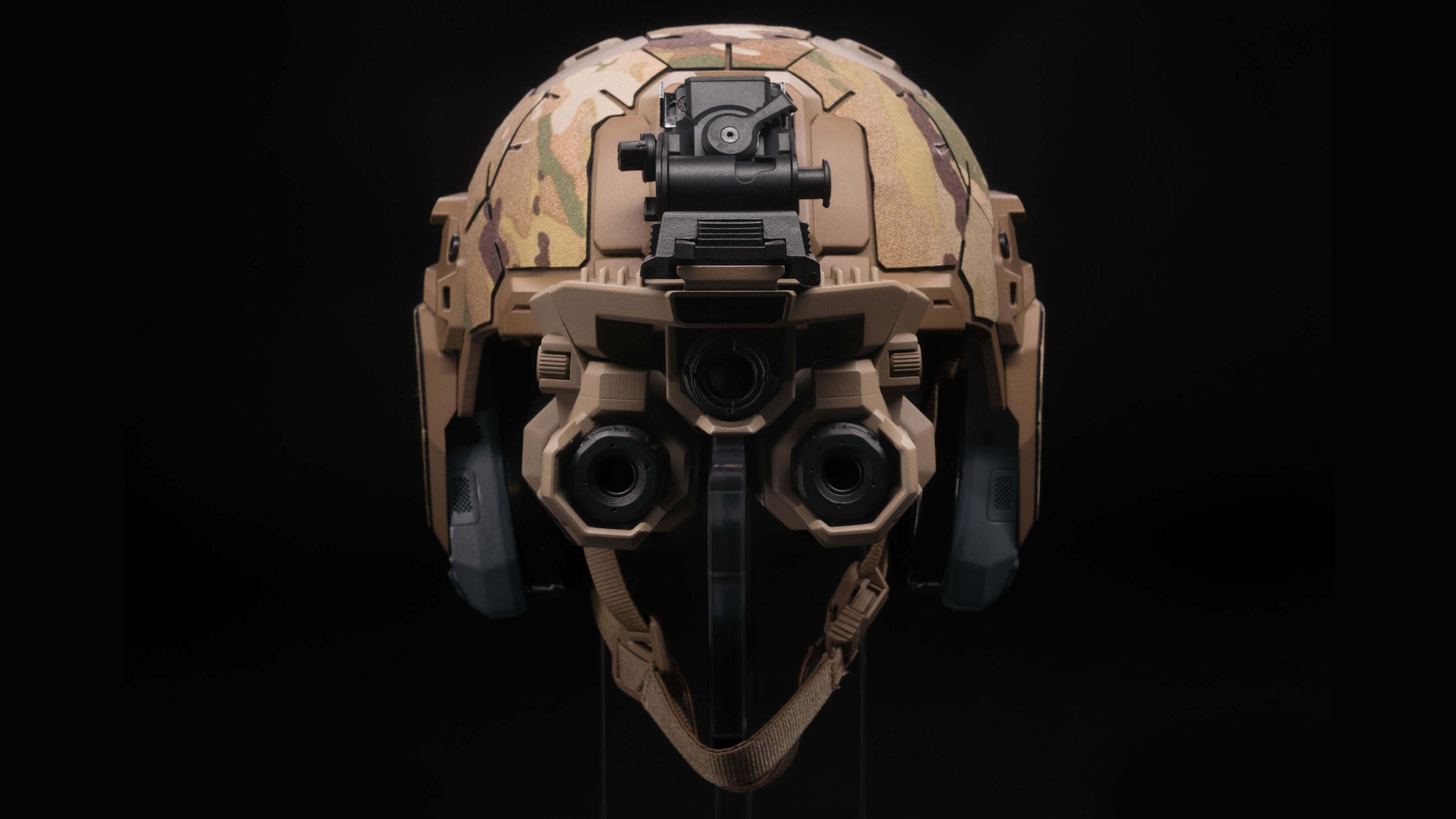
BLUF: Anduril and Meta have a vision for drones and soldiers to see together, share information seamlessly, and make decisions as one including ordering drone strikes via eye-tracking and voice commands.
The glasses will overlay certain information onto a soldier’s field of view.
This might be as simple as a compass or as complex as an entire map of the area, information about where nearby drones are flying, or AI-driven recognition of a target like a truck.
The soldier would then speak to the interface in plain language—for example, to order an evacuation for someone who’s been injured or to plan a route taking into account which areas are off limits.
LLMs will be used to help translate a soldier’s speech into commands the software can follow. And the engine for it all will be Anduril’s software Lattice, which incorporates data from lots of different military hardware into one picture.
If all goes to plan, commands might not even require speech; the soldier could instead communicate through tracked eye movements and subtle taps.
The company is testing a new system for digital night vision, which uses electronic sensors and algorithms to boost low levels of light.
Anduril is not the only one competing to develop smart goggles for combat. Rivet, which specializes in wearable sensors for the military, received a $195M prototyping contract the same time, and in March the Israeli company Elbit received its own $120M contract.
One big challenge for all companies is that the technology has to work in environments without ubiquitous 5G cell connections meaning that powerful computer vision and AI models will need to run locally on the device.
The Army isn’t expected to move its top choice for the Soldier Born Mission Command program into production until 2028, if it moves forward.
L3Harris Achieves Major Milestones With Latest Series of Rotating Detonation Engine Tests
BLUF: L3Harris has announced a major milestone in propulsion innovation with the successful self-funded testing of two advanced Rotating Detonation Engines (RDEs), demonstrating a significant step toward flight-ready systems
The first test focused on long-duration runs to validate the fundamental physics that determine operability - where and how RDE technology performs optimally.
The second test featured a full-scale RDE, demonstrating the ability to operate across the entire flight range of a relevant mission.
Rotating Detonation Engines represent a state-of-the-art propulsion solution, enabling air-breathing missiles to achieve greater range and efficiency compared to traditional systems.
Air-breathing propulsion systems offer a high-performance, low-cost solution capable of meeting the most demanding mission requirements.
Red Cat Closes Acquisition of Quaze Technologies
BLUF: Red Cat, a provider of advanced all-domain drone and robotic solutions for defense and national security, announced it has acquired Quaze Technologies Inc, a Québec-based developer of wireless power transfer technology for unmanned systems, drones and autonomous machines.
Quaze will operate as an independent business unit, developing and scaling its wireless power architecture for integration across Red Cat’s Family of Systems.
The acquisition addresses one of the most significant remaining barriers to true robotic autonomy: power.
Most drones today still rely on manual battery swaps or precise, connector-based charging systems that are difficult to deploy reliably in harsh environments.
Quaze’s technology can be deployed across a wide range of environments and platforms, including vehicle-mounted systems, drone-in-a-box solutions, uncrewed surface vessels, fixed infrastructure and underwater charging stations.
Other Defense Industry News:
Anduril Introduces Voyager Gateway 1: Rugged Edge Compute for the Dismounted Operator
Scout AI raises $100M to build military AI models through real-world training at U.S. base

Shield AI Tapped for LUCAS Autonomy

BLUF: USW(R&E) tapped Shield AI to build its Hivemind autonomy software onto the Low-Cost Uncrewed Combat Attack System (LUCAS).
Hivemind will play AI pilot for the Shahed-like attack drone, enabling groups of drones to coordinate, maneuver, and adapt together to changing conditions in real time, based on warfighter input.
Shield AI plans to do a demo controlling a swarm of LUCAS this fall.
Shiled was tapped to provide the autonomy brains for the CCA program.
Hivemind has been integrated into Anduril’s YFQ-44A CCA, GA’s MQ-20 Avenger, Kratos MQM-178 Firejet, Navy BQM-177 test aircraft, and Airbus UH-72 Lakota helicopter.
With Hivemind, LUCAS operators will pretty much only have to worry about strike. The software will take care of the rest.
“LUCAS is about delivering affordable mass, but mass without coordination is limited in value. Hivemind is the AI pilot that makes that mass intelligent.” Brandon Tseng, Shield AI President
Related: Pentagon taps US firm for coordinated attack by intelligent, low-cost drone swarms. See also our #1 post on the Defense Tech and Acquisition Substack…
Five Companies win DoD’s Drone Dominance Small Drone Lethality Prize Challenge
BLUF: As part of its Drone Dominance initiative, the Pentagon has named five winners of a lethality challenge, a title that could place them ahead of other vendors in the race to snag deals to arm small drones.
WINNERS
Bravo Ordnance
Kela Defense
Kraken Kinetics
Mountain Horse
Northrop Grumman
In April, the DoW announced the Lethality Prize Challenge on Sam.gov, hoping to find payloads for Group 1 drones, those weighing 20 lbs. or less.
Solutions must be scalable to match the rapid growth of Drone Dominance platforms and cost-effective to enable mass production and fielding. At this point, the lethal payload system represents a significant portion of the total system cost; therefore, affordability and manufacturability are critical design considerations.
“We’re an 18-month old hardware startup. This is our first scaled product. The Lethality Challenge selection gives us a rail-locked pathway to thousands or tens of thousands of unit orders for this product, which has absolutely changed the caliber of discussion we’re having with investors, suppliers, other customers/partners, etc." Kevin Landtroop, Bravo Ordnance CSO
Our Take: We continue to be excited about the Drone Dominance program fueling rapid, iterative competitions among established traditional and new non-traditional defense companies. With the goal of rapidly producing hundreds of thousands of drones from many vendors, backed by billions in the defense budget, this is an exciting time for a crowded, growing defense sector.
Southern Border is a Sandbox for Counter-Drone Tech
BLUF: The U.S. Southern Border is a breeding ground for counter drone innovation. JIATF 401 invites industry partners to the border to show off their tech aimed at taking down adversary drones.
NORTHCOM is learning a lot from CENTCOM and attempting to apply those lessons to the southern border.
NORTHCOM has a lot of fixed and movable counter-UAS capabilities, but not anything that would follow a patrolling soldier.
“We tell all of the vendors, if you’re willing to bring it down to the southern border, we’ll put it to use. We’ll tell you if it works; if it does, we’ll probably buy it. If it doesn’t, we’ll tell you exactly what you need to work on, so we can buy it potentially at scale, and therefore we have hundreds of systems down there or components of systems that are the beneficiaries of lessons learned from other regions.” Gen Gregory Guillot, NORTHCOM/NORAD Commander
DIU Robotic Operation for Autonomous Delivery and Sustainment (ROADS) Prize Challenge
BLUF: DIU issued a new $30M prize challenge to integrate commercially proven ground autonomous capabilities to scale a modern fleet of vehicles.
The DoW manages 150,000 non-tactical vehicles, most are idle, analog, and human dependent.
The private sector s rapidly adopting digitally coordinated autonomous vehicle business models to increase utilization and improve safety.
DoW lacks a scalable pathway to integrate these commercially proven capabilities into its fleet operations—particularly in a way that aligns autonomy, dispatch, and real-time fleet coordination to deliver measurable operational impact.
The Department is seeking scalable, commercially derived solutions that integrate modern fleet management and SAE Levels 2+ to 4 autonomous vehicle tech to:
Increase NTV vehicle utilization through dynamic access and tasking
Lower overall accident exposure and improve safety outcomes
Reduce total NTV fleet size and cost per mile
Free service members from routine tasks to focus on higher-value missions
Communication Key as Microelectronics Program Enters Second Year

BLUF: DoW selected 26 projects from the Microelectronics Commons program’s first cohort to advance to year two, and getting the technologies across the valley of death depends on effective communication between the innovators and Pentagon leadership.
The program consists of eight regional hubs across the U.S. meant to expand the nation’s global leadership in microelectronics, accelerate domestic prototyping and grow the U.S.-based semiconductor talent pipeline.
The 26 projects selected for year two span six critical technology focus areas — EW; 5G/6G; AI hardware; secure edge/internet of things computing; quantum; and commercial leap-ahead systems — and represent all eight hubs.
“A point of emphasis for the program as it heads into year two is bridging the communication gap. The technologists and the innovation hubs working on these projects must be able to communicate their technological breakthroughs and their very dense technological understanding to DoW leadership in a way that can be exemplary and ingestible. There is a large understanding and language disconnect when it comes to low-level microelectronics, so the communication requirement, going from innovation to the DoW side and the DIB side, is key.” Eric Makara, Microelectronics PM in OUSW(R&E).
New EW Tech Can Help Unmanned Systems Operate in Anti-Access Areas
BLUF: Rafael Advanced Defense Systems unveiled STORM SHIELD, a miniature EW system for unmanned aerial platforms.
The powerful, lightweight EW system transforms unmanned operations, enabling self-protection, and against a wide range of threats.
The system continuously monitors the electromagnetic spectrum, detecting, analyzing, generating, and transmitting signals autonomously.
STORM SHIELD is built around an AESA transmitter architecture using solid-state R/T modules, paired with advanced DRFM-based technique generation and Digital RF Memory.
The system’s modularity also allows customers to customize configurations according to operational requirements. Whether installed on a manned fighter aircraft or an unmanned combat drone, Storm Shield can be tailored to support various mission profiles and threat environments.
DOD Wants ~$30B in FY27 to Modernize its AI Supercomputing Arsenal
BLUF: DoD is requesting $29.5B in FY27 for next-generation AI supercomputers and modernize the military’s computing infrastructure to power them.
The Pentagon aims to build out its portfolio of highly secure data centers, and ultimately centralize and scale supercomputing assets across the joint force through its new AI Arsenal initiative.
The department’s AI Arsenal initiative is an investment in foundational, government-owned AI infrastructure to maximize federal buying power and build the strategic advantage we need.
Though brief, the mentions of this new initiative signal potentially substantial upcoming procurement opportunities from DOD for AI hardware, cybersecurity, sensors and other associated military technologies.
The initiative includes the concurrent construction of a full portfolio of hardened, SCIF-accredited data center facilities across multiple sites and the procurement and installation of the initial fleet of state-of-the-art GPUs and AI supercomputers within the newly built data centers.
Draft Executive Order Would Set Deadlines for Digital Signature and Key Quantum Encryption
BLUF: The White House is preparing a new executive order aiming to spur federal agency migration to a post-quantum cryptographic standard under particular deadlines, as well as requiring covered contractors to take similar steps within the same window.
The developing order on post-quantum cryptography sets rigid deadlines for quantum-resistant cryptography updates, underscoring that contractors need to migrate to certain standards by 2030.
OMB would be tasked with issuing guidance and deadlines for transitioning high-impact systems to encryption standards intended to withstand code-breaking powered by an eventual fully operational quantum computer.
All agencies must migrate their high-value assets, apart from national security systems.
The draft would require all agencies to transition their digital signatures for high-impact systems and high-value assets to a PQC standard by Dec 2031, and to use post-quantum cryptography for key establishment by Dec. 2030.
Defense Manufacturing That Meets the Moment
During the 1940s, FDR called for the U.S. to become an arsenal of democracy. The nation delivered! American industrial output during the war was staggering.
Fast forward eight decades, and our manufacturing output and armament stockpiles are not so marvelous. China, first exceeded U.S. industrial output in 2009 and is now in a position to quadruple the output of the U.S. by 2030.
Pete Hegseth embarked on an Arsenal of Freedom tour, seeking to prompt a renaissance in the defense industrial base by revitalizing America’s manufacturing might and re-energizing the nation’s workforce.
He visited Divergent which invented a next-generation digital manufacturing platform where the same factory line makes supercars in the morning and cruise missiles in the evening. He said without companies like them, our warfighters won’t have the advantage in the next conflict.
The key to Divergent’s platform is a combination of AI-powered design optimization tools, industrial-sized 3D printers, and robotic assembly processes that drive output and preserve flexibility.
An easily reconfigurable process allows for maximum, modular output.
Digital manufacturing slashes part count, hacks away at development and production timelines, and minimizes component mass.
Capabilities like Divergent’s can’t just exist in a single factory in a single location. They need to scale up, and scale fast. Digital production lines need to be situated alongside weapons hubs, aircraft manufacturing centers, and depot maintenance facilities. They also need to be prepositioned to mitigate supply chain risks in key locations in Europe, the Indo-Pacific, and the Middle East.
Agile combat manufacturing, using digital design and manufacturing tech, can be built with small footprints to meet limited production requirements, either on an aircraft carrier, a forward operating base, or a supply convoy.
Our Take: We fully agree. Companies like Divergent are critical to rebuilding and modernizing the defense industrial base to produce at speed and scale. They can also address critical parts shortages that drive horrific readiness levels across many major weapon systems. DoD acquisition professionals must aggressively integrate digital engineering into most weapon systems to optimize designs, production, and integration. PAEs and SAEs must work closely with operational commands and industry to shape agile combat manufacturing strategies. This will ensure critical parts are distributed where needed and a robust, resilient industrial base competes to provide new warfighting systems while keeping operational ones running.
Pentagon CTO Wants to Give Vendors Fast Decisions on Buying Tech
“The way I’ve approached this, knowing how smaller companies work, is fast yeses and fast nos. The worst thing for a small company is to be dragged through a multi-year process. Entrepreneurs, frankly, will appreciate that, because either they’ll double down on something else, or they’ll fix what they’ve got to meet your need. I think that kind of honesty is really important for the industry.” Emil Michael, DoW CTO
On the topic of what the Pentagon is looking for from industry, interoperability is something he’s trying to build into almost all future requirements.
He pointed to drone swarms as an exciting end result of interoperability, something he said he wants to achieve as he’s seen adversaries achieve such capabilities.
T-REX 26-3

In 90 days, R&E is back full-sprint into another TREX operationally relevant environment.
Primary Joint Operational Problem: Contested Logistics
Secondary Joint Operational Problem: L-SHORAD
Location: North Dakota
When: Late August
Need submissions in the next 2-3 weeks - First IPR is early June!
R&E needs tech that will enable sustainment in disrupted or denied environments.
Think unmanned delivery systems (multi-domain), advanced power solutions, manufacturing at the edge, and innovative ideas to increase Warfighter self-sufficiency.
This will be a small-scale event with only 12-15 technologies receiving an USW(R&E) Task Force RAPTR Warfighter Observation Reports, with another 12-15 technologies included for operational support.

The Senate confirmed Brian Birdwell as the new ASW(Sustainment) in USW(A&S).
Regulatory Friendly Fire: How ITAR Undermines the Alliance It Was Built to Protect
BLUF: The system that once anchored partner access to U.S. weaponry is now an obstacle. Modern statecraft — the interplay of industry, diplomacy, and defense — requires a fresh approach to regulating defense trade.
While the American arsenal accounts for more than 40% of global arms transfers, that share largely comprises exquisite systems for which the U.S. is unable to meet its own demand, let alone the needs of other nations.
U.S. regulations governing defense exports mute international demand and exacerbate the consequences of the Pentagon’s monopsony.
American companies are disincentivized from entering the defense market or from manufacturing to meet global requirements, taxpayers pay higher costs, the industrial base stagnates, and warfighters are left with fewer choices.
International Traffic in Arms Regulations and Export Administration Regulations are a maze of rules originally developed when existential concern about Soviet exploitation of American military capability dictated national policy.
That logic no longer applies. Those rules were designed for technologies the government initiated and funded for military use.
Recommendations
Consolidate regulations. The new rule would still comply with statute but would protect cutting-edge technology and remove ambiguous language along with onerous compliance mandates for allies.
Merge oversight under one interagency task force. This merger would eliminate duplicative functions, facilitate interagency collaboration, and reap cost savings.
Sharpen license applications. The current system is a bureaucratic nightmare, with six distinct agencies. A new system would feature mandatory response times, have standardized conditions for technology transfers, ensure consistency and simplify compliance.
Eliminate unnecessary obstacles to allied burden-sharing. Consolidate license requests for high-trust allies into a general license authorization.
Modernize DoW directives to reflect advances in technology. Consolidate oversight of disparate processes, while rewriting instructions controlling technology security to refocus on protecting the highest-end capabilities.
America has a unique opportunity to replace the ITAR with an optimized and secure system to provide military exports to its allies.
Less Talking. More Doing
BLUF: In my experience, the single biggest obstacle to faster Army software development is not technology, not budget and not talent. It is time spent doing everything except building and delivering software.
Stop defining everything before you build anything.
Push decisions down — and mean it.
Kill the compliance theater.
Build badgeless teams.
Use what exists.
Use AI to give time back to developers.
Talk to users — before, during and after.
Get out of the building.
The speed is already here.
Our Take: We recommend reading the entire article. It’s important thinking from a leader who is executing at scale and appreciates the nitty gritty challenges.

“If companies are looking to sell their tech to SOCOM, they need to have interoperability built in and the tech must be enabled by AI. It should be reducing the cognitive workload on mundane tasks. The more complicated that operational scenario is, the more complicated and complex the environment gets to be. That means there’s more software, there’s more tasks for the operator. Those mundane tasks have to be reduced, so that he or she can focus on the most important decisions.” Melissa Johnson, SOCOM’s Acquisition Executive
Special Operations Leaders Frustrated by Inability to Modify Their Own Equipment
BLUF: SOF leaders expressed frustration about manufacturers’ proprietary agreements that block them from making quick upgrades to military equipment.
The problem is especially acute for unmanned systems, they said, as technology is evolving far faster than the ability of SOCOM to modify its drones.
“The biggest challenge that that we face, at least within the majority of our formations, is the inability of the operator at the edge to have the authority to tinker. Specifically, I’m thinking of unmanned systems, mainly unmanned aerial systems. We are bound right now to the actual vendor of that system that has the proprietary capability. And so what we are looking for is an ability for our people at the edge to have the right to repair.” LTG Lawrence Ferguson, ARSOC Commander
“To add a small, long-range cruise missile to an aerial platform, I want to be able to iterate quickly on the software. Often working with the large vendors, there’s proprietary information to get into the mission computers we hit. We hit walls that small vendors that are trying to move fast and give us those capabilities, sometimes get outmuscled by the bigger vendors and they can’t break through.” Lt. Gen. Michael Conley, AFSOC Commander
Collaborative Autonomy Development Not Moving Fast Enough for SOCOM
BLUF: SOCOM seeks a network that doesn’t rely on equipment specific software to be developed quickly to enable rapid transfer of information across domains and systems.
The Army announced a hackathon alongside major defense companies meant to connect decades-old equipment they still uses with new, incoming technology under a common software architecture.
Collaborative autonomy, is a concept that tasks multiple autonomous or semi-autonomous systems to work in tandem to achieve a shared goal.
It requires a good mix of different systems to be able to operate and talk to each other and share data, share information so they can both benefit from that shared understanding of the environment, and then act on that information that they’re receiving from the environment.
While several government organizations, including SOCOM, are working out how to build a connected architecture, they’re still moving very slowly in that area.
“The ability to quickly integrate autonomous behaviors on multiple different platforms in multiple different domains, without it having to be specifically built for that platform, is something that I'd like to see move faster than we are right now.” David Breede, SOCOM Deputy Director of Acquisition
SOCOM Wants to Move Fast on New Tech
BLUF: Speed is one part of SOCOM’s strategy for fielding new technology. SOCOM has to be focused on ensuring it is giving special operators what they need. That can involve taking a more deliberate approach and spending months to years to develop the right capability when time has permitted.
Iterating fast needs to be done with a purpose, and if you have the time and space to do it deliberately and do it right, take the time and space to do it deliberately and do it right.
SOCOM needs autonomous technologies which can operate independently with a human in or on the loop to be able to share information with each other.
Special Ops Head Calls for Combat AI Reality Check
“Before unleashing violence, humans must be in the loop.” - ADM Frank Bradley
AI is changing and impacting and making SOF more efficient in many ways.
Of all the systems being employed on the battlefield today, very few if any, are actually using true AI at the edge. We have to be very careful about how we come to its employment and integration into the delivery of the battlefield.
Current trials and standards to validate emerging technologies will remain consistent and critical in the employment of AI in the future.
Bradley also demanded USSOCOM be filled with operators able to handle emerging technology types including AI. Echoing an old characterization of special operators, he said SOCOM needs “PhDs’ who can win a bar fight.”
Loitering Munitions, Launched Effects at SOF Week 2026
BLUF: Armed drones, loitering munitions and launched effects were all center stage at this year’s SOF Week expo here, with companies like Teledyne FLIR and AV showing off their latest systems.
Teledyne FLIR displayed Block 2 of its electrically propelled, quadrotor Rogue 1 lethal unmanned aerial system, which also recently went under contract for the Army’s Low Altitude Stalking and Strike Ordnance (LASSO) program.
AV and BlueHalo showcased their wares under a unified banner. They had on display its Mayhem 10 launched effect, capable of conducting ISR or precision strike missions. Mayhem 10 can carry a range of EW sensors as well as the Javelin Multi-Purpose warhead.
To Train for Contested Environments, SOCOM and SOUTHCOM Want More Ranges
“We have to develop ranges and places where we can test and evaluate, rehearse those highly choreographed maneuvers and projections in these new, contested environments. That’s not easy to do. We’ve got all kinds of regulations here in the U.S., and frankly, every nation does, to be able to control their electromagnetic spectrums and the interference that occurs.” ADM Frank Bradley, SOCOM Commander
“It’s remarkable that I think of a certain base, I know that there’s a civilian road in between, and anytime we want to fly, like a drone, like across the civilian road to the training area, we have to shut traffic down. We got to get special approval. We’re just struggling with that, especially when we want to train in that comms denied environment.” GEN Frank Donovan
Special Forces Joins Army’s Next-gen C2 Prototype Experiments
BLUF: SOF seeks to take advantage of NGC2 and integrate into operations.
Three areas of focus for SOF to fit into ongoing NGC2 efforts:
Sharing position location information with conventional forces.
Helping to evolve and inform the targeting cycle, spurred by changes in new tech and processes.
Looking at apps being developed and trying to help inform them.
“This is going to change everything. This is really big. I could see the digital kill chain already, just from the way MG Ellis was briefing on NGC2 and I knew that we needed to do something to get involved and understand how we fit into this new architecture.” MAJ Jaysin Williams, 10th Group SOF NGC2 Integration Director
Green Berets Tested Glider Drones That Can Slip Undetected Past Enemy Electronic Sensors and Resupply Troops

BLUF: As the US military grapples with the challenge of moving, communicating, and resupplying forces without giving away their positions through electronic emissions, glider drones are emerging as a potential option.
During Trojan Footprint in Romania and Macedonia, Romanian aircraft carrying a handful of US troops released two Grasshopper glider drones loaded with construction materials, food, and medical supplies in support of American Green Berets on the ground.
When roads, rivers, or railways aren't an option for delivering supplies to US troops in combat zones, or when troops are deployed in areas where aircraft can't land, a glider is a possible alternative.
Able to land within 10 meters of its intended target area, it deploys a parachute just before making a controlled nose-first impact.
Electronic equipment such as radios and communications systems emits signals able to be detected within the spectrum, and those emissions can reveal a military unit's location to enemy sensors and expose troops to harm.
Dzyne describes the Grasshopper as an expendable aerial resupply system purpose-built for contested and denied environments. The glider and long-range variants can carry up to 500 pounds of cargo.

Army Seeks Cheap Patriot Interceptor Costing <$1M
BLUF: The Army is pressing defense contractors to come up with proposals for a new interceptor for the Patriot surface-to-air missile system with a unit cost under $1M.
This is far cheaper (about 1/5th) than what the Army is paying for current-generation Patriot PAC-3 Missile Segment Enhancement (MSE) interceptors now.
As a supplement to existing interceptors, a lower-cost alternative would improve Patriot’s cost-per-intercept ratio, especially against lower-tier threats like drones and cruise missiles. The design could also be easier to produce at scale, helping address increasingly worrisome strains on stockpiles and supply chains.
Army’s CPE for Defensive Fires quietly put out a call for information about prospective new low-cost interceptor designs for Patriot.
The contracting notice itself breaks the $1M unit price target into four component groups, each of which the Army wants to cost no more than $250,000.
Low-Cost Interceptor All-Up Round (AUR) and Fire Control
Low-Cost Rocket Motor
Low-Cost Seeker
Fire Control and Flight Guidance Implementation
The Army is also seeking information about a potential contractor to serve as the central integrator for all of those best of breed elements, which could come from different sources.
“We are running a very aggressive Low Cost Interceptor (LCI) missile and missile sub-system competition. We will be holding an Industry Day in DC in the very near future. We are looking to generate the greatest amount of interest and participation across the entirety of the missile technology industrial base as possible! This effort is intended to result in multiple awards that can lead to multiple different capable yet affordable missile interceptor solutions!” MG Frank Lozano, PAE Fires
Army Integrates Tactical Drones into NextGen C2 Network
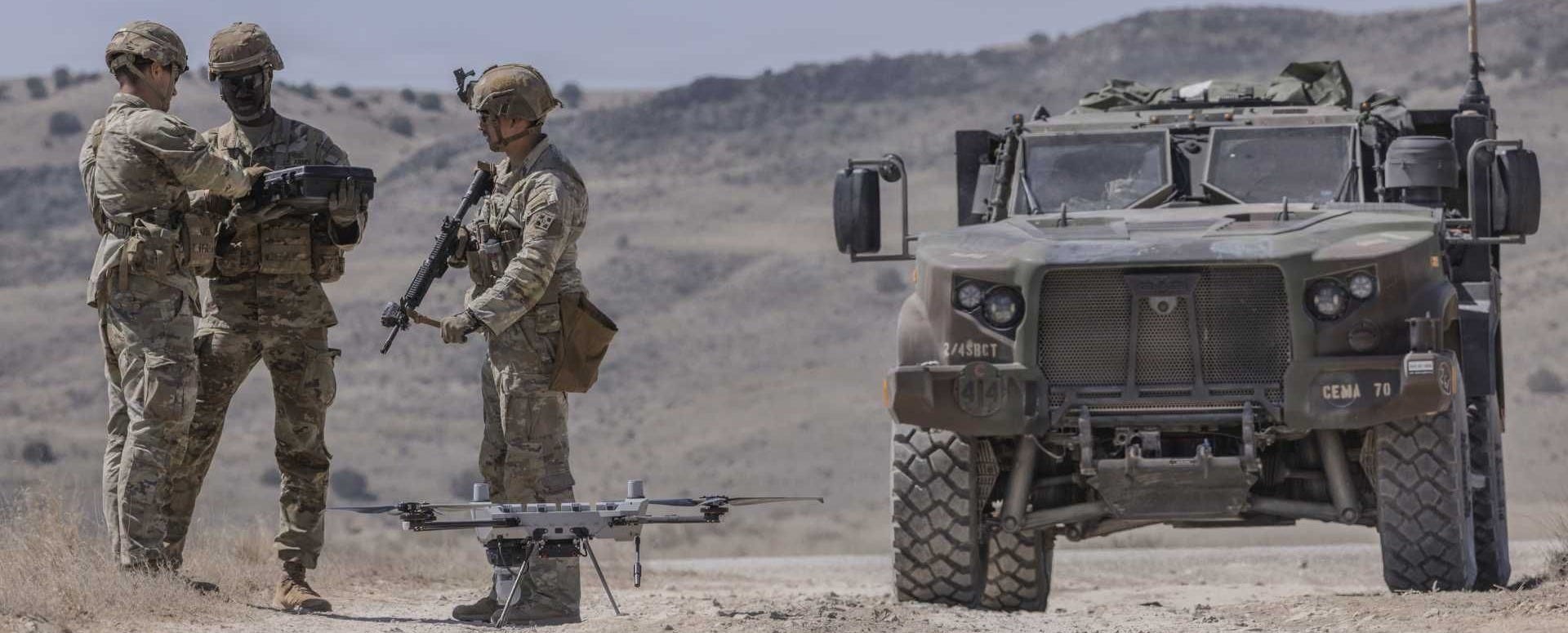
BLUF: Soldiers from the 4th ID used the C-100 UAS during Exercise Ivy Mass at Colorado’s Piñon Canyon Maneuver Site, demonstrating how tactical drones are being woven into the Army’s emerging Next Generation Command and Control (NGC2) network to accelerate battlefield decision-making and strike coordination.
The exercise underscored the growing importance of sensor-linked combat systems that can shorten the time between target detection and engagement during large-scale warfare.
The C-100 enabled units to identify targets, transmit real-time battlefield intelligence, and coordinate fires across dispersed formations, reinforcing the Army’s push toward faster and more connected combat operations.
The integration of tactical drones into NGC2 reflects a broader shift toward networked warfare, where survivability and combat effectiveness increasingly depend on rapid data sharing and sensor-to-shooter integration.
JIATF 401 Drone Defense Marketplace Broadens Allied Access to Counter-Drone Capabilities
BLUF: Army Secretary Dan Driscoll and key leaders from Australia, Poland and South Korea recently signed agreements enabling each country to procure counter-small UAS technologies through the Joint Interagency Task Force 401 drone defense marketplace.
International agreements with key allies are expanding access to counter-unmanned aerial system capabilities.
JIATF 401 is helping allies and partners rapidly acquire state-of-the-art counter-small UAS capability to respond to the evolving threat of drones.
The drone defense marketplace connects diverse solutions with an expanding network of users who need scalable, effective and interoperable technologies.
The initiative aligns with the Army secretary’s goal of providing partner nations with timely access to essential capabilities and highlights JIATF 401’s central role in advancing that mission.
“This partnership gives our allies and partners direct access to proven counter-drone technologies as we continue to expand the marketplace. Our mission includes working with international partners to aggregate demand for counter-drone capabilities.” MAJ Matt Mellor, JIATF 401 Lead Acquisitions Specialist
“We are continuing to expand the market for [counter-small UAS],” We understand that our allies and partners want to purchase American-made counter-drone technologies. The JIATF 401 marketplace helps aggregate that demand, ensuring our defense industrial base is ready to scale production and meet the growing needs of our coalition.” BG Matt Ross, JIATF 401 Director
Related: Army Plans to Launch Marketplace to Streamline US Weapons Exports to Allies
Army Acquisition Executive Brent Ingraham said Trump’s executive order prompted the service to take a look at its own FMS structure which he described as the most complex among the military services.
The new FMS marketplace will include systems that have already been approved for weapons exports and be designed in a way that participating countries can log on and quickly order capabilities.
The website will build off of and function similarly to the Army’s drone marketplace launched in March
“If there’s a $2,000 drone out there that they want to buy, we should not spend six months or a year going to an FMS process to figure out how to do that. There are certain things that we should be working through.” Brent Ingraham
Army Awards Northrop $325M Contract for RangeHawk Hypersonic Missile Testing Drone
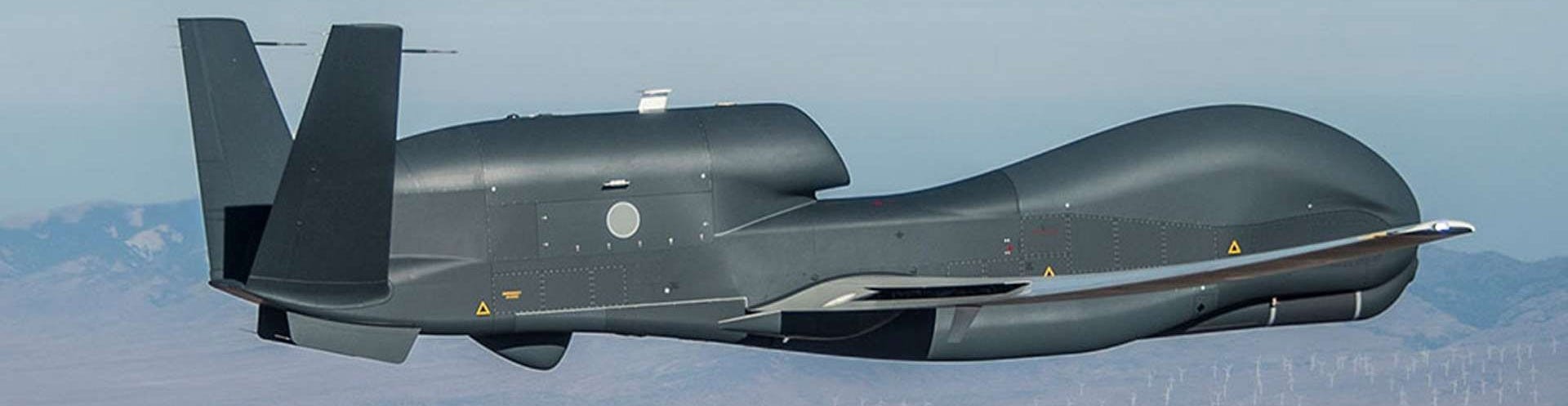
BLUF: Northrop Grumman has secured a $325.5M Army contract to develop the RangeHawk high-altitude uncrewed aircraft, a specialized airborne platform designed to track and collect data from hypersonic and long-range weapon tests.
The program addresses a critical weakness in U.S. hypersonic weapons development by giving the Army a persistent airborne sensor platform capable of following missiles traveling at extreme speeds beyond the effective coverage of fixed or ship-based test infrastructure.
RangeHawk is derived from the RQ-4 Global Hawk family, whose baseline characteristics explain why the airframe was selected.
The universal payload architecture is the most significant element of the new Army award because it addresses integration speed rather than only aircraft availability.
A conventional sensor installation can require aircraft-specific mounts, wiring, power conversion, cooling changes, software interfaces, electromagnetic compatibility work, and flight safety certification.
A modular architecture should allow the Army and the Test Resource Management Center to change telemetry receivers, antennas, processors, or optical sensors as test requirements evolve, without redesigning the aircraft for every missile program.
For U.S. hypersonic testing, that flexibility matters because Dark Eagle, Conventional Prompt Strike, air-breathing hypersonic missiles, rocket-boosted test vehicles, and thermal-protection experiments may all require different viewing angles, frequencies, bandwidths, and data formats.
Army Awards SBIR Phase 3 $248.5M IDIQ for AN/APX-128: Advancing Aviation Safety and Warfighting Capability
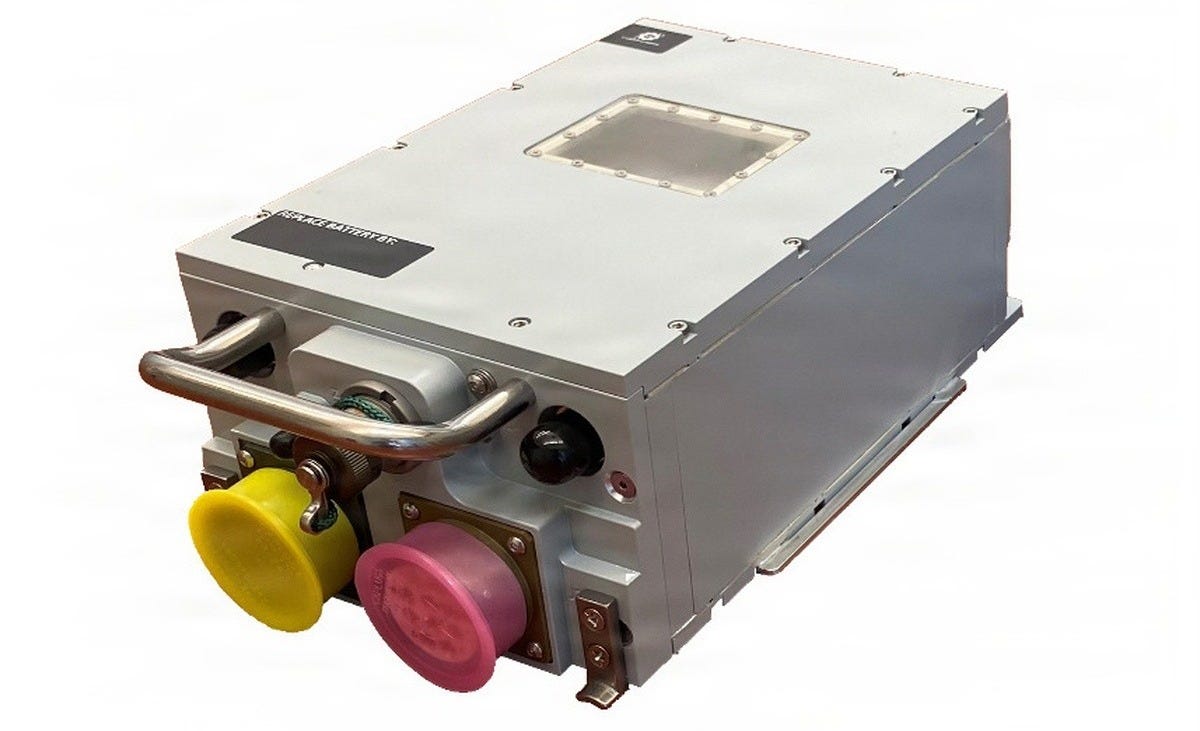
BLUF: CPE Aviation and ACC-APB awarded a 10-year, $248M IDIQ contract to Sagetech Avionics to produce the new AN/APX-128 Identify Friend or Foe (IFF) transponder for Army Aircraft.
The APX-128 improves airspace awareness for pilots and air traffic control by broadcasting position location information through Automatic Dependent Surveillance-Broadcast (ADS-B) OUT. It can also receive and display similar data from other aircraft via ADS-B IN.
Army Aviation’s Wasted Decade: Lessons for the Next Generation of Drone Integration
BLUF: Two decades after initial helicopter-drone teaming, Army Aviation has made little progress, and in 2025 ended a failed ten-year effort to advance interoperability between AH-64 Apache helicopters and RQ-7 Shadow drones.
The DoW seeks to unleash drone dominance and accelerate AI integration.
Army Aviation’s failure to modernize shows that the bottlenecks to adopting and diffusing emerging technologies go well beyond production, procurement, and Pentagon-level policy.
Real transformation demands a cultural shift away from the familiar, highly skilled, and empowered soldiers, and the willingness to experiment, fail, and say so.
Three dynamics explain the Army’s failure to advance manned-unmanned teaming, offering insights into the challenges the U.S. military faces in adopting unmanned and autonomous systems at scale.
Cultural inertia led Army Aviation to frame unmanned systems as accessories to manned aviation rather than a new form of combat power.
The Army underestimated the on-the-ground integration complexities of drone and helicopter platoons fighting together and the talent needed to make it work
The spirit of stubbornness throughout the ranks — encouraged and incentivized by the institution itself — offered few paths for honest reflection and actionable feedback.
Today’s acquisitions overhaul may deliver better drones, but the failure to institute meaningful organizational change is fundamentally a people problem.
The disparity between helicopter and drone crews showed the inextricable link between expertise and mission effectiveness.
The availability of agile, technically capable tactical-level soldiers will dictate the edge on the battlefield, especially as unmanned systems evolve.
With the Shadow, the Army viewed drone operators and maintainers as inferior to their manned counterparts, a mistake it cannot afford to continue making as it fields increasingly advanced systems.
The Army is cutting 6,500 aviation positions over the next two years. The Pentagon should financially incentivize downsized aviators, along with the many promising officers to move into drone billets rather than walk out the door.
Units need the freedom to discard obsolete tactics and shape future doctrine.
Money can buy better drones, but it can’t convince an institution to use them effectively. Only changes in how the force thinks, trains, and listens can do that.
New Army NVGs Promise Clearer Sight in Total Darkness

BLUF: More than two decades after the AN/PVS-14 changed modern warfare by giving ordinary infantry the ability to fight at night, the Army has chosen three defense companies to develop the new Binocular Night Observation Device (BiNOD).
The contracts were awarded to Elbit Systems of America, L3Harris, and Photonis Defense as part of the Army’s effort to modernize nighttime combat equipment while maintaining multiple production sources for future needs.
The new BiNOD systems are designed to fix many of these problems by using binocular designs instead of monocular ones. Having two tubes improves depth perception, gives a wider field of view, and helps soldiers stay more aware during night operations.
All three systems use white phosphor displays instead of the old green ones, creating black-and-white images. This change helps reduce eye strain and makes it easier for soldiers to see clearly during long missions.
Other Army News:
Army Integrates AEVEX Disruptor During Exercise Arcane Thunder 26
SRC Selected as Winner in Army xTech|Live Competition at eMerge Americas 2026
Army hosts Defense Critical Infrastructure summit to boost installation crisis response

Navy Selects 7 MUSV Designs to Enter Prototype Phase
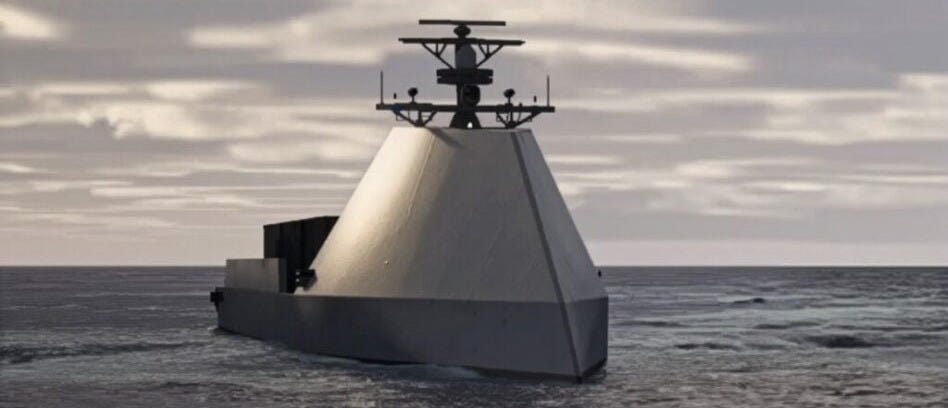
BLUF: The Navy tapped seven companies to develop Medium USV prototypes.
Out of about two dozen options submitted for the MUSV marketplace, the unspecified shipbuilders will develop vessels that will be tested against Navy requirements for the robotic craft.
Selected industry partners must successfully complete at-sea demonstrations to prove the maturity of their systems. After successful at-sea demonstrations prior to October 2026, the Navy plans to work with industry to have vessels available for Navy leasing or procurement in FY27.
The basic requirements include the vessel having the ability to travel 2,500 nautical miles at 25 knots in sea state 4 carrying a payload of up to 25 metric tons.
The payload needs to accommodate at least two 40-foot shipping containers and operate autonomously with the shipbuilder able to field an operational vessel by FY27.
Shipbuilders able to meet the requirements during the prototype phase will receive $15M and be eligible for follow-on production.
The Navy did not identify the companies. Companies ranging from Saronic, HII and Blue Water Autonomy have offered up models for MUSV work and made deals with shipyards to produce the hulls.
The Navy Needs Precise Mass and Here Is How to Get There
BLUF: Maintaining deterrence in the Indo-Pacific and around the world requires the Navy to change what it builds and how it fights. The current model of naval power cannot scale at the speed modern war demands. To build a larger and more capable fleet by 2030, the Navy should double down on investing in, fielding, and sustaining smaller attritable autonomous systems to support Indo-Pacific Command’s Hellscape concept, which will increase short-term deterrence and warfighting capabilities.
High-end ships are being consumed in sustained operations, munitions inventories are thinning, and replacement timelines for exquisite weapons stretch into years. America’s advanced surface ships are now profoundly vulnerable.
To complement the existing arsenal, the Navy should aggressively procure lower-cost, long-range munitions. For example, the Navy should follow the example of the Air Force by rapidly moving a low-cost cruise missile into production.
The Navy should maximize funding to develop and produce MUSVs.
Medium autonomous warships should be purpose-built to lower costs and increase efficiency, constructed in yacht yards, smaller shipyards where large speedboats or yachts are constructed, instead of larger shipyards, and made capable of installing vertical launch tubes for missiles or surveillance equipment.
Medium autonomous warships should become the Navy’s Collaborative Combat Surface Vessels, the surface fleet version of CCA in the air.
The Navy has 291 ships, well below the 355 mandated by the 2017 NDAA and even further below the 381 ships the Navy told Congress it needed in 2024.
Efforts to produce more ships through traditional shipyards and to repair the ones already deployed are struggling. Nearly every single U.S. Navy shipbuilding project is behind schedule by years and over budget.
There are 60 additional inactive facilities that once produced Navy ships, submarines, or oceangoing cargo vessels, 86 active smaller shipyards, and eight active yards capable of producing megayachts in the U.S.
The top priority should be scaling a medium autonomous warship as a new ship for the Navy.
The U.S. Navy is confronting a structural mismatch between the character of modern warfare and the force it has built to fight those wars. The era of precise mass is altering the economics and operational logic of naval power.
A naval fleet built exclusively around a small number of exquisite, capital-intensive platforms and weapons is increasingly brittle.
Investing in medium autonomous warships, lower-cost long-range munitions, and surface drones is not about affordably generating the volume and diversity of effects necessary to survive and fight in a contested environment. The Navy should treat these capabilities not as adjuncts to the existing fleet but as central components of future maritime power.
Navy SEALs In Mini-Submarines Teamed With Underwater Drones In The Works

BLUF: The Navy sees a future in which uncrewed underwater vehicles (UUV) work together with submersibles loaded with SEALs.
The Navy has already been conducting tests to explore how crewed-uncrewed teaming under the waves might work. UUVs could help extend the operational reach of operators riding in Seal Delivery Vehicles (SDVs) and reduce their vulnerability, but there are comms and other challenges still to overcome.
The main workhorse of the Navy’s SDV force is the Mk 11, which is just under 22 and a half feet long. It is operated by a crew of two and can carry six passengers.
The Mk 11, like its predecessors, can be launched and recovered from submerged submarines with specialized Dry Deck Shelters (DDS) attached to their hulls.
“In terms of the potential benefits of UUV-SDV teams, underwater systems like the SDV and UUVs afford reach underwater. So, if you can get somewhere in an SDV and then launch a UUV to go do something, then that would make you more capable.” CAPT Mike Linn, PMS 340
Navy Transforming How it Arms Fleet Amid Stockpile Concerns
BLUF: The Navy is on a mission to replenish its munitions supply in more affordable and more timely ways amid looming threats of future conflict.
Surface-to-air missiles are some of the biggest concern right now.
The Tomahawk Land Attack Missile, a long-range munition fired from sea at ground targets, is also perennially a concern, as it is the only proven missile strike weapon the Navy currently has with decent range and known performance.
The Navy is rolling out a new munitions strategy built on two pillars — maximizing production of capabilities the Navy currently employs, and rapidly expanding capacity by welcoming new industry partners.
The strategy’s first target is to stabilize the foundation of its industrial base through stable, multi-year demand signals, but in return, will demand that they invest their own capital to expand capacity.
The Navy is also making targeted investments in critical supply chain nodes to mitigate bottlenecks, particularly in energetics and solid rocket motors.
Indian Head is part of the Navy’s munitions organic industrial base — three sites within the DoN that produce either research-and-development products, prototypes or full-on munitions production capability.
The targeted investment is an infrastructure modernization effort called the Energetics Comprehensive Modernization Plan. The multi-billion dollar, three-phase plan stretches beyond 2030 and is a “historic investment going into the organic industrial base” to improve capability and capacity for solid rocket motors.
One approach the Navy is exploring is standardization. For example, the Navy is modifying its Mark 41 vertical launching system to support the Patriot missile, with the thought being bulk buys could achieve cost savings.
“The Navy is executing a fundamental shift in how we arm the fleet. To compete and win in an era of strategic competition, we must supplement our exquisite, high-cost weapons with affordable mass. We need deeper magazines, and we need them now.
The Navy’s strategy is how we build a deeper, more lethal magazine and a healthier industrial base to support it. It is a deliberate, multi-faceted and actionable plan designed to create an industrial ecosystem that is stable, diverse and optimized for the challenges of today and tomorrow.” VADM Seiko Okano, PMD to Navy SAE
MQ-25A Stingray Certified to Enter Low-Rate Initial Production
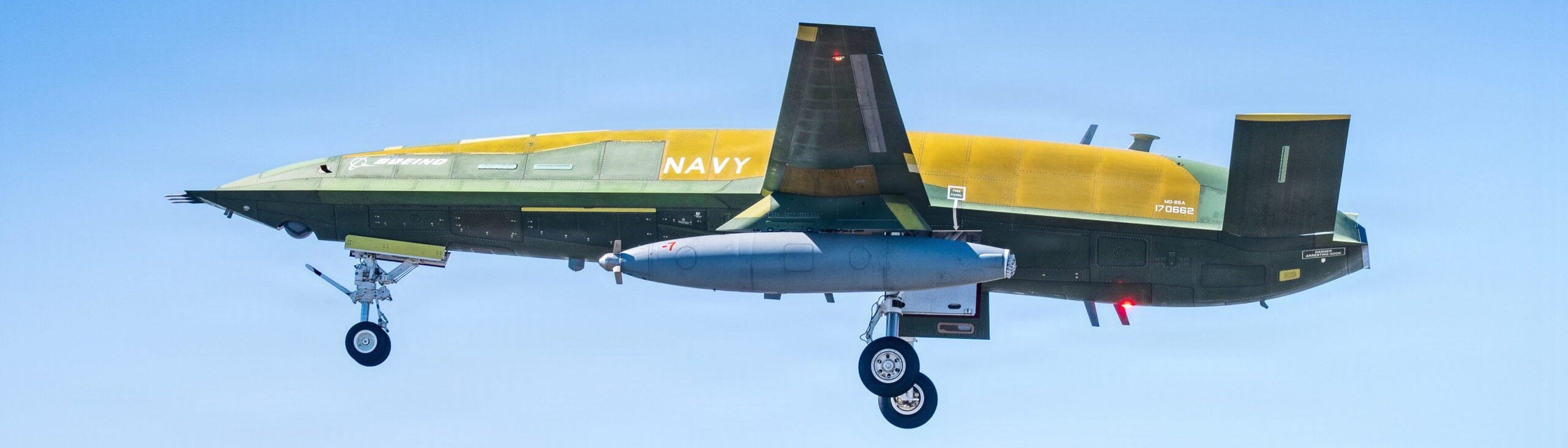
BLUF: The MQ-25A Stingray achieved Milestone C approval to enter the Low Rate Initial Production (LRIP) phase.
An LRIP Lot 1 contract for three aircraft is expected to be awarded this summer and include priced options for Lot 2 (3 aircraft) and Lot 3 (5 aircraft).
The MQ-25A program is expected to total $15.9 billion and cost about $209 million per aircraft.
Boeing did a pre-planned test flight of an MQ-25A engineering development model (EDM) last month.
The MQ-25A won’t deploy on aircraft carriers until FY29, three years later than previously projected.
Related: Navy’s MQ-25A Stingray secures Milestone C approval
Navy, Marine Corps Back Longer Amphib Readiness Cycles, Request More Ships

BLUF: The Navy is recommending a modification to the force generation model it uses for amphibious ships, following a report from the new Amphibious Force Readiness Board (AFRB) that aims to improve the ships’ readiness.
The Navy currently uses a 36-month plan for maintenance, training, and seven-month long deployments for amphibious vessels.
Acting SECNAV Hung Cao is on board with a new 56-month model. Two workup cycles, two integrated training cycles, and two deployments for every ship.
The proposal also includes increasing the number of amphibious ships to 40, up from the congressionally mandated 31 ships.
Navy Awards Raytheon Contract to Develop Next-gen Naval Radar Software

BLUF: Raytheon’s Advanced Technology team will develop software that enables each building block within a radar to operate independently, allowing a single radar to perform multiple missions simultaneously.
By treating each building block as its own software-defined aperture, the radar can rapidly adapt to changing operational needs and better share crowded frequency bands with commercial networks such as 5G.
Once the software development is complete, Raytheon will conduct a series of demonstrations to validate independent control of radar modules and associated capabilities such as multi-mission operation and spectrum sharing.
New PAE Strategic Systems Programs (SSP)
The Senate confirmed the promotion of RADM Douglas Williams to VADM and will become PAE SSP in June. VADM Johnny Wolfe will retire after 37 years in the Navy.
USS Nimitz Becomes the longest-serving Navy aircraft carrier
Commissioned in May 1975, the Old Salt claims the title after 51 years.


Marine Corps Tests Using Helicopter as Mobile Drone Command Center

BLUF: The Marine Corps is testing new ways to combine low-cost drones with traditional aircraft, having recently paired a UH-1Y Venom helicopter with an attack drone in a recent exercise.
Marines launched a Neros Archer FPV, drone from the ground before transferring control to operators aboard a helicopter orbiting miles away.
The move was a step towards integrating inexpensive drones into aviation ops.
The goal, according to the release, was to see if aircraft like the UH-1Y Venom and AH-1Z Viper could extend the reach of FPV drones, which let operators watch a live feed of UAS from a screen or goggles.
The Marines quickly expanded its FPV attack drone inventory, fielding more than 3,500 after officials greenlit integration of the new tech.
Our Take: While we applaud more manned-unmanned teaming, the Marines need to be cautious to not constrain unmanned CONOPS by tying it to vulnerable manned platforms. Extending range and options is great. Leveraging unmanned systems to avoid deploying Marines on the ground, sea, or air is even better.
Marine Corps Taps Rune for Project Dynamis
BLUF: The Marine Corps awarded Rune a contract for Project Dynamis, to accelerate modernization of C2 contributions to CJADC2 in the Navy’s Project Overmatch.
Dynamis is broken up into three core pillars: Assured C2, Battlespace Awareness, and C-C5ISRT.
Rune’s TyrOS predictive logistics is emerging as a pretty handy tool to bring that paper-and-pencil work into the AI era.
TyrOS, built to operate on everything from low-connectivity edge devices to the command level, uses predictive AI and tons of data to track and move gear, fuel, food, and parts around more quickly across domains than legacy sustainment systems.
Rune recently rolled out a frontline AI agent inside TyrOS called Saga, designed around sustaining and restoring a force to combat effectiveness (reconstitution), which the Marine Corps is also getting its hands on through Dynamis.
Amphibious Combat Vehicles Equipped With Cannons

BLUF: ACV-30 boasts the largest weapon in the Marine Corps’ ground combat vehicle fleet.
Completing the first of the cannon-equipped vehicles is a big milestone for BAE Systems as it continues to develop and deliver variants of the Amphibious Combat Vehicle.
Designed as an adaptable platform, the ACV-30 can receive software upgrades or minor hardware modifications, such as adding a sensor to become a mobile drone killer and otherwise stay relevant on the evolving battlefield.
They were able to shoot 30mm rounds at drones coming about 10 meters per second and about 800 meters away, with a three-round burst of proximity rounds.
Our Take: Hopefully everyone involved in defining the requirements, budget, and designs has seen The Pentagon Wars to avoid repeating past mistakes.

“For Epic Fury, perhaps the most valuable player was the unmanned MQ-9. While the number of strikes is classified, no other platform that’s even close to the MQ-9. We get a lot of utility out of them and don’t put our folks at risk.”
Gen Kenneth Wilsbach, CSAF @ HASC Hearing
MQ-9 Reaper Most Valuable Player of Iran War Despite Losses’
BLUF: Nearly every type of fighter and bomber in the Air Force’s inventory has been employed against Iran—F-15Es, F-16s, F-22s, F-35s, A-10s, B-52s, B-1s, and B-2s but it is the stalwart Reaper that the CSAF said has been an unsung hero of the conflict.
The aircraft’s heavy use against Iran has come at a cost. Nearly 30 MQ-9 Reapers have been lost in operations against Iran.
MQ-9s are active around the Strait of Hormuz to enforce the ongoing U.S. military blockade against Iranian ports.
In the heat of the air war, Reapers flew around a dozen orbits over Iran at a time, focused on striking or providing intelligence to other platforms to hit “dynamic targets,” such as missile and drone launchers, aircraft, and mobile systems.
The roughly 13,000 targets struck in Iran by the U.S. included more than 4,000 dynamic targets that were identified during operations on the battlefield.
MQ-9s also protected the weapons system officer of a downed F-15E Strike Eagle last month by securing the area.
Our Take: This just shows the fill potential of unmanned systems and why new platforms like the CCA should be scaled near-term to bring these types of effects that would be much more dangerous and unachievable with manned assets.
YFQ-42A Collaborative Combat Aircraft Returns to Flight with Software Fix After Crash
BLUF: General Atomics YFQ-42A CCA has resumed flight testing after a six-week pause that began when one of the drones crashed in early April.
A safety review conducted by the Air Force and GA determined the crash was caused by an “autopilot miscalculation for the weight and center of gravity of the aircraft.”
The aircraft was destroyed in the crash near an airport in the California desert.
The firm updated the drone’s software, and flights have resumed.
Air Force Wants Special Ops Plane That Can Be Built On the Fly
BLUF: AFSOC is testing whether it can take its new OA-1K Skyraider II apart, pack it inside a cargo jet and put it back together in the field
The single-engine, prop-driven OA-1K, a militarized version of the Air Tractor AT-802 crop duster, is built to give isolated special operations teams eyes overhead and firepower on call from rough dirt strips with little support.
Rapid disassembly and reassembly means, in a matter of hours, the aircraft can be loaded into mobility aircraft like a C-5 or C-17 for worldwide deployment.
AFSOC has pitched the modular Skyraider II as a cheaper airframe that can do the work of many.
The program of record is 75 a/c, but the Pentagon has cut the funded total to 53.
Related Article: Plan To Test OA-1K Skyraider II’s Rapid Deployability Outlined By Air Force Special Ops Command
Maximizing Airpower: Flexibility in Weapons and Platforms
BLUF: The Joint Force is not maximizing airpower combat options due to insufficient prioritization of weapons interoperability, flawed incentive structures and shortsighted resourcing decisions. There are some clear actions it can take to reverse course.
To realize maximum flexibility, the armed forces must rework incentives surrounding weapons compatibility and foster a cultural shift to prioritize effects for the Joint Force over singular platforms.
While moving to portfolios is a positive step, three further changes are proposed:
the current approach to platform prioritization when equipping new weapons on aircraft
fully fund and enforce modular open system compliance
increase aircraft-store compatibility engineering resources.
Both Iran and Ukraine conflicts have proven that dispersal and regular relocation of assets are necessary to counter rapid adversary targeting cycles.
Weapons flexibility also forces the adversary to make difficult operational and tactical choices, enhancing friendly force survivability.
New weapons integration usually prioritizes the newest platforms leaving legacy aircraft behind the power curve - even though platforms like the F-16 are usually cheaper, faster and easier to upgrade.
Recommendations
PAEs should remove threshold versus objective platform designations and instead set general priorities, restructure funding and offer organizational accolades to incentivize weapons programs to field on any platform.
DoW go beyond requiring “maximum” use of modular open system approaches in memorandums to actual enforcement.
Fully fund standardized weapons integration systems, such as the Universal Armament Interface with mandatory weapon standard compliance.
Weapons programs should fully resource aircraft-store compatibility engineering with sufficient testing hardware and immediately seek emerging AI-enabled modeling solutions to speed timelines and reduce cost.
Our Take: These are great recommendations to accelerate adaptability.
Air Force’s Next-Gen Combat Drones to Get GE426 Engines for Enhanced Performance
BLUF: GE Aerospace has a new Air Force contract to continue development of its GE426 engine, a propulsion system designed for autonomous combat aircraft that could fly alongside crewed fighter jets in future military operations.
The award moves the GE426 program into the PDR stage as part of the Air Force’s medium-thrust-class Autonomous Collaborative Platform initiative.
The company has already worked with Kratos Defense & Security Solutions to develop the GEK800 and GEK1500 propulsion systems.
Valkyrie Redux: Supercruising Bombers Could Viably Replace B-52s

BLUF: The Air Force just revealed that it was launching a study of a new heavy bomber that might replace the Boeing B-52 as part of an FY27 AoA.
76 B-52Js, will continue to carry nuclear-armed cruise missiles – the new Raytheon AGM-181 – as part of the U.S. deterrent triad.
If the adversary’s anti-access capabilities can push the B-52s 2,500 nautical miles back, sortie cycle times will be more than 12 hours.
This would impair the Air Force’s ability to deliver hypersonic standoff weapons in large numbers in reasonable mission timeframes.
A bomber burning ordinary jet fuel and built from familiar materials can cruise at Mach 2.4, three times faster than a B-52.
Air Force Wants to Develop Follow-on to ARRW Hypersonic Missile
BLUF: The Air Force is planning to kickstart two programs in FY27 aimed at developing more hypersonic missiles, including a follow-on to the AGM-183A ARRW and the new Air-Launched Ballistic Missile (ALBM) effort.
The ALBM program will focus on developing a new air-launched, long-range capability that complement the Air Force’s rapid-strike portfolio — which includes the baseline AGM-183A and upcoming HACM.
The Air Force said the weapon will feature “unique trajectory profiles to address distinct target sets.”
Air Force Asking for $1.5B to Fund E-7 in 2027
BLUF: The Air Force is working on a $1.5B budget amendment to restore funding for the E-7A Wedgetail in FY27.
“The request is working its way through the system right now. Our plan is to submit a budget adjustment to fund the FY 27 and, as we do the FY28 budget to lay in the production of the seven aircraft [which would include five production jets plus two rapid prototypes].” Secretary Meink
No Gap in USAF’s Close Air Support After A-10s Retire
BLUF: Lawmakers were told by Air Force officials that there will be no gap in the service’s close air support capabilities under its latest plan to retire the venerable A-10 Thunderbolt II at the start of the next decade.
The plan is for modern, survivable, multirole fighters like the F-35 Lightning II and the F-15EX Eagle II to replace the A-10 in providing close air support.
At least some lawmakers questioned whether these fighters are properly equipped to deliver sustained close air support as effectively as the A-10.
One congressional argument was that the A-10 is considerably less expensive to fly and can loiter above ground troops in need of support longer than an F-35.
Long-Range Nuclear Cruise Missile Going Well Entering Critical Phase
BLUF: The AGM-181 Long Range Stand-off Weapon passed its critical design review in 2023, and the Air Force said its performing “very well” in both cost and schedule.
The AGM-181 will transport the W80-4 warhead, which has a yield of up to 150 kilotons. It has a subsonic top speed, which is 530 to 690 mph.
LRSOs will also give B-2s and B-21s the ability to strike targets without overflying defenses surrounding targets.
Other Air Force News:

SDA Director Drops ‘Acting’ Label and Adds All Missile Warning to Portfolio
BLUF: Gurpartap “GP” Sandhoo was named SDA’s permanent leader and given a second hat as the Space Force’s PAE for missile warning and tracking programs.
As head of SDA, Sandhoo will continue to guide the transition of the agency’s Proliferated Warfighter Space Architecture from the demonstration phase to an operational constellation of hundreds of satellites in low-Earth orbit.
As PAE for all of the Space Force’s missile warning and tracking programs, Sandhoo now oversees a multi-orbit architecture of sensor satellites.
This includes SDA’s satellites, plus the Resilient Missile Warning and Tracking constellation in MEO and the Next-Generation OPIR program.
Related Article: SDA Director and PAE for Missile Warning and Tracking Announced
Our Take: With the PAE establishment, it would seem that SDA could be stood down and the PAE shop could be matured to move into a portfolio with a broader than SDA’s focus on proliferated LEO capabilities.
Space Force Study Recommends Third Heavy Launch Site
BLUF: A recent study of the Space Force’s launch infrastructure found that the service needs a third launch site to manage surging government and commercial launch demand.
The Space Force operates the nation’s busiest spaceports at Cape Canaveral Space Force Station, Fla., and Vandenberg Space Force Station, Calif.—both of which are running out of room.
Together, both the Cape and Vandenberg supported 175 launches in 2025 and are projecting that number to jump to upwards of 700 missions by 2036—a 300 percent increase over 10 years.
That forecast is based on projections from each of the major launch companies who have pads at the spaceport—including SpaceX, United Launch Alliance, and Blue Origin—as well as newcomers like Firefly, Stoke, and Relativity.
The two ranges have been working to optimize the space they have by reconfiguring their ranges, making their processes more efficient, and upgrading ports and roads to enable more activity.
“At a high level, what it says is we probably need another site that’s capable of heavy and super heavy launch capability, both from a resiliency perspective and just, even at the Cape, limitations on how much space we’ve got.” Secretary Meink
Space Force Testing Dual-Use Logistics Capabilities

BLUF: SSC is partnering with commercial industry to test dual-use refueling and augmented maneuver capabilities.
The refueling demo is with Astroscale U.S., and the augmented maneuver demonstration is via a contract with Starfish Space using its Otter space vehicle.
The companies will both own and operate the systems used in the two test runs
Starfish Space will mate a commercial service satellite with a government-owned asset, and doing the attitude control and doing the movement and maneuver of those space vehicles.
Related Article: Space Force accelerating work to operationalize on-orbit logistics tech
Space Force Awards $90M Contract to Rocket Lab for Two GEO Satellites
BLUF: Space Force has awarded a $90M contract to Rocket Lab for satellites to host payloads that tracks objects in geosynchronous orbit.
The satellites will carry a small optical sensor called Heimdall.
The two satellites will be built on the company’s Lightning bus, which has been adapted for the strain of the GEO environment.
The new contract covers up to five years of on-orbit operations, launch integration, and manufacturing.
Related Article: Rocket Lab wins first GEO satellite production contract from Space Force
DARPA’s Robotic Servicing Spacecraft to Finally Fly This Summer
BLUF: Northrop Grumman plans to launch its robotic servicing spacecraft designed in partnership with DARPA/
The Robotic Servicing of Geosynchronous Satellites (RSGS) program has weathered a rough road since initiated by DARPA in 2017.
The RSGS’s two highly dexterous robotic arms were developed by the Naval Research Laboratory and handed over to Northrop Grumman for integration.
The MRV, which sports a series of “ports” that can stow tools, or provide power and/or data, has been designed to undertake at least four types of on-orbit servicing missions:
inspect anomalies that appear in a satellite’s operations
assist with adjustments to a satellite’s orbit
correct mechanical problems
help install new payloads to upgrade capabilities.
The RSGS demonstration will get underway about a year after launch, as it will take the spacecraft’s electric propulsion system 10 months or so to get to GEO.
The Mission Extension Pods will provide propulsion to extend the life of the client satellites that have run out of their own power.
The pods are capable of powering birds weighing 4,400lbs for up to eight years.
Related Article: DARPA`s orbital robotic servicing satellite set for 2026 launch
SpaceX Launches First Starship V3

BLUF: SpaceX launched the newest version of its Starship vehicle for the first time May 22, completing most of the test objectives planned for the suborbital flight.
The Super Heavy booster fired 33 Raptor 3 engines for the initial ascent, although one of the engines shut down about one minute and 40 seconds after liftoff.
Two and a half minutes after liftoff, the Starship upper stage ignited its six engines and separated from Super Heavy.
Super Heavy was then scheduled to perform a “boostback” burn to prepare for a targeted splashdown in the Gulf of Mexico.
However, only a handful of engines ignited, and those that did shut down less than 20 seconds into the minute-long burn.
SpaceX made significant changes to both the Super Heavy booster and Starship upper stage and also built a new launch pad for the vehicle at Starbase. The upgrades are designed to improve the performance and reliability of Starship V3.
Space Force Expands Protected Tactical Satellite Communications
BLUF: The PAE for Satellite Communications and Positioning, Navigation, and Timing awarded a $398M fixed-price contract to Northrop Grumman to develop and build the Enhanced Protected Tactical Satellite Communications – Prototype, or Enhanced PTS-P. The prototype is projected for launch no earlier than fiscal year 2030.
Enhanced PTS-P is designed to improve satellite communications performance in the presence of jamming through advanced antennas and space-based processing of the Protected Tactical Waveform, or PTW.
It accelerates capability to the warfighter by utilizing an additional middle-tier acquisition period to iteratively deliver improved PTW satellite communications for earlier operational use on the path to full requirement satisfaction.
Every Country Should Understand Space as a Warfighting Domain
BLUF: Space power has achieved the decisiveness of air power, and space, like the air, should be regarded as a warfighting domain.
Classifying the domain as a warfighting one furthers a nation’s ability to coordinate its capabilities, resource these efforts and requirements, and signal sufficient resolve – paving the way for credible deterrence.
A warfighting designation serves to elevate the domain to that of air, sea, and land, recognizing it as an environment in which conflict is occurring already, not merely an enabler for other domains.
This in turn supports doctrinal legitimacy and helps justify space capability acquisition.
While enhanced cooperation is a critical step towards establishing credible deterrence, it is equally important to have language that matches.
The ambiguity of the ‘operational domain’ label is no longer fit for purpose. It plays down the reality of what is occurring today.
Our Take: This is well overdue. There needs to be a more serious discussion between peer adversaries on the rules of space with clear redlines and a deescalation regime. That discussion might not be possible until the reality is acknowledged about the dangerous path that both countries are on given that certain actions could ruin the space domain for future generations.

Pragmatic Solutions for Golden Dome C2
BLUF: The influx in funding and increased focus for Golden Dome has led many to naturally look to future, cutting-edge solutions. To move quickly, a pragmatic approach using a combination of existing and new technologies, augmented by AI is needed to build a defensive capability particularly when it comes to C2.
Less flashy than new radars or missiles, command-and-control systems are often overlooked and underfunded. That is not the case with Golden Dome.
While efforts are underway, the Golden Dome team faces significant challenges associated with developing a C2 system.
The first is uncertainty over the eventual Golden Dome architecture.
The second challenge is organizational given it drives changes to existing homeland multi-command, department, and agency, air and missile defense authority structures.
The third challenge associated with Golden Dome C2 is time. The administration has mandated very short timelines for fielding a capability, and the clock is ticking.
The fourth major challenge is geography.
The Pacific theater is often associated with the tyranny of distance but is only around 2,000 miles.
The defended front for North America is far longer stretching a vast distance of over 11,000 miles.
Given these challenges, delivering capability at the speed of relevance requires a pragmatic approach to Golden Dome C2.
Rather than building a system from scratch, the team should leverage existing air and missile defense programs of record.
Rather than invent a new, one-off structure, General Guetlein and his team should, to as great an extent as is possible, fall back on existing doctrinal command relationships and structures.
Our Take: We generally agree with this approach given the timelines but many of the current structures are not optimized for hypersonic threats and drone swarms so Gen Guetlein still needs to advance areas both in tech and CONOPS to ensure that Golden Dome progresses on the needed path.
Preparing CJADC2 Operations Through LVC Training and AI-Enabled Analysis
BLUF: CJADC2 is not limited by access to data. It is constrained by the ability to align, interpret and act on that data at operational speed.
As connectivity expands across services and partners, misalignment across systems, timelines and classification increases, raising cognitive load and execution risk.
As CJADC2 interactions scale across domains and organizations, the number of required training interactions exceeds what live assets can replicate.
Training environments must match this shift. Live, virtual and constructive environments address this gap by integrating simulated systems and entities with live operations, while AI enables decision-making at the speed CJADC2 requires.
LVC introduces synthetic tracks, threats and effects that are not available in live exercises.
The environment supports multi-domain and multi-partner participation without requiring co-location of assets.
AI enhances LVC environments through real-time decision support and post-event analysis.
Together, these capabilities allow organizations to train decision timelines, evaluate data exchange and measure performance across repeated events.
Lack of Counter-Drone Tech to Cover Troops Patrolling the Southern Border a ‘Concern’ for NORTHCOM Commander
BLUF: While U.S. forces deployed to the southern border employ several fixed and mobile counter-drone systems, the top general in charge of stateside defense said troops lack adequate technology for patrols.
While he did not specify if he meant hand-held devices, wearable jammers, or literal systems that would track drone threats this is not the first time that issues have been highlighted with patrol-oriented counter-UAS tech.
Troops had employed other individualized counter-drone systems, including portable devices, such as the Wingman and Pitbull systems, as well as Smart Shooter, a rifle-mounted optic meant to track and down UAS.
“It presents us a different challenge. We have a lot of fixed and movable counter-UAS capabilities, but not really anything that would follow a patrolling soldier, and that’s a concern of mine.” Gen Guillot

Sweden Chooses Unusual French Design for Its New Frigates

BLUF: Sweden has chosen its future surface combatant, the Luleå class, its largest in decades, in the shape of the French FDI frigate. The unusual design, with its inverted bow, won out against rival warships from the UK and Spain.
Sweden’s defense procurement organization, chose the French design primarily based on its advanced integrated combat systems and the maturity of the design.
Sweden factored the speed of delivery into the equation.
Sweden expects to receive one vessel per year starting in 2030.
Despite choosing an off-the-shelf foreign design, there will be industrial benefits for Sweden, with local defense contractors, in particular, Saab, involved in kitting out the warships.
Ukraine Tests Hornet Strike Drone Launched from Aerostat

BLUF: Ukrainian forces have tested an unusual tactic that could significantly extend the reach of the Hornet strike drone: launching it from a tethered aerostat at high altitude rather than from a ground-based catapult.
The test involved a Hornet manufactured by Perennial Autonomy being dropped from a balloon at approximately 8 kilometers altitude after the aerostat carried the drone 42 kilometers from its launch point.
Ukrainian sources reported that the drone consumed only 5 percent of its battery capacity during the aerostat transit, leaving almost its full energy reserve available for the powered strike mission.
Ukrainian operators claim the tactic could extend the Hornet’s operational reach from approximately 150 kilometers to around 300 kilometers.
Government Backing Future British ‘Defence Unicorns’ as New Contracts Awarded to Drive Innovation
BLUF: Thirteen British tech companies sign contracts to develop cutting-edge systems. They are set to receive contracts worth up to £4 million for quantum sensing and autonomous systems to secure communications, space manufacturing and synthetic training.
The new scheme gives accelerated contracts to small, innovative British companies who have done limited or no previous business with the Ministry of Defence.
The contracts underline the Government’s focus on moving at pace, getting contracts to innovative British businesses faster than traditional procurement routes allow, and getting innovative new kit into the hands of UK Armed Forces.
New Eurofighter Jet with Advanced Radar, More Upgrades Showcased, Flight Testing Soon
BLUF: Airbus showcased the Tranche 4-standard Eurofighter for the German Air Force.
German Air Force is expected to receive 38 Tranche 4-standard Eurofighters
The Tranche 4 Eurofighter incorporates the installation of a modern AESA radar system, which significantly improves target tracking, surveillance range, and electronic warfare performance.
Beyond radar improvements, the aircraft features updated avionics, enhanced mission systems, and a more advanced digital infrastructure.
Reports revealed that the new version of the fighter jet is yet to be flown for the first time so still some progress needed to see if timeline is credible.
Australia Kicks Off $11B Upgrade Program for Ageing Collins-Class Subs
BLUF: The government has formally kicked off the Collins-class submarine life-of-type extension program, marking the start of a major effort to sustain Australia’s undersea warfare capability as the country transitions toward a future fleet of nuclear-powered submarines under the AUKUS partnership.
HMAS Farncomb will enter the first phase of extension work at the end of the month, becoming the first of the Royal Australian Navy’s six Collins-class submarines to undergo the process.
Under the plan, Defence and ASC, Australia’s submarine sustainment partner, will retain and restore core components while continuing to upgrade key combat systems, weapons, and other critical capabilities.
Australia plans to invest up to A$11 billion over the next decade in Collins-class sustainment.
Redwire Awarded a Multi-Year Contract to Deliver Next Generation Penguin Mk3 Tactical UAS to NATO Country
BLUF: Redwire Corporation announced that it has been awarded a multi-million, multi-year contract by an undisclosed NATO country ally to deliver its Penguin Mk3 UAS as part of a modernization program for the country’s tactical UAS capabilities.
Other International News:

Recent Hearings
SASC Hearing DoD S&T Priorities | May 19
Emil Michael, USW(R&E) • Chris Manning, ASA/R&T • Dave Tremper, DASN RDT&E • Dr. Janet Wolfson, ASAF/E&PS
SASC Hearing FY27 Navy Budget | May 19
Hung Cao, Acting SECNAV • ADM Daryl Caudle, CNO • Gen Eric Smith, USMC
HASC Hearing National Security Challenges in Middle East | May 19
Daniel Zimmerman, ASD(ISA) • ADM Brad Cooper, CENTCOM • Gen Dagvin Anderson AFRICOM
HASC Hearing FY27 Air Force Budget | May 20
Troy Meink, SECAF • Gen Kenneth Wilsbach, CSAF • Gen B. Chance Saltzman, CSO
SASC Hearing FY27 Air Force Budget | May 21
Troy Meink, SECAF • Gen Kenneth Wilsbach, CSAF • Gen B. Chance Saltzman, CSO

How AI is Changing Modern Warfare | Lockheed Martin’s Jim Taiclet
Fox Business
Deal Team Six Exposed: Pentagon’s Wall Street Ninja Squad
Last Week in D.C.
Connecting the Factory to the Fights | Dr. Jen Gebhardt
Emerging Tech Horizons
America is Rebuilding the Arsenal of Freedom
Department of War
Military Human Spaceflight | Col (ret) Kyle “Puma” Pumroy
Aerospace Nation
The Warfighter is the Ultimate Innovator | Adam Fife
Drone Wars
America's LUCAS attack drones get HIVEMIND AI injection
Sandboxx
Inside the Pentagon’s Innovation Engine | Doug Beck
The Defense Brief
Drones, Deterrence, and the Future of Asymmetric Defense
Irregular Warfare
Navy’s AI-Powered Readiness Revolution Is Changing How Wars Will Be Fought
Fed Gov Today
SCSP XChange
Building AI-Ready Warfighters | Cameron Stanley, CDAO
Future of Autonomous Warfare: Drone Dominance | Maj Gen Kunkel
Defense Industrial Base | Mike Cadenazzi, ASW(IBP)
Air Force and Space Force at 300 | Matthew Lohmeier
U.S. Military at 300 | Congressman Rob Wittman
Defense Acquisition at 300 | Michael Duffey, USW(A&S)
American Military Technologies of the Future | Dr. Joseph Jewell, Chip Usher
Disruptive Capabilities in Defense | Jay Dryer, SCO Director
Why Machines Fail at Teaming | Dr. Eric Davis (DARPA)
Sources of Innovation at 300 | Steve Bowsher, In-Q-Tel

2026 NatSec100 Launch
SVDG • May 26 • New York, NY - We’ll see you there!
TechNetCyber
AFECA • Jun 2-4 • Baltimore, MD
MIL SATCOM USA
Jun 8-10 • Arlington, VA
Future Force Capabilities
NDIA • Jun 8-10 • Las Vegas, NV
Eurosatory
Jun 15-19 • Paris, France
Congressional M&S Leadership Summit
NTSA • Jun 16 • Orlando, FL
Army Summit
Potomac Officers Club • Jun 18 • Reston, VA
Federal Acquisition Conference
PSC • Jun 25 • Arlington, VA
Capital Hill Modeling and Sim Expo
NTSA • Jul 9 • Washington • DC
Training & Simulation Industry Symposium
NTSA • Jun 17-18 • Orlando • FL
See our Events Page for all the other events over the next year.
Join over 15,000 defense and industry subscribers to get our weekly recaps and thought pieces. Paid subscribers also get budget and legislative analysis and are valued supporters of our work.
SOCOM's FY25 budget still shows Reaper Shortfall of 12 airframes and no money for the attritable drone line. Paper drones don't clear rooms.
The premise of the Devine and Slocum piece is pretty weak - the problem is obviously not a lack of competition (because the sole source contractor has every incentive to maximize production at profitable margins, and also because downselects to single-source contracts can result in significantly more aggressive competition on price). The problem is a lack of capacity arising from uneven demand signaling - so the contractor has the incentive but lacks the ability to make more profit by expanding output. I totally agree that second sources should be required and enabled on programs but I would not characterize that as competition if the programs specs are defined and prices are already set.