

Headlines: Go Faster and Iterate
It's All About Lower Cost Capabilities and Distributed Operations


Welcome to the latest edition of Defense Tech and Acquisition.
The biggest stories across the Department and the defense industry this week:
Hybrid Electric Vehicles presenting new options for lower-cost strike and logistics
Development times are being slashed with smaller teams, accelerated prototyping and design for manufacturing
SOF Community launches new acquisition event with rapid awards and facetime with leaders
Army deploys hypersonic missiles in Pacific exercise and buys older Patriot missiles to expand magazine
Navy has new S&T strategy but still relying too heavily on exquisite systems.
Air Force builds air to ground expertise with new F-15EX units while looking for new cUAS tech.
Space Force needs bigger investments in launch infrastructure & SpaceX’s Starship sees 13th success
China building up its maritime militia and UK going all in on new CCA paired with legacy aircraft
Congress passes CR and NDAA but budget (including reconciliation) seems a trickier business.

Pentagon’s Next APFIT Round Will Prioritize Tech That Can be Made Cheaply at Scale

BLUF: The next cycle of APFIT will fund companies with production ready capabilities that DoW can quickly operationalize and be made cheaply at scale.
APFIT was designed to get in-demand equipment into the hands of military personnel years earlier than traditional acquisition timelines would allow, by rapidly providing large batches of direct procurement funding.
More than a dozen industry-built products awarded through APFIT spanning autonomous and counter-drone systems, EW, expeditionary manufacturing, resilient communications, contested logistics and other mission areas were on display at Tuesday’s Hill event.
“Things that succeed, we tend to find money for.” Rep. Ken Calvert
“This program created over $2B in awards that have been provided to over 100 small businesses. That’s an incredible achievement, and we should all celebrate that.” Rep. Betty McCollum
Our Take: We were proud to attend the APFIT on the Hill event to support this invaluable program, the Congressional and Department leaders who tirelessly support the program, and the innovative companies accelerating production of warfighting capabilities. This included a full size LUCAS in the Congressional offices. The biggest applause went to Devin Bohanan, the AFPIT Program Manager who has led this program from its beginning and his relentless drive is the #1 cause of APFIT success.
Related Article: Seatrec Awarded $30.8 Million in Department of War APFIT Funding to Accelerate Persistent Undersea Monitoring Capabilities
Executive Order: Securing America's Defense Supply Chains and Ensuring Domestic Acquisition of Critical Materials
BLUF: It is the policy of the U.S. that not only the finished equipment deployed by our military, but also the critical materials and components necessary to manufacture, maintain, sustain, and repair that equipment, are sourced domestically or from allies.
On Jan 1, 2027, SECWAR shall cease to issue waivers for the acquisition of covered materials under 10 USC 4872 except when the prime contractor provides the Department a formal mitigation plan accepted by the Secretary or designee that:
Identifies the source of the non-compliant covered material.
Documents exhaustive efforts to acquire complaint material or demonstrate not available.
Describes steps taken to remove non-complaint material from supply chain.
Establishes a strict projected timeline to complete mitigation plan.
Within 180 days, SECWAR shall develop a policy and implementation guidance to require all prime contractors and subcontracts at ANY tier to map and illuminate critical supply chains for DoW acquisitions that support national security.
Contractors must submit an indentured Bill of Materials traces all components, parts, equipment, software, and materials in their supply chain.
DoW shall, in response to the vulnerabilities, bottlenecks, and single points of failure identified by contractor acquisition information, map national security vulnerabilities as they relate to the sourcing of key raw materials or other links in the supply chain, using any tools and tech to include AI to assist in doing so.
Related: Trump authorizes use of AI for defense supply chain mapping and New executive order tightens defense supply chain waiver rules
Peace Through Secure Supply Chains
BLUF: The United States has the most lethal military on Earth. But even the most advanced weapons system is only as strong as the supply chains behind it.
The hard truth is this: America cannot dominate the modern battlefield if the Department of War does not know where its critical materials, components and software come from.
In a major defense program, those chains may run five or six tiers deep, while government visibility often stops at the first or second.
Congress recognized the danger in 10 U.S.C. 4872, which restricts acquiring covered materials from covered nations. But laws are only as strong as their enforcement and waiver culture, contractor convenience, and bureaucratic inertia have hollowed out those rules.
That era is over. The Trump policy is simple and tough: end the loose waiver process, expose hidden supply chains, vet the lower tiers, qualify trusted sources and hold contractors accountable.
Pentagon Willing to Work with Industry Over Critical Mineral EO Concerns

“What we need to do is commit to companies to say, ‘Look, how are you going to go ahead and resolve this problem through friendshoring, through domestic shoring, through changes in suppliers? And if there’s a gap, a legitimate gap, and you have a plan and you need a window to see you through to bridge that gap, that’s what we want to know. But it’s about the plan, it’s about the mitigation plan for the long haul.” Michael Cadenazzi, ASW(Industrial Base Policy)
FY28 Administration R&D Budget Priorities
Invest in Foundational Research to Drive Scientific Breakthroughs for Emerging Technologies
Physical Sciences | Chemistry and Materials Science | Mathematics and Computer Science | Engineering Sciences | Biological Sciences
Advance National Science and Technology Missions
AI | Quantum | Fusion | Space | Robotics | Semiconductors
Build the Foundation for a New Era of Scientific Discovery
AI as an Instrument of Scientific Discovery | Scientific Foundation Model Development | Scientific Data Generation for AI | Integration of AI with Scientific Instrumentation
Expand World-Class R&D Infrastructure for Broad Use
User Facilities for the S&T Ecosystem | Advanced Compute for Federal R&D
Leverage R&D to Strengthen Regional Manufacturing and Industry
Pentagon Adds Bombers to Drone Dominance Program
BLUF: DoW is adding a fifth element to the Drone Dominance Program by incorporating UAS that are reusable and can drop bombs on enemy targets.
Drones are reshaping the character of war. To meet this challenge, the DoW must provide ground combat forces with the tools needed to locate, close with, and destroy the enemy in close combat.
While one-way attack (OWA) is critical on the battlefield, additional strike capability is required to support warfighters at low cost, at scale, and from a supply chain that is resilient.
The department is seeking man-packable or light-duty combat vehicle-transportable UAS with a mission range of 15-30 kilometers.
The platforms must be able to carry multiple warheads and strike “single and multiple moving and stationary targets in succession.” Target sets could include enemy personnel, light armor, maritime surface or landing craft, heavy armor, or other assets.
The Pentagon wants bomber drones that can operate in all-weather and all-lighting conditions and be resilient to attempted jamming of communications and navigation systems.
In related news: DDP Releases an Updated Version of the Supply Chain Framework

Anduril Unveils Thunder Unmanned Attack Aircraft

BLUF: Anduril unveiled a new Group 5 helicopter-like attack drone called Thunder, specifically designed to multiply the combat power and increase the survivability of current and next-generation crewed attack and assault aircraft.
Anduril built the aircraft with Archer Aviation (the two first teamed up in December 2024) and a team of UK companies, including GKN Aerospace. Per the company, Thunder is the “defence-specific variant” of the platform—Archer will spearhead the commercial version.
Worth noting here that Anduril was one of four companies down-selected for the UK MoD’s Project Nyx to develop “loyal wingmen” for Apache attack helicopters back in May.
Anduril officials said the Thunder, which has been in development since 2024, will be able to fight alongside crewed aircraft, as part of an autonomous formation, or independently across missions.
On its weapons side, modular internal main and nose payload module bays will allow the Thunder to be armed with everything from precision munitions and EW payloads to air-launched effects, rockets and counter-drone munitions.
It could carry 10 air-to-ground missiles, 16 launched effects or 76 70mm rockets, in addition to a dozen counter-UAS munitions.
Related: Thunderstruck: Anduril unveils autonomous attack rotorcraft and Anduril’s new autonomous tiltrotor takes off vertically, carries 10-missile payload
Our Take: There is so much to love about this bad-ass design, autonomy, and mission impact. At a time when manned helicopters are highly vulnerable and A-10s are retiring, there are many operational missions over the last year this could dive into. Oh, and it’s a dual-use tech platform with Halo.
US Firm Unveils Halo Hybrid-Electric VTOL Platform for Cargo, Emergency Missions
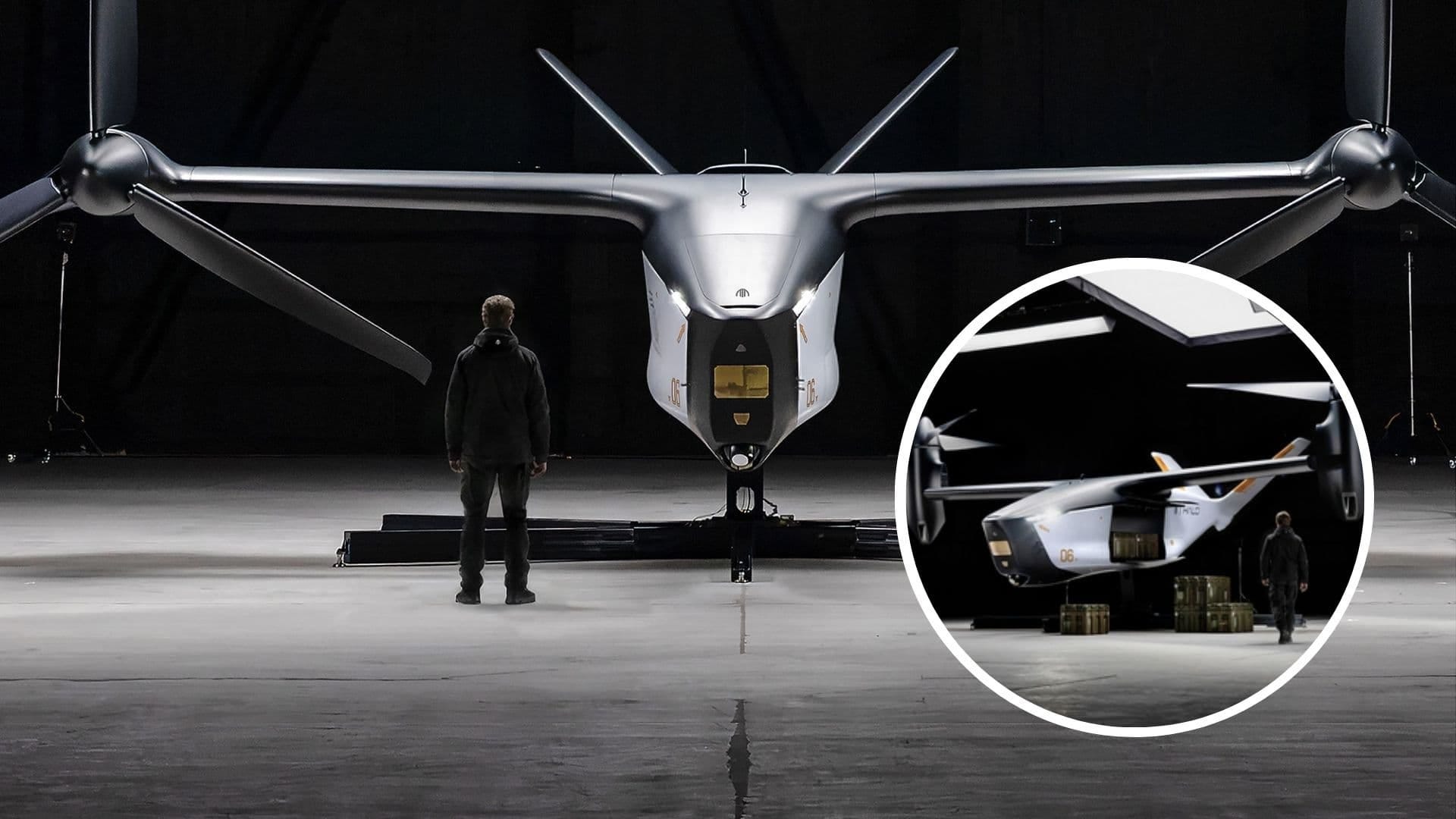
BLUF: Archer Aviation introduced Halo, the commercial version of its newly developed autonomous VTOL aircraft platform. The step is significant to diversify Archer’s lineup beyond passenger air taxis and enter the commercial logistics market.
Both aircraft share a common airframe, hybrid-electric propulsion system and core technologies, while being configured for different mission requirements.
The aircraft features a clean-sheet design and incorporates a series hybrid-electric powertrain alongside dual tiltrotors, enabling greater range, endurance and operational efficiency than conventional electric VTOL platforms.
MV250 Hybrid-Electric VTOL Combat Cargo Drone Unveiled
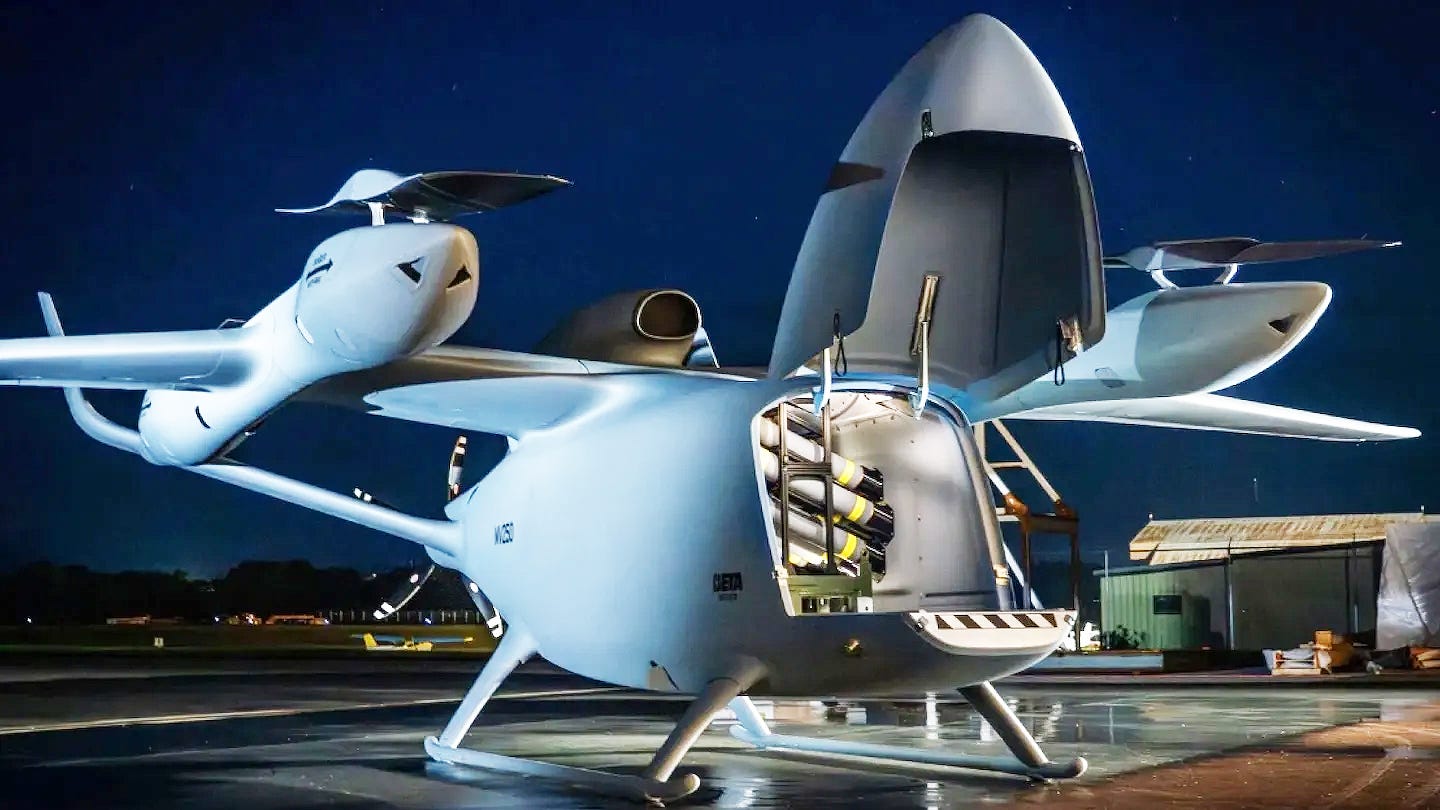
BLUF: BETA Technologies’ MV250 is a new uncrewed platform is designed to move cargo, deploy air-launched effects, and support dispersed military operations.
The new drone is a military adaptation of BETA Technologies’ Alia 250 eVTOL aircraft, which can carry five passengers or an equivalent load of cargo, plus pilot.
The uncrewed MV250 is primarily intended for cargo transport, with freight loaded and unloaded through an upward-opening nose visor. It can also deploy air-launched effects (ALEs) from a set of side-mounted launch tubes.
“The basic physics of the MV250 enable significantly longer range, higher speed, and a lower cost of operations when compared to tiltrotor and legacy platforms. I believe we should be offering our military the most robust and best equipment in the world to maintain superiority and thus deterrence.” Kyle Clark, CEO of BETA Technologies
US Unveils Reusable Microwave Drone-Killer That Can Take Down 50 UAVs Per Mission
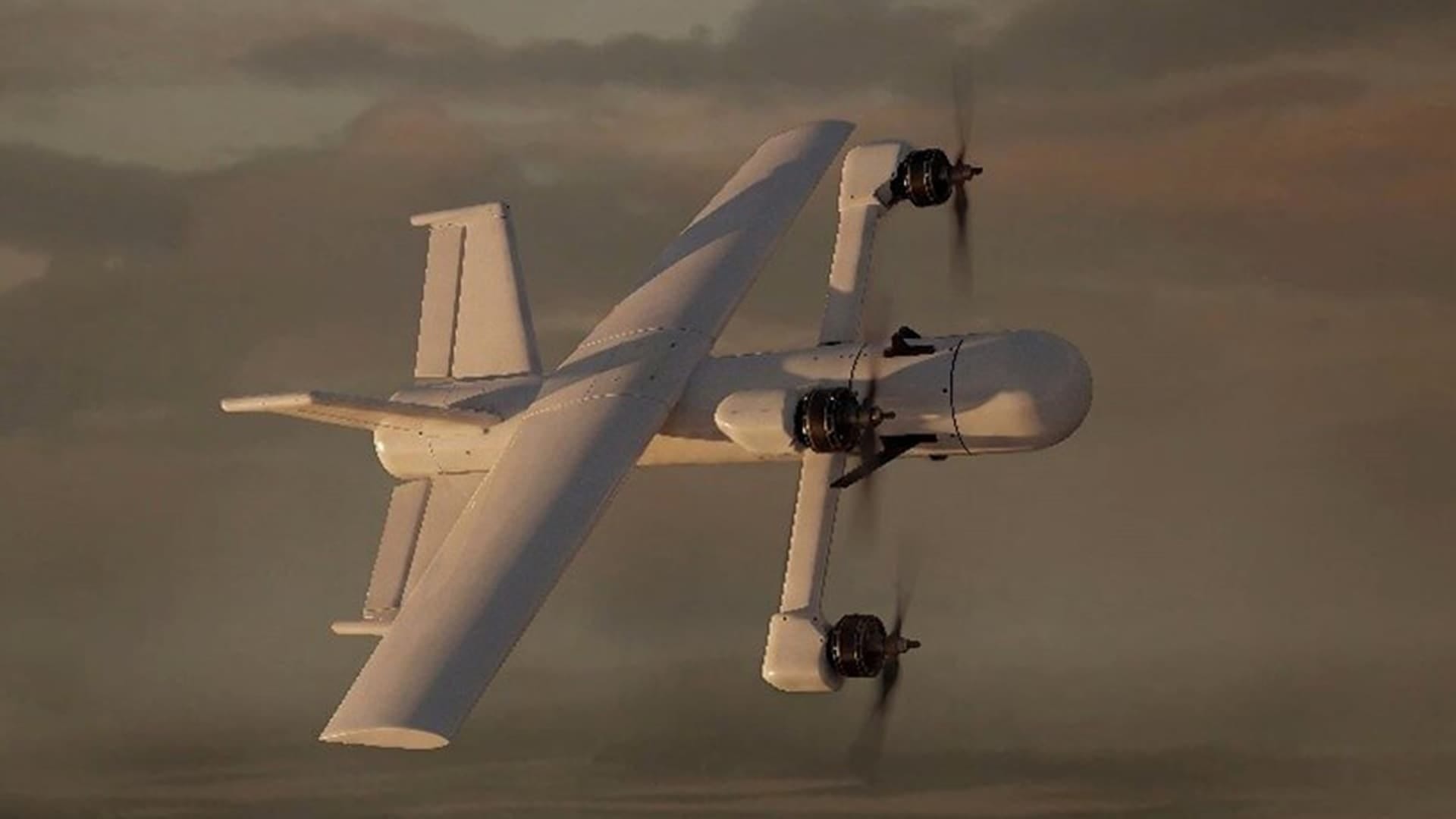
BLUF: Lockheed Martin recently unveiled Morfius X-rotor, a one-to-many airborne counter-drone weapon, designed to neutralize large swarms of hostile UAVs while keeping operating costs low.
It relies on high-power microwave (HPM) technology to disable multiple drones during a single mission.
The weapon can neutralize more than 50 enemy drones in one flight before being recovered and prepared for reuse. Its launch comes as drone swarms become a growing threat on modern battlefields.
It uses directed beams of electromagnetic energy to instantly disrupt the internal electronics and guidance systems of UAVs.
“Morfius sets a new benchmark for counter-drone capability, delivering a high kill rate while keeping the cost per kill low.” Randy Crites, VP and GM of Lockheed Martin Missiles and Fire Control Advance Programs
Nomad 100 Rotor-Blown Wing Drone Completes First Flight Tests For Runway-Free Ops
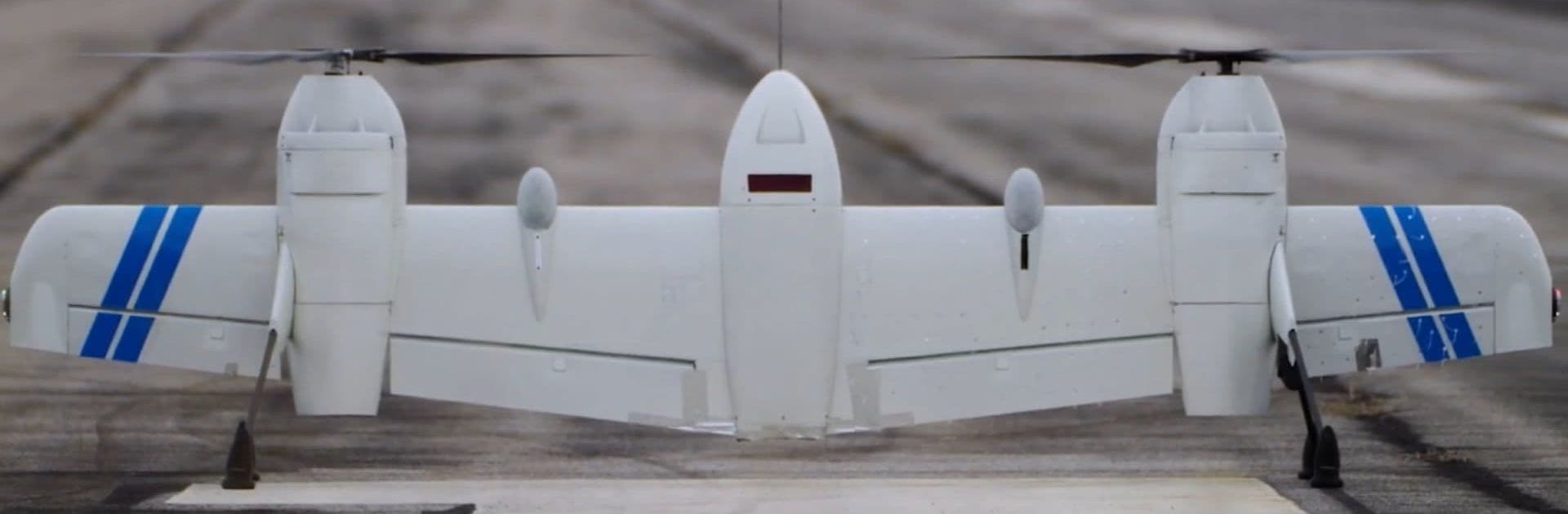
BLUF: Sikorsky has moved its Nomad 100 uncrewed aircraft into flight testing, clearing an early milestone in a DARPA-backed effort to develop next-generation vertical takeoff and landing platforms for military operations.
Rotor-blown wing technology powers the Nomad 100 through early flight tests before expanded government trials.
Part of DARPA’s Early VTOL Aircraft Demonstration (EVADE) program, setting the stage for a broader government-led test campaign.
The Nomad 100 targets missions where conventional aircraft face operational limits. Designed to operate without a runway, it can launch from remote bases, ships and rough terrain while supporting logistics, reconnaissance and other tactical missions alongside crewed aircraft.
Twin prop-rotors allow the aircraft to take off and land vertically before transitioning into wing-borne flight for greater speed, range, and endurance.
DARPA selected Sikorsky’s MATRIX autonomous flight system as the common autonomy package for all five aircraft participating in the EVADE program. The technology allows operators to command aircraft through higher-level mission objectives instead of manually controlling every stage of flight.
GE Completes Key Engine Test for X-BAT Aircraft That Takes Off Without Runways
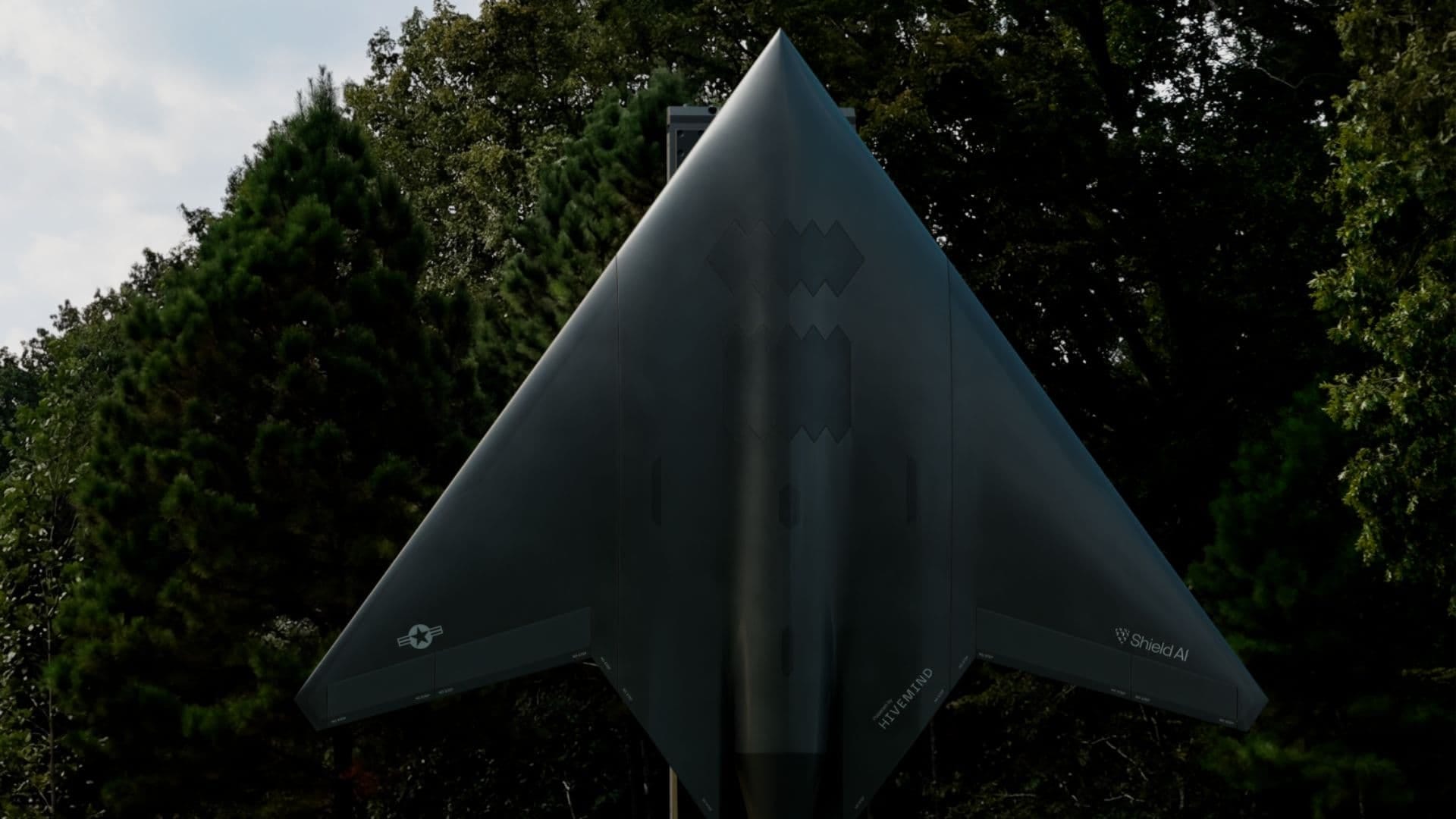
BLUF: GE Aerospace and Shield AI have reached a key milestone in developing the X-BAT unmanned strike aircraft, moving the project closer to vertical flight testing planned for later this year. The companies said they completed integration, actuation, and engine light-off tests of the Axisymmetric Vectoring Exhaust Nozzle (AVEN), which lets the aircraft take off and land vertically without a runway.
DIU Seeks Massed Modular Aircraft
BLUF: The Joint Force seeks a cost-effective, theater-range, massed, and modular UAS to provide a flexible, operationally-responsive, risk-tolerant option in the air domain.
The ability to employ many aircraft at once ensures a persistent overwhelming credible threat despite inevitable attrition.
Massed modular aircraft (MMA) are envisioned as in-theater reconfigurable platforms capable of long-range payload delivery. Crucially, MMA must retain the ability to be outfitted with a variety of payloads, including Full Motion Video (FMV) sensors, to execute missions that the MQ-9A performs today.
By deploying large groups of risk-tolerant MMA, the Joint Force can overwhelm enemy defenses even while experiencing numerous MMA losses.
Primary Attributes Sought include: Risk tolerance, sufficient munition and sensor payload capacity (>2,800 lbs), meaningful range, maximum interoperability and integration.
General Atomics-ASI CEO Throws Shade at Cost Target for New Drone
BLUF: General Atomics Aeronautical Systems will propose a new, clean-sheet aircraft for the Pentagon’s Massed Modular Aircraft project for a cheap hunter-killer drone, but the CEO of its aeronautics division is skeptical that competing companies will be able to achieve the lower end of the cost target laid out by DIU.
Earlier this month, the DIU released a solicitation for a drone capable of fulfilling the MQ-9 Reaper’s surveillance and strike missions, with a price tag significantly lower than the $30 million per aircraft cost associated with the Reaper.
The Pentagon wants a drone with a payload capacity of at least 2,800 pounds and a range of at least 2,300 nautical miles while carrying that load.
“I believe they put a silly goal in here for a low-end [cost]. Anybody that bids that number is very suspicious. If you want a commercial product, then don’t put certified bid requirements on the product. Don’t, if you want commercial pricing.” Dave Alexander
The USB-C Moment for Drones
Julie Bush and Nick Leak

BLUF: The true potential of aerial autonomy cannot be fulfilled if operators are stuck rooting around for the right dongle or packing six different backup batteries. No, we need a common foundation for how drones are powered.
America’s drone ecosystem is moving faster than ever. On an almost daily basis, new benchmarks are set for range, autonomy, sensing, fleet coordination, and manufacturing scale.
Every emerging technology eventually reaches the same inflection point: the product can only scale as far as the supporting infrastructure allows. Without common power standards, drones risk becoming another transformative technology constrained by fragmentation.
Tesla’s Charging System and USB-C are models that drones must follow.
Competition should happen where it creates advantage: autonomy, endurance, reliability, cost, and manufacturing speed. But, the fundamental necessity of keeping drones powered should not require users to manage a dozen different charging systems.
Industry needs a shared set of standards for charging and battery interoperability—a common configuration that reduces friction, improves safety, simplifies logistics, and instills confidence in users to leverage these systems in remote, safety-critical environments.
The path forward will require cooperation among manufacturers, standards bodies, and operators. It will require companies to give up some near-term control in exchange for long-term ecosystem growth.
The opportunities in front of us demand agility and interoperability, not a grab bag of incompatible systems.
7 AI Technologies Making Military Drone Swarms Smarter and Deadlier

BLUF: AI helps drones interpret sensor data, navigate contested environments, distribute tasks, communicate with other platforms, and reduce the workload placed on human operators. Here are seven AI-enabled technologies helping make military drone swarms possible.
Swarm intelligence and multi-agent coordination
Edge AI and distributed onboard computing
AI-enabled mesh networking and resilient communications
AI-powered navigation in GPS-denied environments
Multi-sensor fusion
Human-swarm teaming and AI mission management
AI-based target recognition and threat classification
How Startups are Reshaping the Pentagon’s Drone Industry

BLUF: The leaders in the rapidly evolving defense drone industry are nearly all privately held companies focused on small UASs rather than traditional weapons. Seven were founded within the past 13 years and eight within the past four.
During the 12-day event at Camp Grayling, Michigan, 49 companies competed across multiple mission sets. Officials evaluated their sUAS on performance, ease of use and each company’s ability to produce at scale.
By the end, 19 companies advanced to the next round of testing in August.
Rather than competing to build the same aircraft, many are developing different pieces of the same capability, from airframes and sensors to autonomy software.
The dominance of younger companies reflects a broader shift in how the Pentagon acquires technology.
A startup may successfully build a prototype, sell a handful of systems and convince the military it has a winning product. But when the government suddenly wants thousands, a small company or startup may lack the manufacturing capacity and capital needed to meet demand.
Drone Dominance is doing more than selecting companies for future contracts. The competition reflects a broader shift in defense acquisition by encouraging and almost forcing collaboration.
DIU Seeks Ground-Based Affordable Mass Prize Challenge
Through Ground-Based Affordable Mass (G-BAM), the DoW is seeking mature, affordable, long-range precision strike systems that can be demonstrated within 60-90 days, certified, and scaled into production within 12-18 months. Aligned with the DRPM-UxS mandate to field low-cost autonomous capabilities at scale, the Government is particularly interested in mature, proven solutions that deliver favorable cost-per-effect at operationally relevant ranges while minimizing the logistical, training, and sustainment burden on employing units.
Primary Desired Attributes:
Ground-launched, 600+ nm, payload > 35 lbs, preference > 100lbs, mission capable in DDIL and EW-contested environments, cost-per-effect < $500K with Sub $250K all-up flyaway costs at scale…
Our Take: It is refreshing to see cost per effect and unit cost in the desired attributes. No more gold plating. Achieve desired effects at an affordable cost.
PAC-3 Adapted Capability Effector Is Lockheed’s New Low-Cost Patriot Interceptor

BLUF: Lockheed Martin unveiled the PAC-3 Adapted Capability Effector (ACE), a lower-cost interceptor for the Patriot surface-to-air missile system. By leveraging the existing PAC-3 fire-control architecture and Integrated Battle Command System (IBCS), the company says the new interceptor will cost less than half as much as the in-production PAC-3 Missile Segment Enhancement (MSE) while providing a high-volume option for defeating aircraft, cruise missiles, and shorter-range ballistic missile threats.
A single PAC-3 ACE missile would cost around $2.5M, compared to roughly $5M for the PAC-3 MSE.
Lockheed Martin said the PAC-3 ACE is designed to provide allied forces with a rapidly fielded complement to existing Patriot interceptors.
Related: Lockheed Martin Announces Cheaper Patriot Interceptor Missile, Lockheed Martin unveils cheaper PAC-3 ACE missile defence interceptor and Lockheed Unveils a Patriot on a Budget and a Flying Drone-Zapper
T-REX Update
For the first time, T-REX is moving its entire experimentation enterprise to a new operating environment. T-REX 26-3 will execute across a distributed network connecting Camp Grafton Training Center, ND; Grand Forks AFB, ND; and Panama City, FL, requiring the team to sync people, prototypes, data, infrastructure, and operational effects across multiple geographically separated locations.
The primary Joint Operational Problem is Contested Logistics, to include Maritime CONLOG Security Support. Before TF RAPTR evaluates a single prototype, the team must first overcome the same challenges the event is designed to address: distributed operations, constrained movement, resilient sustainment, communications, and integration across multiple mission environments.
T-REX 26-3 will also support JIATF-401 counter-UAS priorities and advance Integrated Base Defense through the integration of diverse sensor suites, command-and-control capabilities, and directed-energy systems, including lasers designed to defeat aerial threat platforms.
TF RAPTR will evaluate and validate the baseline technical maturity and military utility of these capabilities, providing decision-quality observations that help identify which technologies are ready to advance toward rapid fielding and greater operational integration for the Joint Warfighter.
IARPA Launches Solutions Marketplace
The IARPA Solutions Marketplace connects innovative companies, researchers and technology providers with government organizations through a streamlined pathway for identifying, assessing and acquiring emerging technologies.
Other Defense Tech News:
NODA AI wins $10M deal to make Pentagon drones work as one team
New plug-and-play subsystem repairs laser weapons in minutes without fiber splicing
US, Ukraine Reach Breakthrough Agreement On Drone Cooperation

Boeing Mulls Building Many Ghost Bat Production Hubs Overseas
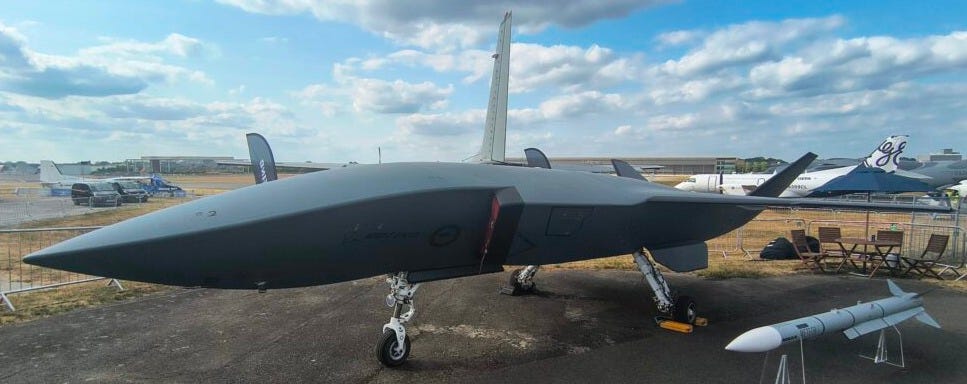
BLUF: Boeing is considering plans to build MQ-28 Ghost Bat production facilities in more countries, as it steps up a major push to secure international orders of the drone wingman from foreign leaders.
Engineering Speed Is Reshaping Defense Competition
Chris Jones, Bill Radzevych, Katherine Kajzer-Hughes, and Jessica Port
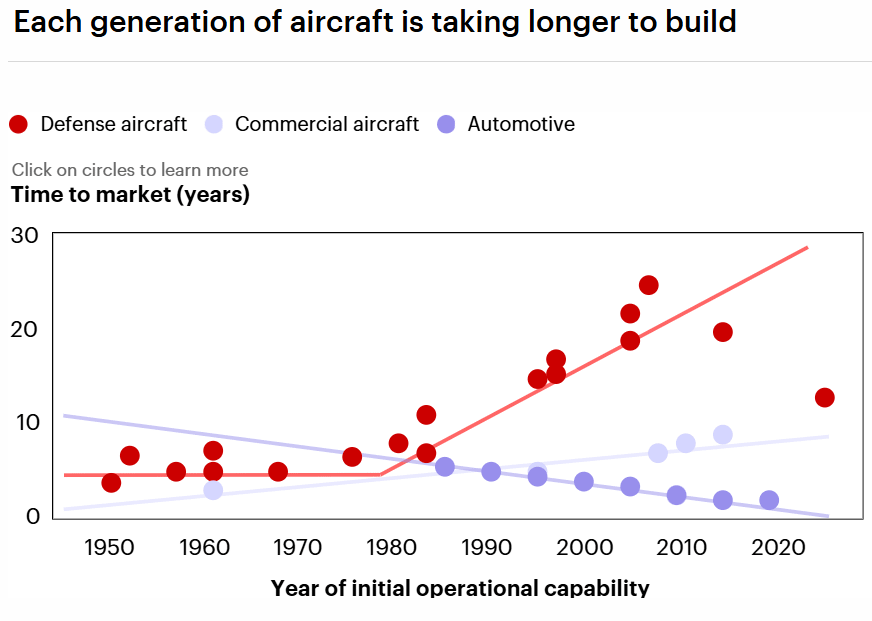
Major defense programs now take nearly 12 years on average to deliver an initial capability, while operational requirements are evolving far faster.
Many delays stem not from external constraints, but from how engineering organizations are structured and managed.
Leaders are slashing development time by deploying smaller teams, accelerating prototyping cycles, and designing for manufacturing from the start.
In many defense organizations, slowdowns accumulate gradually across the engineering system rather than from any single failure point. Engineering functions are typically optimized for control, not speed. Delays emerge from three reinforcing patterns.
Over-centralized decision making.
Functional silos.
Slow learning cycles.
Three changes matter most in compressing defense program timelines.
Build smaller, product-focused teams. The most effective primes organize development around products or subsystems rather than traditional functions.
Treat rapid prototyping as a core capability. Leaders approach development as a sequence of rapid test-and-learn cycles rather than a linear march toward a perfect final design.
Design for manufacturing, scale, and reuse from the start. Many development delays originate from decisions made early in design that create complexity during production.
The defense companies that lead the next era will be those that learn, adapt, and deliver capability fastest.
State of the Ramp: Aerospace and Defense Production Ramp Readiness
Scott Thompson, Aaron Cooke, and Ashley Ransom
BLUF: Aerospace and defense (A&D) industry is facing a defining challenge in scaling production to meet rapidly rising demand.
Defense budgets are injecting hundreds of billions to ramp the industrial base for what’s billed as a new Arsenal of Freedom against a backdrop of commercial aircraft backlogs stretching 10+ years and massive space economy growth.
This swell in funding and investment likely won’t be enough to meet surging demand unless broad swaths of the A&D industrial base are redesigned and expanded for this herculean task.
Key Findings
Confidence in ramp readiness falls off at 2x.
Forecasts bullwhip downstream.
Cost and capacity must be solved for together.
Playbooks still favor diversification; structural moves are the emerging frontier.
Capital is not evenly available.
Products, processes, and operating models should be designed for scalability.
Accomplishing this will require several imperatives:
Value chain restructuring: The aggressive pursuit of control, leverage, and/or partnerships in strategic production capabilities to improve demand responsiveness, iteration cycle speed, and resilience to shocks.
Program intelligence: The end-to-end visibility required to predict and manage risk and financial performance real-time in a complex value chain, using AI to harness proprietary data, supplier inputs, and API-accessible market signals.
Relentless execution: A bias for action and willingness to do things differently, driving a portfolio of high-ROI “capacity unlock” initiatives that both squeeze existing lines and fast-track capital projects coming online.
Ramp-ready operating model and integrated business rhythm: Enterprise governance geared to drive accountability, coordination across functions and value chain nodes, process discipline, and faster, better decision-making from the shop floor to the C-suite.
Other Defense Industry News:

SOF Community Puts Novel Acquisition Strategy to the Test During Accelerator Challenge
BLUF: DoW’s special operations policy shop has launched a new acquisition event designed to collapse the multi-year procurement process for emerging capabilities into a single day.
The ASD for SO/LIC hosted its inaugural Accelerator event on Friday, bringing together industry and government officials to rapidly evaluate and potentially fund commercial technologies.
Unlike standard industry days, companies invited to the event have the chance to immediately receive seed funding from the department the same day — opening doors for further development, prototyping and fielding.
The Accelerator initiative focused on nine operational challenges ranging from resilient communications to sensor payloads for unmanned systems.
After receiving over 700 submissions, the office ultimately invited 15 commercial companies to present their mature technologies in front of operators and senior leaders from SOCOM, CENTCOM and other organizations.
Pentagon Dangles $400,000 Salaries to Recruit Wall Street Bankers
BLUF: The Pentagon has spent the past few months amassing a small army of bankers, consultants and hired specialists. Their task is to vet contractors’ operations, invest in production lines and more quickly expand the U.S. military arsenal.
The OSC, which earlier this year was staffed by a core of five dealmakers, said it has added 30 more professionals in recent weeks.
It plans to hire 40 more over the coming months from an array of private-equity firms, private-credit firms and investment banks.
The Pentagon has also recruited mid-career investment professionals at business schools, persuading some to pause their MBA at schools like Stanford University and the University of Pennsylvania to take the government assignments.
PAE News
BGen Joshua Williams has been named the new PAE C3BM.

Army Partners with Industry to Alleviate Abrams Engine Supply Chain Woes
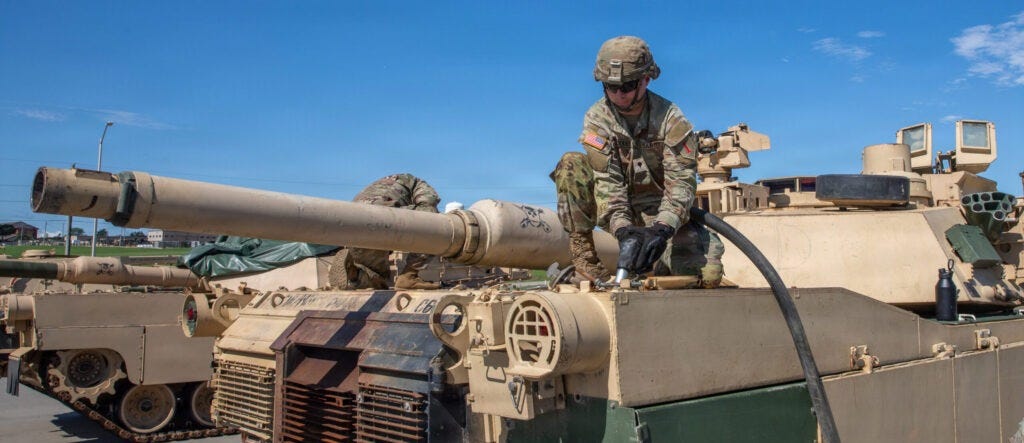
BLUF: The Army organized a hackathon to find new vendors that could help with the supply of 166 critical components causing readiness issues for the tank’s engine.
The Army is looking to industry to help resolve supply chain bottlenecks affecting production of its M1 Abrams tank engine, which reduces readiness rates.
The bottlenecks are mainly affecting subcomponents of the engine, the AGT1500, made by Honeywell Aerospace. Those parts come from subvendors who report to Honeywell, and supply chain issues can result in delays of months to a year.
As a result, troops have numerous Abrams tanks sitting idle unable to operate.
There are 166 critical and single source components directly impacting delivery timelines and fleet readiness for the engine. The Army owns the IP to 122.
“The primary reason we did the hackathon was to identify solutions to resolve some critical sourcing and manufacturing bottlenecks that we had with the engine, and ultimately help increase and maintain, more importantly, operational readiness for the Abrams platform.” Phil Labut, Logistics Specialist
U.S. Shapes Sea-Based Distributed AH-64 Apache Strike Architecture for Contested Pacific Operations
BLUF: Army AH-64 Apache helicopters are expanding beyond traditional land bases after one from the 25th Combat Aviation Brigade launched from the Wasp-class amphibious assault ship USS Essex during RIMPAC 2026.
The demonstration shows how the U.S. military is increasing the mobility and survivability of its attack aviation by enabling Apaches to operate from ships, islands and expeditionary sites, complicating an adversary’s ability to target a limited number of fixed airfields across the Indo-Pacific.
The deck landing qualification is part of a broader effort to turn amphibious ships into flexible aviation nodes capable of supporting Army attack helicopters when conventional bases are unavailable or vulnerable.
Combined with shipboard maintenance, joint live-fire training and evolving distributed operations concepts, the activity points toward a more resilient joint force able to project combat power across the Pacific while laying the foundation for future integration with autonomous attack systems.
Army Says Quality Defects Slowing Lockheed Hypersonic Missile
BLUF: Quality Defects were delaying deliveries Lockheed Martin Corp.’s hypersonic missile program and efforts were underway to improve the manufacturing process.
Accepting delivery of the remaining initial installment of the Dark Eagle — the US’s first hypersonic missile — would depend on understanding and remedying the causes for those defects.
Lockheed Martin said they are enhancing production and manufacturing processes to deliver faster.
The Army hired Boston Consulting Group about a year ago, crediting them with helping understand how to improve manufacturing and production processes.
US struggles in developing a homegrown hypersonic weapon, having spent more than $12B since 2018, while still lagging behind China and Russia in deployment.
At least $50B is still earmarked for spending on the Army hypersonic program and a complementary one for the Navy, the Conventional Prompt Strike weapon
“We’ve been working through some quality defects on the line. It’s not enough to address a defect we found in a particular missile. We have to understand what generated the defect on the manufacturing process.” LTG Frank Lozano, PAE Fires
Army Is Buying Older PAC-2 Patriot Missiles For The First Time In Decades
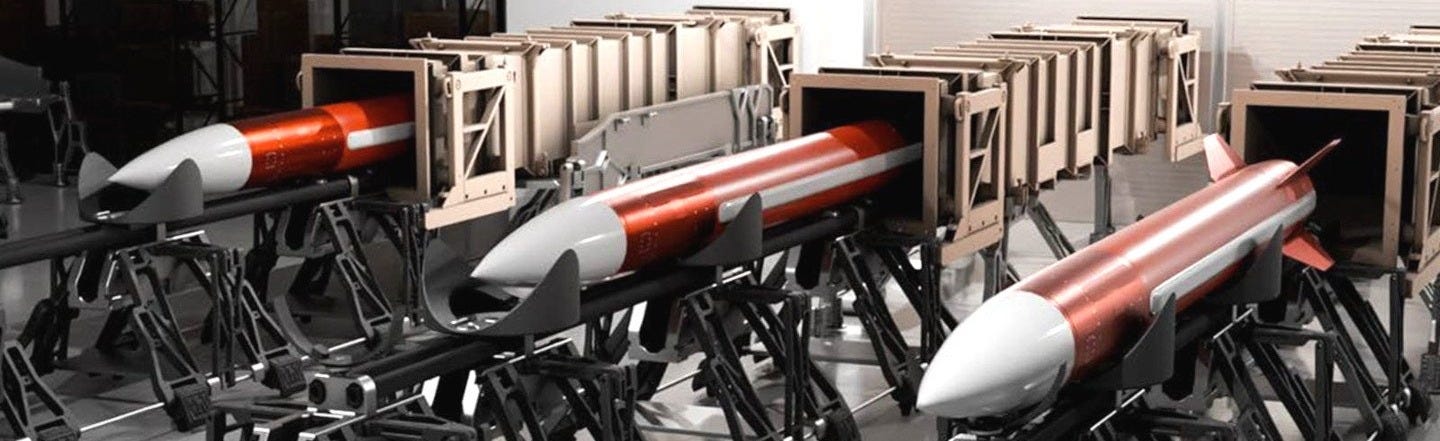
BLUF: PAC-2 GEM-T missiles are not generally as capable as their PAC-3 counterparts, but the Army needs all the Patriots it can get.
Raytheon has touted a new domestic order for PAC-2-series interceptors for the Patriot surface-to-air missile system. This is the first time the U.S. military has bought any new PAC-2s in more than 30 years, according to the company.
Patriot has been seeing a broader renaissance in recent years amid an evolving threat ecosystem, emanating especially from Russia and China.
Raytheon is the prime contractor for the Patriot system and the PAC-2 interceptor. Lockheed Martin is the prime contractor for the separate PAC-3 family of interceptors for Patriot.
Raytheon began production of the baseline Guidance Enhanced Missile (GEM) variant, also designated the MIM-104D, in the mid-1990s. Compared to earlier versions of the PAC-2, GEM had improved engagement capability against smaller targets or ones otherwise with smaller radar cross-sections thanks to a new seeker.
The U.S. military had not placed any orders for new-production GEM-Ts in decades. Members of the HASC notably questioned this logic just in June, in a report accompanying a draft of the FY27 NDAA.
Related Post: Stop Funding Duct Tape
Army Deploys Hypersonic Missiles in Range of China During Exercise
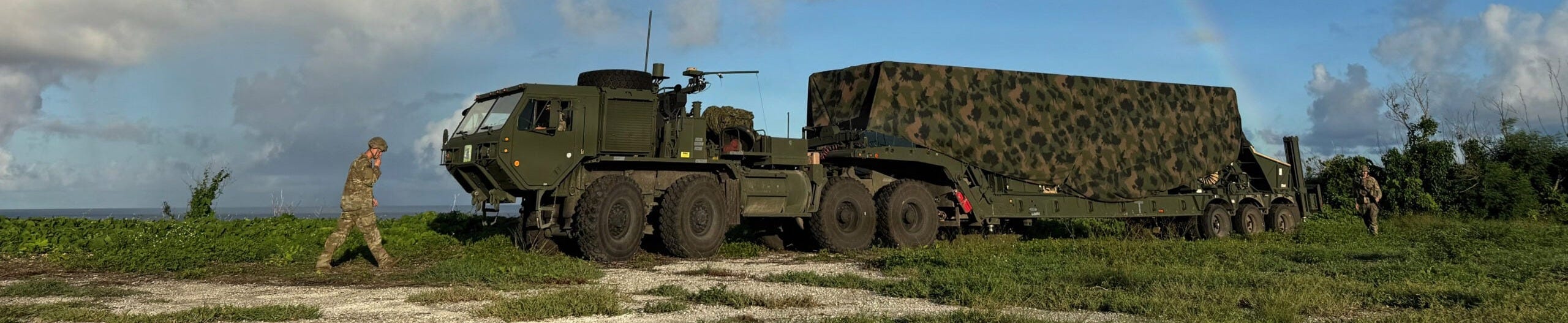
BLUF: The Army deployed its Dark Eagle hypersonic missiles for a multinational warfighting exercise last month in the Western Pacific.
this year’s Valiant Shield focused on operating against enemies on land, air and sea under a contested environment.
Conventional hypersonics have been highlighted by the Army and Navy as a capability that would allow commanders to rapidly respond to threats at extended ranges, such as those posed in the Pacific.
Other Army News:
Too many trucks, too many zeros: Army audit drive exposes flaws as Pentagon nears 2028 goal
Army Says Quality Defects Slowing Lockheed Hypersonic Missile

ONR Announces 2026 S&T Strategy for Navy, Marine Corps Tech Future

ONR must balance the urgent demands of current conflicts with the steady cultivation of long-term, paradigm-shifting inventions. Several powerful factors impact the mission:
The accelerating speed and complexity of technological change
Evolving character of conflict
Intensified strategic competition
Unprecedented global investment in defense innovation
Systemic barriers to technology transition
Balancing time horizons
This strategy is built upon an actionable approach summarized by FEED at Speed.
Focus: Concentrate S&T investments on “Only ONR” problems.
Explain: Clearly communicate the naval relevance and value of S&T initiatives.
Engage: Synchronize efforts across the defense ecosystem.
Deploy: Focus on measuring outcomes.
Speed: Leverage AI to accelerate scientific discovery; compress research timelines.
“In this important moment in time, we have embarked on a journey to refine how we do every part of our business — to make transparent what we are solving for, what bets we will place across our portfolio, and how we will measure whether and how they have paid off.” Dr. Rachel Riley, Chief of Naval Research (CNR)
How Technology and Acquisition Reform are Propelling Navy Submarine Production
BLUF: Navy and Electric Boat leaders say centralized acquisition authority, gaming-engine floor training, and targeted supplier investment are driving the submarine production rebound needed to hit Columbia and Virginia class delivery targets.
China’s expanding nuclear submarine production and rapid technological change are pushing the Navy and industrial base to modernize.
The DRPM Submarines and PAE Undersea reorganizations centralize accountability for on-time new-construction delivery and sustainment readiness.
Technical authority, contracting authority, and milestone decision authority now sit directly with the Director of Submarine Programs, cutting external bottlenecks and speeding execution funding to the shipyard floor.
By concentrating technical authority, contracting authority, and milestone decision authority directly within the Director of Submarine Programs, the Navy is better able to bypass external administrative bottlenecks, expedite execution funding and deliver rapid programmatic answers straight to the shipyard floor.
The Navy is funding supplier development to help vendors upgrade facilities and meet quality metrics, and deploying IT systems to give vendors advance visibility into long-term demand.
“The benefits of that reorganization are that it centralizes accountability…to support on-time delivery of new-construction submarines, and to support our sustainment side, ensuring that we have submarines that are ready.” Stephanie Link, Navy Deputy Director for In-Service Submarines
Navy’s Is Still Focused on Exquisite Systems
BLUF: The Air Force and Navy are focused mostly on exquisite capabilities while the Army is becoming the mother of innovation as it faces tighter budgets.
In the Pacific, soldiers have trained placing long-range fire systems on austere beaches from shallow-draft landing craft. The broader counter-targeting effort will be enabled by the Army’s desired 100 autonomous cargo boats.
The efforts towards those craft show that a land service is building a distributed, attritable capability in a theater the Navy owns. The Navy should take the hint.
The Navy has stood up PAE RAS with greater flexibility to foster innovation. Sailors are experimenting with and using unmanned systems in real exercises and operations. The doctrine and machinery to realize it are emerging.
The budget, unfortunately, tells a different story. Across the Navy’s new five-year shipbuilding plan, unmanned vessels account for <2% of the investment while the service launches a new class of nuclear-powered battleship that will absorb more than ten times the entire unmanned line.
The Navy continues to bias towards a handful of large, hard to produce platforms whose survivability is increasingly assumed rather than demonstrated.
More dollars and attention need to go to cheap systems produced enmasse.
The future fleet will not come only from shipyards. Part of it will come from workshops, software, and the operators closest to the problem.
Our Take: John spells it out clearly. The Navy isn’t funding RAS to the extent it should and the logistics piece to employ a novel fleet requires
Mothership Sought by Navy for Southern Command Operations

BLUF: The Navy is seeking a multi-mission maritime security vessel to “launch, recover, and support a mix of manned and unmanned air and surface platforms.
The Special Mission Vessel is envisioned as a versatile ‘mothership’ designed to significantly enhance maritime domain awareness and response capabilities.
These operations are crucial for conducting command and control, surveillance, and interdiction missions across vast stretches of the open ocean.
The Navy wants a steel monohull or catamaran that’s between 300 and 400 feet long and can travel at a 10-knot minimum sustained speed with a range of 9,600 nautical miles.
The ship’s flight deck/helicopter pad needs to be able to launch and recover Sikorsky SH-60, MH-60 Seahawk, MH-60T Jayhawk and MH-65 Dolphin helicopters.
Other Navy News
Rhoads Industries, GDEB sign $2.5B deal to support US Navy submarine construction
Navy moving forward on West Coast dock for aircraft carriers
Navy’s 15,000-ton Hypersonic Destroyer to Return With No Missiles Aboard
Navy’s reusable MK 54 torpedo trainer enters manufacturing under $21.3M deal

Marine Regiment Tests AeroVironment’s JUMP 20-X System for the First Time, but Faces Lack of Group 3 Drone Operators
BLUF: A Marine Corps regiment experimented with a new Group 3 UAS during a recent training exercise in what officials said marked the first time a drone of that size had been tested by one of the service’s conventional units.
However, its troops relied on the system’s vendor to employ the technology because the regiment lacked operators.
Because the 2nd Marine Regiment does not have any Marines trained to operate Group 3 drones, contractors with AeroVironment launched the JUMP 20-X uncrewed platform.
Marines Take Allen Control Systems’ Counter-Drone Machine Gun Mobile
BLUF: The Austin-based counter-drone startup announced this week that the Marine Corps has selected its Bullfrog robo-machine gun for the Light Marine Air Defense Integrated System (LMADIS), the service’s most expeditionary vehicle-based c-UAS platform, under its broader Ground Based Air Defense (GBAD) program.
The company’s flagship Bullfrog autonomous turret, which uses AI and computer vision to identify and track aerial targets and a standard M240 machine gun to provide a cost-effective defeat system.
Related Article: U.S. Marines Add Bullfrog M240 Weapon Station to L-MADIS Vehicle for Low-Cost Drone Kills.

Fighter Jets Are Passé. The Future of Warfare is Drones, Clearly.
BLUF: Instead of wasting time and resources debating whether future military systems should be manned or not, the U.S. and others should be wrestling with the degree to which unmanned systems should remain under direct human control or be guided by artificial intelligence.
After WWI, Cavalry officers from around the world argued strongly against trading their lovely mounts for new tanks insisting that heavy armored vehicles could never conquer the hilly terrains in which horses thrived.
These arguments ensured that the U.S. and British militaries kept mounted cavalry units until the outbreak of World War II.
The world’s biggest militaries are now at a similar turning point.
Recent developments in Ukraine and Middle East have shown that cheap, unmanned forces at scale present serious military capability.
Yet Western militaries have failed to reckon with these innovations in warfare, mostly planning and spending as if nothing new is afoot.
DoW requested $5B to cover just the FY27 costs of its next generation of manned combat aircraft, the F-47. Flight tests aren’t expected to start until after 2031.
The French and Germans are designing a new tank, which is not slated to be ready until 2040.
China is similarly continuing their buildup of massively armed and staffed aircraft carriers and will soon start work on the largest nuclear aircraft carrier in the world.
It seems clear that the future will be dominated by weapons of war that do not have a human onboard. These include cruise and ballistic missiles, that can effectively attack targets anywhere in the air, on land, or in water.
More and more, warfare will also include:
Unmanned ground vehicles, which can fight, deliver goods, and evacuate wounded
Sea drones, which threaten ships and containers around the world; and
UAVs, which many countries are now making by the millions.
By still spending so much on conventional manned equipment, the U.S. and many other countries are diverting funds from more efficient systems.
Taking the human out of the cockpit does not take humans out of the fight; it just puts them in a safer place.
The Ukrainians, for example, made strides in their war against Russia when they reduced the number of human soldiers on the front line and turned over much of the fighting to remotely controlled systems.
Cheap Iranian drones have been effectively targeting American bases in the Persian Gulf, regardless of the patrolling of fancy F-35 jets.
Autonomous AI-controlled weapons are developing apace. By crunching massive amounts of data in a short time, AI can help identify and strike enemy targets.
The nature of war has changed, and countries that fail to acknowledge it run the risk of sounding like nostalgic defenders of cavalry units—and being left behind.
Our Take: We included a lot of this article in our summary because it really captures what we have been thinking and pushing for years. If we continue to build forces to support a Cold War conflict e.g. tanks through the Fulda Gap and advanced fighters dogfighting it out in the skies overhead, then we are going to look foolish when the real conflict comes. More importantly, we are going to be less effective and could be forced to concede strategic objective to an adversary that changes the global order.
We see a lot of hubris in building small quantities of super high-tech fighters that can take a missile as easy as any other fighter. We see stealth and EW as technologies ripe for disruption given space sensing, quantum tech and machine processing. Some of the most advanced aircraft were seen taking ground fire in Iran. We see the Army continuing to buy Abrams tanks that are going to be bristling with countermeasures of every type as incredibly foolhardy given Russian losses of 4,000 tanks (including its fleet of T-80s) in Ukraine. Despite experiencing massive shipbuilding challenges and seeing the Russian Black Sea fleet rapidly degraded from cheap sea drones, the Navy continues to build huge “Bismarck-style” destroyers and frigates, not to mention aircraft carriers that are going to be increasingly vulnerable.
In an increasingly distributed world, the U.S. still seems intent on fighting with a centralized concept using forces that are relatively unchanged from 50 years ago. One can only hope we never have to fight that hybrid, mass-effect war that is likely in future conflicts because we are not remotely ready. CCA, UGV and USV procurement (along with low-cost cruise missile production) is a great start, but it needs to get 10x the resources and operational attention to avoid the “calvary moment".”
Air Force Crews Drop 36 Practice Bombs to Validate F-15EX Strike Capability
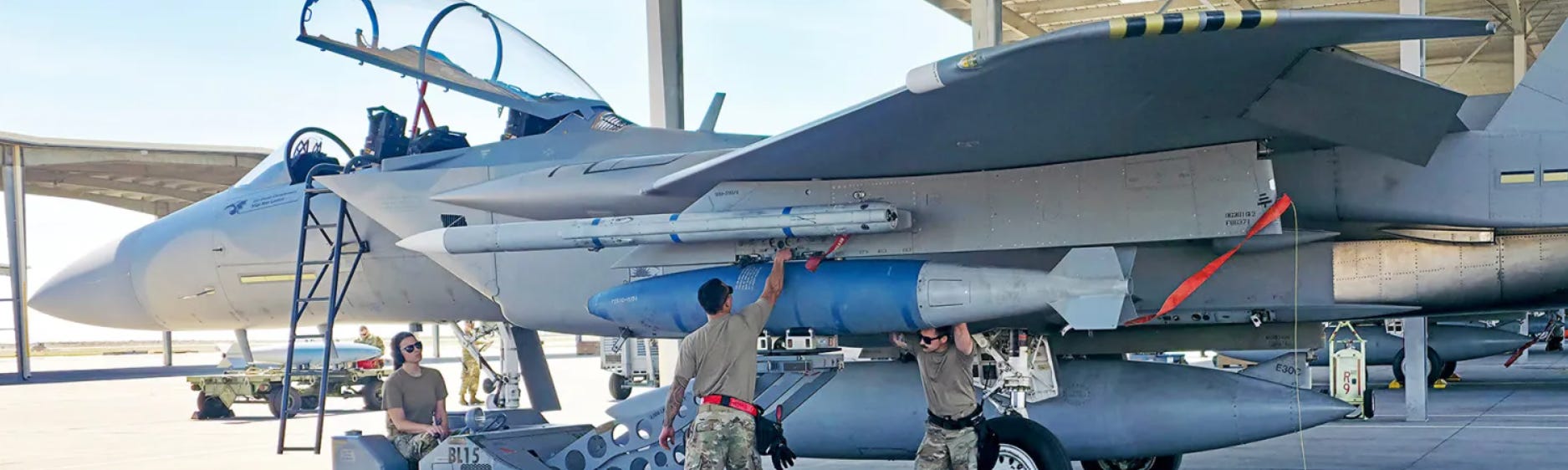
BLUF: For the first time, an operational F-15EX unit has successfully loaded and dropped bombs as part of its mission readiness training.
Crews loaded 500-pound BDU-50 and 2,000-pound BDU-56 practice bombs onto the aircraft before releasing them over the Mountain Home bombing range.
The F-15EX Eagle II is built as a multirole fighter, capable of carrying out both air-to-air and air-to-ground missions (unlike its predecessor).
Unlocking that expanded capability, however, required months of preparation and specialized training.
Three pilots completed a nine-month training program focused on the tactics and technical aspects of delivering precision-guided munitions.
They then developed a training curriculum to teach the rest of the wing’s pilots the fundamentals of air-to-ground operations, laying the foundation for the unit’s first operational bomb-dropping mission.
The training mission involved 10 sorties, during which crews dropped a total of 24 BDU-50 and 12 BDU-56 practice bombs. The operation was completed without any safety incidents, and all missions received satisfactory evaluations,
The next phase in the F-15EX’s air-to-ground certification process will involve loading and dropping live munitions.
The crew is scheduled to conduct that mission at the end of August, bringing the wing one step closer to full air-to-ground operational capability.
Related Article: Air-To-Ground Capabilities Are Already Creeping Into The F-15EX’s Mission Set
As Fighter Pilots Prepare to Command Drone Wingmen, BAE Bets on New Helmet Tech

BLUF: As militaries prepare for a new age of air combat defined by ever-evolving unmanned aerial systems, BAE is betting that the workload of fighter pilots will swell far beyond flying an aircraft to include directing swarms of drones.
BAE Systems unveiled a helmet-mounted prototype it says is intended to explore how future pilots may be able to operate under battlefield conditions they anticipate to be saturated with unprecedented amounts of data.
Called Project Intuity, the demonstrator is intended to help pilots manage input from multiple sources by projecting information onto the helmet’s visor.
BAE did not yet say whether the demonstrator is tied to a specific program or provide a timeline for when this technology could enter service, but the project comes as the U.S. is experimenting with having pilots command drone wingmen.
Air Force Seeking Air Defense Missile System to Protect Air Bases
BLUF: The Air Force issued an RFI to find an air defense missile system to defend the service’s installations against cruise missiles and drones.
The RFI lists requirements that suggest an air defense system that can handle a variety of threats from cruise missiles to Group 1-5 UAS.
This would mean a single system that could stop everything from a small kamikaze drone to a giant Global Hawk-sized UAV.
The query comes as U.S. and allied military bases in the Middle East have been struck hard by Iranian drones and missiles.
Contractors are asked to “outline the firing rate across all magazines and the total magazine depth, while demonstrating seamless command and control (C2) system integration for rapid sensor data dissemination and weapons cueing.”
The RFI suggests a desire for a self-contained system that is easily transportable, uses a laser illuminator for fire control and possesses integrated sensing capabilities.
An Early Look at the Air Force’s New Counter-Drone Units
BLUF: The Air Force has established the first rapidly deployable units designed to protect air bases in the Pacific or other potential hotspots from aerial attack.
These point defense flights, made up of roughly 20 enlisted Airmen could protect permanent installations in the U.S, but are specifically trained to defend remote airfields, such as might be used in agile combat employment, from drone attack.
The Air Force is in the early stages of refining these counter-drone units of action, will eventually be manned by Airmen trained for a base defense job specialty the service announced about a month ago to protect against evolving drone threats.
The Air Force is placing a heavy focus on identifying Airmen with command-and-control experience to serve in these new units.
Our Take: This is a very encouraging step to advance the ACE concept. Drone defenses will be crucial for bases in an ACE construct to be able to execute their operations. It seems very likely that these newly trained airman will also serve other key functions.
Fury Loyal Wingman Arrives at Creech AFB for Agile Combat Deployment Trials
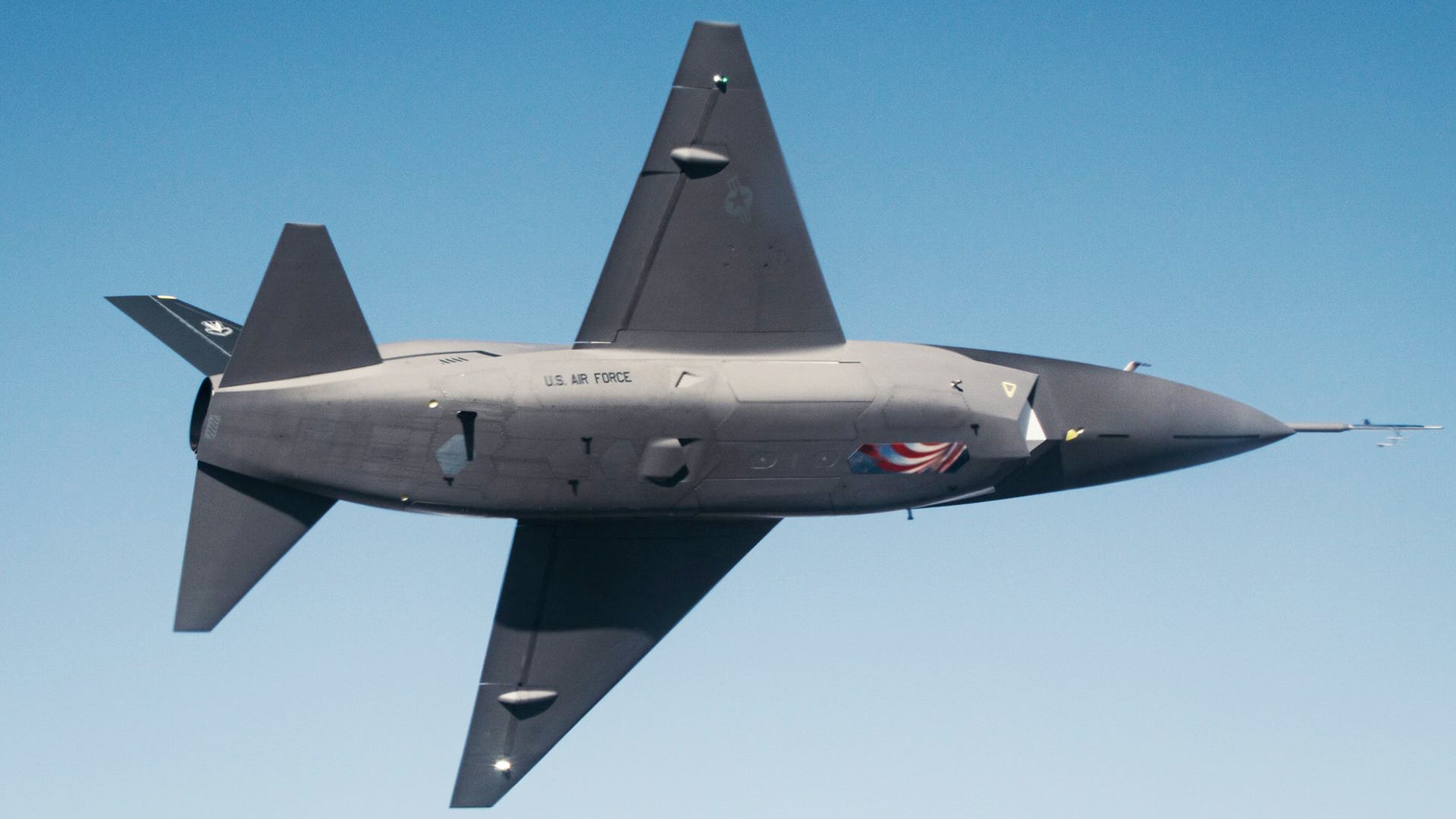
BLUF: Anduril’s YFQ-44 Fury CCA caught the attention of aircraft trackers yesterday evening when it left its developmental home at the Southern California Logistics Airport in Victorville and flew to Creech Air Force Base in southern Nevada.
Both CCA types will be hosted by Creech for an exercise that will its ability to operate from austere locales with minimal logistical footprint, and on the move from location to location, under the ACE combat doctrine.
The CCA EOU was stood up exactly for these kinds of trials. The unit is working to blaze a path for the service to operationalize its CCA ambitions, and its personnel certainly have their work cut out for them.
Some of the biggest concerns surrounding the CCA concept have more to do with logistics, maintenance, integration with the manned fighter force, and above all else, building trust.
This exercise is clearly aimed at reducing risks in these areas and adding clarity to what pages will be needed in the USAF’s future CCA playbook.
Air Force Begins Piloted Flights, Autonomy Tests for Modified F-16s
BLUF: The Air Force began piloted flights and autonomy tests for modified F-16s that allows artificial intelligence agents to fly the aircraft.
The agents are able to fly the F-16s in the Viper Experimentation and Next-gen Operations Model, or VENOM, program through the aircraft’s additional hardware, software and instrumentation installed.
The pilots, located in the cockpit during the flights, monitored the AI agents to ensure the flight and mission systems tests objectives were met.
Related Article: F-16 outfitted with AI kit completes pathbreaking sortie in ‘monumental milestone’
Pentagon Awards Largest-Ever F-35 Spare Parts Contract
BLUF: The F-35 Joint Program Office awarded Lockheed Martin a $1.6B contract for spare parts for the fighter jet last week, a record sum for the program.
F-35 operators—including the Air Force, Navy, Marine Corps, as well as foreign partners—do not buy their own spare parts.
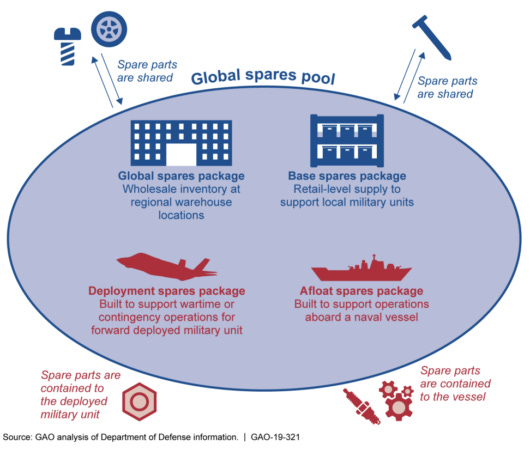
Instead, the F-35 Joint Program Office procures spare parts for a global spares pool. Operators then “purchase access to parts in the shared pool based on how many F-35 aircraft they own and the number of flight hours they plan to fly,
The global spares pool includes:
Base spares packages: Parts positioned at each main F-35 operating base, with the exact amount depending on the number of jets and flying hours anticipated.
Global spares packages: “Wholesale-level” supplies of parts in warehouses throughout the world, shipped to operators as needed.
Deployment spares packages: Collections of parts purchased to support a forward-deployed F-35 unit for a certain amount of time. “The parts in this package are generally reserved for use only by the participant who purchased the package,” the GAO report notes.
Afloat spares packages: Similar to the deployment packages, but for F-35s deployed aboard naval vessels. Like the deployment packages, these parts are usually reserved for those who paid for them
F-35 readiness has been particularly low, with GAO citing in a June report that full mission capable rates for the three versions of the jet were all around 25%.
The Air Force’s F-35As scored the best of the bunch at 28.5 but have trended downward overall largely due to lack of parts.
Lockheed says it is committed to an additional $1B of strategic internal investment for the F-35, with an emphasis on the aircraft sustainment system to improve mission-capable rates across the fleet.
Our Take: This is positive to see from Lockheed because buying more spares is only one piece of the readiness problem. Parts need to meet their required life limits and ease of repair needs to be continually improved.
Pathway To Larger B-21 Raider Fleet Was Baked into Production Deal
BLUF: An agreement to ramp up production of the B-21 Raider was indeed structured to at least open the door to orders for more of the bombers.
The deal, as it was announced earlier this year, centers on a 25 percent boost in annual B-21 production capacity.
What that new B-21 fleet number might be remains to be seen, and it is not clear whether it will even be publicly disclosed.
Our Take: It seems inevitable that the total inventory will exceed 100 in the future, but the Air Force is likely hedging bets before committing to a number given the budget uncertainties and that there are other platforms it wants to invest in over the next decade.

Space Force Sees Launch Demand Surge from 60 Missions to 170

BLUF: The Space Force is tripling the size of one of its main launch procurement contracts from $5.6B to $17B to accommodate growing demand from government customers.
The service on July 17 announced a new cost ceiling for Lane 1 of its National Security Space Launch program, the contract mechanism the Space Force uses to launch government payloads with less stringent mission assurance requirements.
The scope of the effort has grown from earlier estimates of around 30 to 60 missions to roughly 170 over a five-year ordering period.
Those increases fall across several mission areas, including space-based moving target indication; data transport; missile warning, tracking and defense; and space domain awareness.
The service has approved seven companies to compete for missions under its Lane 1 contract:
SpaceX
United Launch Alliance
Blue Origin
Stoke Space
Rocket Lab
Relativity Space
Impulse Space.
Related Articles:
Space Force Could Cap Launch Support Without Extra Funding
BLUF: The CSO is warning lawmakers that the Space Force may eventually have to limit the number of launches it can support each year without additional resources to manage surging demand at its spaceports.
Demand for commercial and military payload launch has risen dramatically in recent years, and the Space Force is responsible for facilitating most U.S. launch operations at its two coastal ranges, which supported 180 missions in 2025.
Annual launch rates at the two ranges are projected to grow to more than 700 over the next five to 10 years, and leaders say more funding is essential to further prepare its spaceport infrastructure for that higher throughput.
Among the service’s needs are new roads and bridges to support more providers on the range, better commodity access to launch pads, and expanded authorities that allow the ranges to operate more like commercial ports.
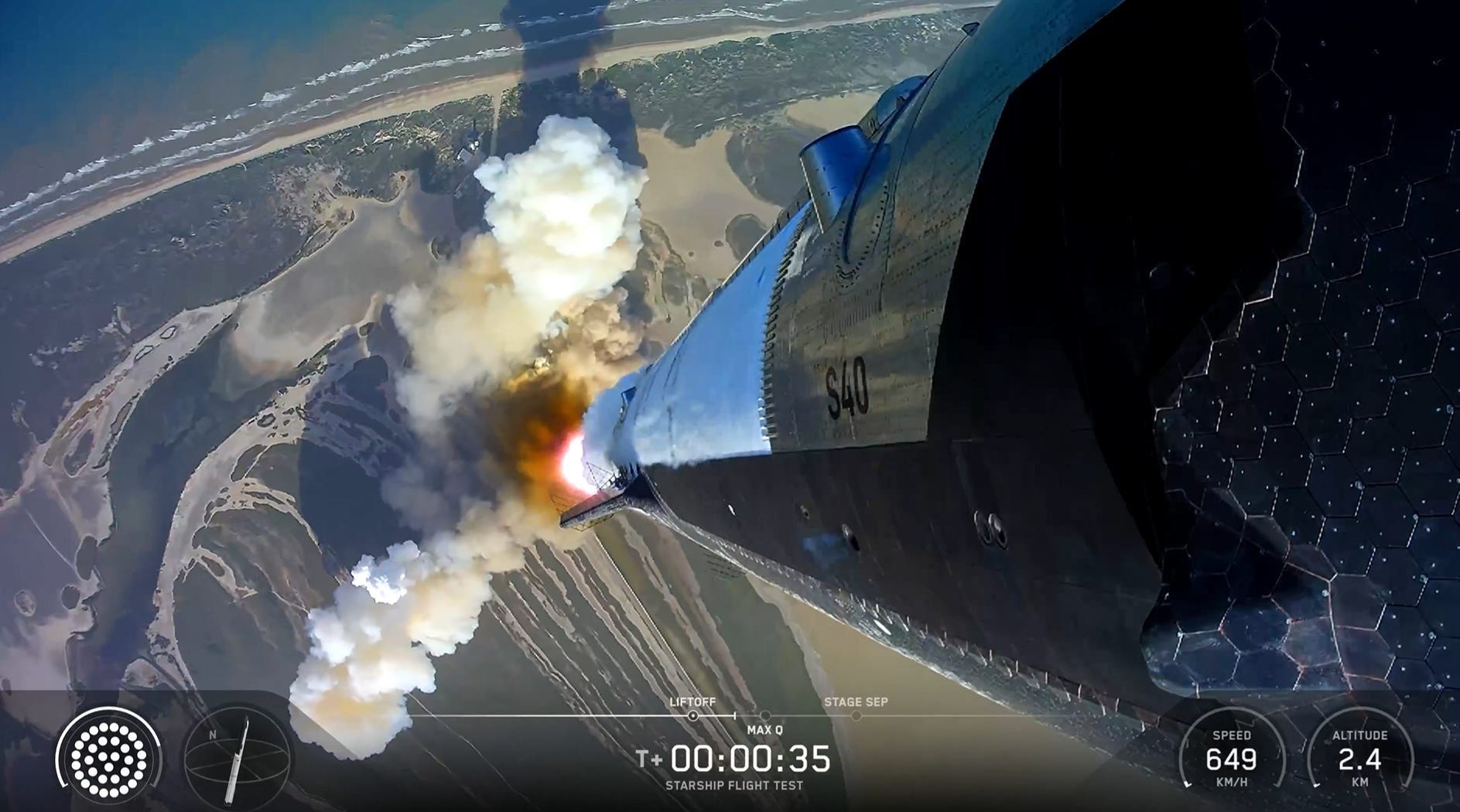
SpaceX’s Starship’s Thirteenth Flight Test a Success
SpaceX Reportedly May Join AI Arms Race
BLUF: SpaceX, is in talks with DoW to provide access to its artificial intelligence (AI) data centers to support the Pentagon.
This would not be the first time SpaceX rented out its computing power to outside entities. Its AI data centers are being used by Google for $920M a month from October 2026 to June 2029.
The deal could be worth up to $30.4B over the 33 months if the contract is completed in its entirety.
York Confirms Health of 21 New SDA Satellites
BLUF: York Space Systems said it has confirmed the health of 21 satellites that launched July 16 as part of the SDA’s data transport constellation.
While initial contact is an early step in a monthslong checkout process, it’s welcome news after SDA faced early challenges with its first two Tranche 1 launches last fall.
Among those challenges, which SDA attributed to growing pains as it builds out its nascent low-Earth orbit satellite network, was the time it took to make initial contact with the satellites.
SDA plans to launch 154 data transport and missile warning satellites as part of Tranche 1, which will provide the first operational capability to military users.
SpaceX Launches Northrop’s Robotic Spacecraft to Extend Satellites Without Refueling
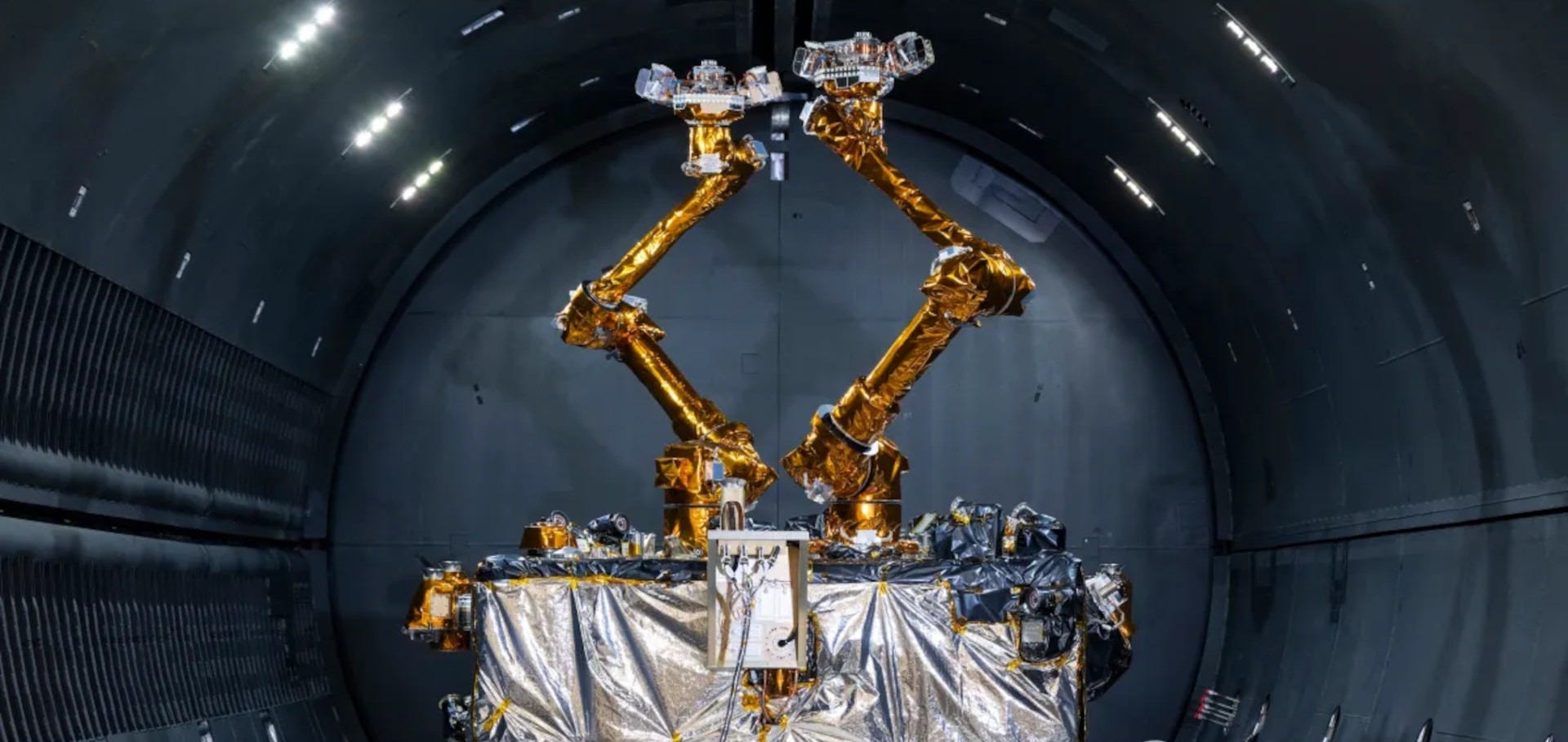
BLUF: Northrop Grumman has launched a robotic spacecraft designed to extend the operating lives of aging communications satellites without refueling them.
The mission will test a new servicing model that allows a single spacecraft to install propulsion modules on multiple satellites in geostationary orbit.
The spacecraft will now make its way to geostationary orbit, where the servicing campaign will begin in the coming weeks.
Unlike Northrop‘s earlier Mission Extension Vehicles, which remained attached to a single satellite, MRV is designed to move from one customer to another.
The spacecraft will retrieve each Mission Extension Pod, approach a client satellite, and use robotic arms to install hardware before moving on to its next assignment.
Northrop estimates the technology can keep a typical geostationary communications satellite operating for about six additional years.
Space Force has indicated it wants access to MRV once the spacecraft enters service, viewing it as a commercial capability that government operators could use when needed.
Related Article: Could This New Northrop Spacecraft Use Its Robotic Arms to Attack Enemy Satellites?
Our Take: This is a really huge deal. The ability to extend the life of exquisite satellites in GEO by 6 years is incredible given what it takes to launch and maintain those assets. As China has demonstrated, there are multiple uses for a robotic arm including using it to deorbit an adversary space vehicle
Space Force Wants Commercial Bandwidth for SATCOM Experiments
BLUF: The Space Force is moving forward with a series of experiments to test ideas for broadening its narrowband satellite communication mission to MEO.
In a Space Systems Command notice, the Space Force says it’s interested in using bandwidth from commercially owned and operated narrowband satellites, payloads, or communication links in MEO to use in upcoming experiments.
The experimentation campaign will help the Space Force demonstrate interoperability between commercial satellites in MEO and existing government spacecraft in geosynchronous orbit.
It could also inform a plan to either augment or replace those GEO satellites with a proliferated MEO constellation.
The Space Force currently relies on its Mobile User Objective System constellation for narrowband, or ultra high frequency, communications.
The fleet of four satellites—plus one on-orbit spare—in geosynchronous orbit provides secure tactical communications capabilities.
Our Take: This hybrid architecture is desperately needed because we know our adversaries will target critical comm satellites (whether in space or from the ground) as soon as a conflict kicks off.

US Ally’s Integrated Air, Missile Defense Achilles Shield Set to Bolster Multi-Layered Defensive Architecture
BLUF: Greece has approved the acquisition of a new Israeli-developed integrated air and missile defence system, known as Achilles Shield.
The project, valued at ~$3.1–4B forms the centerpiece of Greece’s long-term military modernization program aimed at strengthening protection against missiles, aircraft and unmanned aerial systems.
The Achilles Shield will provide a multi-layered defensive architecture capable of countering ballistic missiles, cruise missiles, combat aircraft and drones through an integrated network of radars, sensors and interceptor systems.
Israeli defense companies Rafael Advanced Defense Systems and Israel Aerospace Industries (IAI) are expected to supply the core technologies for the program.
The system is expected to become fully operational within 35 months, with at least 25 percent of production to be carried out by Greek industry.
Greece currently relies on a mix of U.S.-made Patriot missile batteries and older Russian-origin S-300 systems for air defence.
Achilles Shield is expected to replace this fragmented approach with a more integrated, layered network capable of responding simultaneously to multiple aerial threats, including increasingly sophisticated drone attacks.

The Strategic Competition with China: Winning the Multi-Domain Race
BLUF: History demonstrates military innovation continually rewrites the rules of combat, reshaping warfare and rendering strategies from past conflicts obsolete. There are technologies being employed today that are changing the game.
Stealth aircraft, satellite navigation and digital communications defined the military dominance enjoyed by the United States during the late 20th century.
Today, there are new ones that will define 21st century warfare:
Persistent space-based surveillance has dramatically reduced the possibility of achieving battlefield surprise.
Hypersonic weapons compress decision timelines and challenge existing defensive architectures.
AI accelerates decision-making and enhances operational planning.
Offensive cyber operations provide strategic options below the threshold of conventional warfare.
Counterspace weapons threaten the satellites upon which virtually every modern military operation depends.
The proliferation of drones — individually or in autonomous swarms — allows adversaries to impose disproportionate costs on sophisticated military forces.
Perhaps the most important lesson from the war in Ukraine is that modern conflicts are not won solely through superior tactics or advanced weapons.
Victory increasingly depends upon industrial endurance, resilient logistics, secure supply chains and the ability to replace losses more rapidly than an adversary.
In the strategic competition with China, the U.S. faces a fundamentally different environment than it did during the Cold War.
America’s competitive advantage will ultimately rest upon two mutually reinforcing pillars: Technological Superiority and Industrial Capacity and Resilience that incorporates improvement in the following areas:
Cyber operations—AI/ML Incorporation—space superiority—credible missile defense—countering drones and autonomous swarms—accelerating the OODA loop—produce at scale and speed—accelerating defense acquisition—expand domestic manufacturing—leveraging commercial innovation—secure critical supply chains—measuring success by combat capability—strengthening allied industrial capacity
History consistently favors nations that recognize changes in character of warfare before their competitors. The U.S. has done so before and must do so again.
Our Take: We 100% agree with this assessment. This is worth an entire read.
China’s Shadowy Maritime Militia is Worryingly Active

BLUF: In December, over 1,000 vessels from Zhoushan and other parts of China’s eastern seaboard lined up to form an L shape in the seas north of Taiwan, held the formation for more than 12 hours, then dispersed. Over the next few months Chinese fishing boats coalesced again in the East China Sea, on four more occasions.
China is unusual in having three separate maritime forces at its disposal.
The first two are the navy and the coastguard. But since as far back as the 1950s, China’s leaders have also commandeered part of the country’s fishing fleet as a paramilitary “maritime militia”.
This shadowy force is made up of a mixture of normal fishing boats and larger, steel-hulled ones which appear to be purpose-built for aggressive maneuvers.
The maneuvers suggest Chinese officials are testing out their capabilities—and some fear that could give China an edge in a conflict over Taiwan.
For decades the maritime militia had a reputation as a ragtag bunch, with antiquated weapons and poor discipline.
Since Xi Jinping came to power, China has been trying to build what it calls a “new-style” maritime militia—one that is better equipped, trained and organized.
Fishing boats can get daily subsidies of $3,500+ to loiter in disputed areas, more than enough to cover costs and allow owners to profit without doing any fishing.

Typhoons Paired with CCA Fighter Drones Armed with Meteor Missiles Eyed By UK

BLUF: BAE Systems is exploring how the Eurofighter Typhoon could control CCAs as part of a broader effort to introduce new capabilities for the jet.
The experience gained here will be ported over to the future Tempest combat jet — designed to work closely with drones from the outset.
The CCA capabilities are planned to be added to the Typhoon under a much wider effort known as the Long-Term Evolution (LTE) program.
These features include the large-area display (LAD) cockpit, European Common Radar System (ECRS) Mk 2, and the Striker II helmet-mounted display system.
The aspiration to have CCAs armed with the long-range Meteor missile is a significant one, due to the particular set of capabilities that the missile brings.
The Meteor is among the longest-ranged of any Western air-to-air missile, considered to be able to engage certain types of targets out to around 130 miles.
Critically, while CCAs are already a forward extension of the fighter, a missile of this kind would increase the engagement range when combined with the CCA, allowing the Typhoon to stay outside the engagement range of the enemy.
The missile also uses a two-way datalink, which feeds it with in-flight updates as it flies out to its target and provides the pilot in the launch aircraft with information on the Meteor’s fuel, energy, and tracking state.
Adding CCAs, provided they have their own sensors, would allow them to pass data to the Typhoon and Meteor, regardless of who launched the missile.
BAE Systems Unveils Brontanax: UK’s First Autonomous Combat Aircraft

BLUF: The prototype CCA was designed and built by engineers at BAE Systems in Warton, Lancashire, home of the UK’s sovereign combat air industrial capability.
More than 500 BAE Systems employees have been involved in the aircraft’s development to date, working with over 75 large companies and SMEs from across Britain’s world leading aerospace sector.
The first-of-its class CCA – named Brontanax – is intended to provide electronic warfare and precision strike capabilities against airborne and ground targets.
Brontanax is designed to be operated by a Typhoon pilot or mission commander from range, allowing crewed and uncrewed aircraft to operate as a team.
The aircraft is now being prepared for ground-based testing at Warton prior to flight testing within UK airspace.
Our Take: As we’ve learned with aircraft programs, the real test is getting airborne so we look forward to that milestone. While we’re excited to see the Brits get into the CCA game, we despair at the naming convention here. Brontanax was the best option among the thousand others? With a proud legacy of aircraft names from WWII to today (Spitfire, Tempest, Meteor, Tornado, Typhoon, Hawk), we would have preferred to see something bird-like such as Phoenix or Tern…or evocative like Shard or Dusk.
Related Articles
Anduril’s Year-Old Rheinmetall Drone Partnership Is Scaled Back
BLUF: Anduril Industries Inc.’s strategic partnership with Rheinmetall AG has been significantly scaled back a year after it was announced, a blow to the US defense startup’s efforts to broaden its work with major European contractors.
Part of the collaboration, which called for jointly developing and manufacturing European versions of Anduril products, has been suspended.
The alliance was announced in June 2025 with a goal of integrating the low-cost Barracuda munitions and the Fury autonomous combat aircraft into Rheinmetall’s Battlesuite digital platform.
However, Rheinmetall announced a strategic partnership with Boeing Co. in March to provide the MQ-28 Ghost Bat, an Australian-developed drone.
A previous deal with Helsing, Europe’s most valuable defense startup, never took off and was dissolved in 2024.
Our Take: While the partnership does not seem completely shattered, it is unusual for a company to abandon joint manufacturing arrangements so quickly so it either got a better offer from Boeing or there were other intangibles we don’t know about - or Rheinmetall is not a very reliable partner which could make it harder to craft deals with other companies in the future. Guess we’ll learn more about this one over time.
China Builds World’s Largest Naval Resupply Ship
BLUF: An enormous vessel taking shape near Guangzhou, China, appears designed to refuel, rearm and resupply Chinese carrier groups far from home. At roughly 885 feet long, it could become the world’s largest dedicated naval replenishment ship.
The Pentagon says China is developing a global logistics and basing network that could include permanent bases, shared facilities, military sites beside commercial infrastructure and temporary access to foreign ports.
A joint logistics center opened at Cambodia’s Ream Naval Base in April 2025, while China continues to explore access along the sea lanes through the Malacca Strait, the Strait of Hormuz, Africa and the Middle East.
The ship does not prove that war is imminent. It does, however, fit a larger pattern. China is building the physical, industrial and technological capacity to absorb economic punishment, replace battlefield losses and project power long after a crisis begins.
Embraer, Anduril Pursuing Barracuda Missiles on C-390
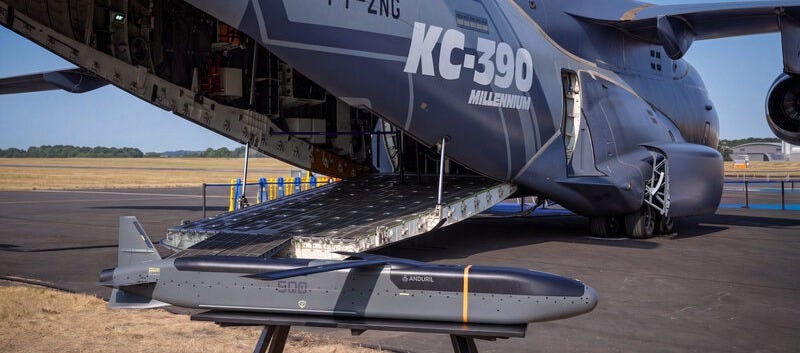
BLUF: Brazil’s Embracer signed an agreement with Anduril to pursue a palletized weapons program on its C-390 Millenium aircraft.
The firms will pursue integrating the palletized Baracuda-500M cruise missile onto the Millenium, the first time an offensive capability would be put on the C-390.
The C-390 is currently operational with Brazil, Portugal, Hungary and the Czech Republic. The Republic of Korea, the Netherlands, Austria, Uzbekistan, Sweden, the UAE, Slovakia, and Lithuania have all ordered the plane as well.
“Integrating the pallet-launched Barracuda-500M with Embraer’s C-390 Millennium gives allied militaries a new way to generate massed, stand-off effects from a proven airlift platform. Anduril’s Barracuda family of systems delivers rapidly producible, operationally relevant capabilities to meet the growing demand for affordable, scalable munitions.” Greg Kausner, Anduril SVP for Global Defense
Related Article: Embraer and Anduril sign MoU to expand C-390 capabilities with palletized Barracuda-500M
UK Awards $26M Hypersonic Target Contract to Lockheed Martin

BLUF: UK’s National Armaments Director (NAD) Group has awarded a £20m ($26M) contract to Lockheed Martin UK for the delivery of the advanced hypersonic target programme, Project Bowline.
The new target vehicle is being developed to replicate the behaviour of next-generation high-speed threats, capable of travelling at speeds above Mach 5.
It is intended to provide a realistic test environment for the evaluation of future missile defence systems, including both sensors and interceptor technologies.
In addition, the project is expected to strengthen the national capabilities in sovereign expertise in hypersonic systems modelling, manufacturing, and testing, while fostering closer links across industry, academia, and smaller companies.
Related Article: Mach 5+ speed: New hypersonic ‘clay pigeon’ target to be built under AUKUS Pillar 2
Lockheed, RTX in Early Talks for Ukraine Patriot Production
BLUF: RTX subsidiary Raytheon is studying how to proceed after the WH announced that the US would grant a license for building Patriot interceptors in Ukraine, a top executive said Monday, while cautioning that talks are still early.
Missiles for the Patriot system — which itself consists of an RTX radar and other subsystems, as well as interceptors built by both RTX and Lockheed Martin — contain several lines of effort.
RTX supplies the Patriot’s GEM-T interceptor and Lockheed produces the PAC-3, both of which can be used to defeat air and missile threats.
On Monday, Lockheed additionally rolled out a new, lower-cost version of its PAC-3 interceptor, called the Adapted Capability Effector. The company plans to partner with European industry and carry out a first test in 2028.
“So as we work through the sort of feasibility studies, we will also, in parallel, be working licensing with the United States government. And then, hopefully something of all that will yield the ability for Ukraine to get the right level of support that they desire for increased Patriot production.” Tom Laliberty, Raytheon’s president of land and air defense systems
Ukraine Company Fields New Long-Range Weapon Aimed at Russia
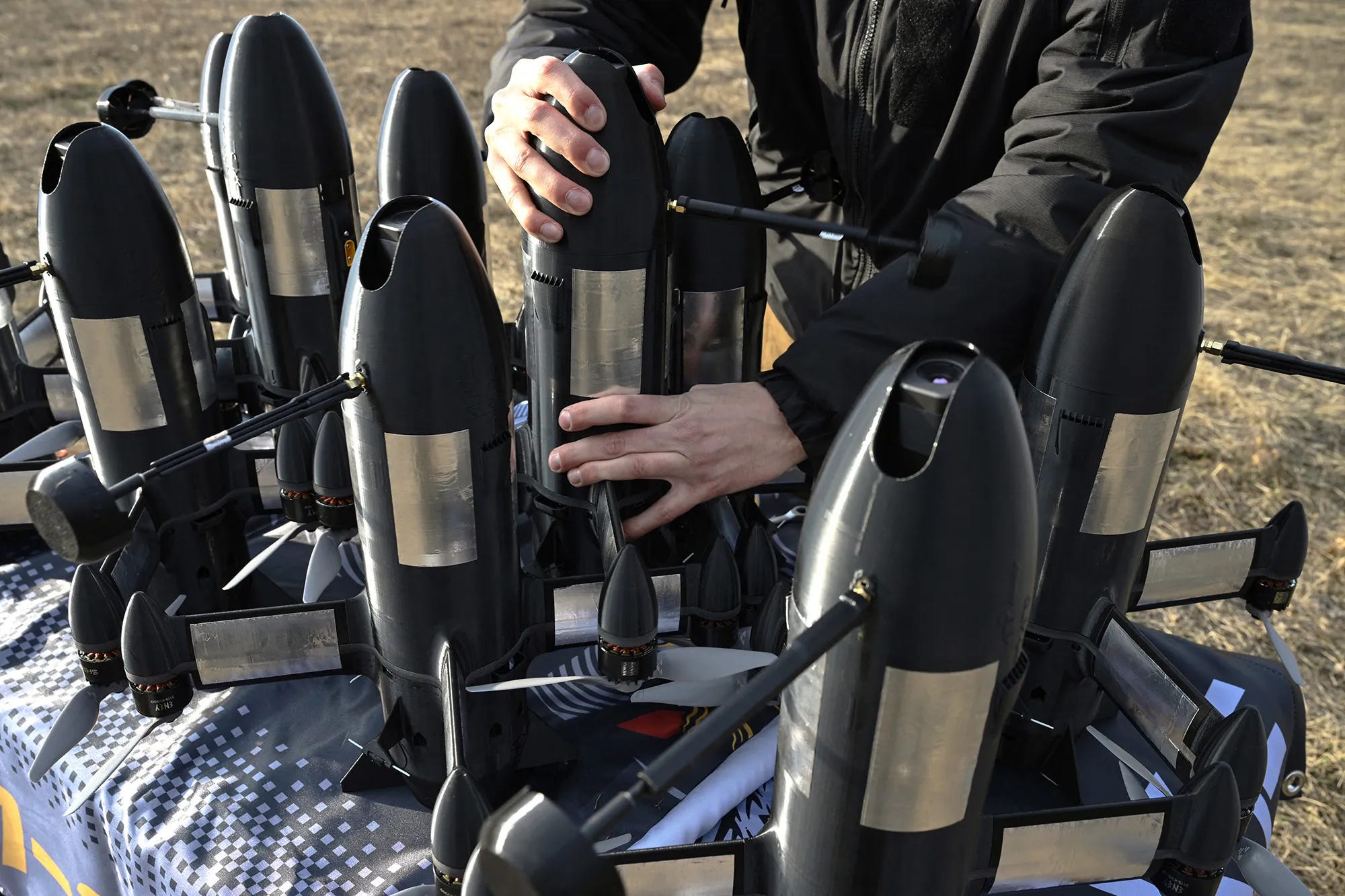
BLUF: SkyFall, the Ukrainian defense technology company, has developed a long-range strike weapon that is being tested in operations against Russia.
The fixed-wing, propeller-driven munition has a roughly 11-foot wingspan and a range of at least 600 kilometers and will be mass produced within months.
With a top speed of 370 kilometers per hour (230 mph), the “JetKiller” model can catch up to the Russian weapons in the slower portions of their attack.
SkyFall is also in the final stages of testing a new, faster version of its P1-SUN drone designed to hit jet-powered Shahed-type rudimentary cruise missiles.
The company’s goal for the latest P1 is full autonomy, with someone just selecting a target on a monitor.
Eventually it will be able to be launched from nearly any horizontal platform, including boats.
Ukrainian-Born UFORCE Inks a Deal to Build MAGURA USVs in the US
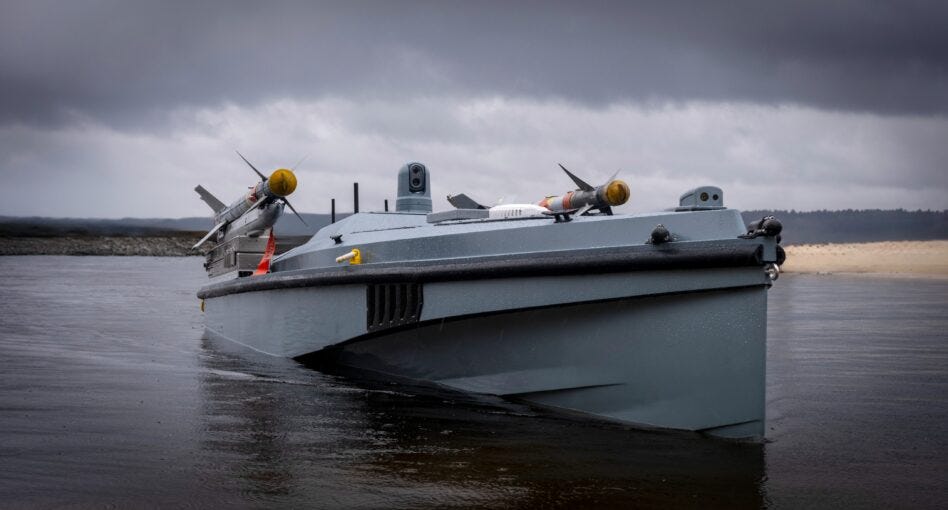
BLUF: British-Ukrainian defense tech startup UFORCE announced that it’s inked a deal with Oregon-based Special Operations-focused boat-builder ReconCraft to produce its now-famous MAGURA USVs on US soil.
UFORCE, founded in Ukraine but now headquartered in London, is less of a startup and more of a conglomerate of nine Ukrainian defense companies that merged early last year to integrate all their capabilities.
The MAGURA family of autonomous surface vessels holds one of the most impactful and reliable combat records in maritime warfare and contributed to the destruction of more than a dozen Russian warships in the Black Sea.
The MAGURA is 25 feet long with a 1,700-pound payload capacity and over 350-mile range. They can be used as one-way attack vessels (they cost less than $500,000), as a drone-launching platform, or in maritime ISR missions.
Along with the MAGURA, those offerings include:
Nemesis: A family of medium and heavy strike multirotor bomber UAVs that are among the most popular and effective in Ukraine, earning them the mythological nickname “Baba Yaga” from Russian forces.
Lyut 2 (Fury): An unmanned ground vehicle with an integrated turret designed to engage stationary and moving targets.
Sunray: A next-gen counter-UAS laser system.
Other International News:
MQ-9B and Gambit Series: Advancing European Defense Capabilities
GA-ASI and KONGSBERG complete design reviews for MQ-9B JSM integration

A $1.5 Trillion Defense Budget? Not So Fast
BLUF: The WH proposed a $1.5 trillion defense budget for fiscal 2027—a record-breaking figure that called to mind the Reagan buildup of the 1980s. Now, nearly eight months later, the chances such a budget might pass are fading fast.
The White House has asked Congress to fund $1.567 trillion in defense requests this year, split into three bills:
$1.15T in the fiscal 2027 base “discretionary” budget, the usual annual appropriation for defense
$350B in “mandatory” spending, intended to be passed using a congressional maneuver called a reconciliation bill.
$67.1B included in a supplemental funding request submitted in June, with much of that money paying the cost of the Iran war, while the balance funds other administration priorities.
The House of Representatives is working on a $1.07T defense bill and passed $60B supplemental measure to cover war costs.
The Senate has yet to move on any appropriations legislation.
Grand hopes for a third bill dubbed “Reconciliation 3.0” that might have made up the difference now seem slim at best.
The House approved a CR this week to fund the government at 2026 levels through Dec. 4. Doing so would buy lawmakers two months to pass a budget.

Related Articles:
House passes $1.15 trillion defense bill in near party-line vote
House Passes 2027 NDAA, Reconciliation Package, but Future in Senate Unclear
Senators Cast Doubt on Success of New Reconciliation Bill
BLUF: A bipartisan group of senators forecast a bleak outlook for a third reconciliation bill, warning that appropriators must take action to ensure the Pentagon’s base budget includes all the funds necessary for national security priorities.
“There isn’t going to be a third reconciliation package. So anything that’s in there is not going anywhere. We need to be disciplined about the exercise of what’s a priority and what we’re going to fund.” Sen. Jeanne Shaheen, D-N.H., a member of both the Senate Armed Services and Appropriations committees.
“I’m not certain there’s going to be a reconciliation bill that passes the House and the Senate.” Sen. Jerry Moran, R-Kansas
“We need to move forward on our appropriations bills. Congress has to take back its responsibility of funding government, making the decisions on how on how we use taxpayer money, and we need to get it done.” Sen. Deb Fischer, R-Neb
Our Take: Given the amount of days left in the session and the fact that the $60B supplemental bill only passed by two votes in the House means that if the Senate makes any significant changes, it has to go back to the House for another vote. Given where the Senate is currently at with appropriations, it seems dubious that DoW will see anything close to the $350B it had requested. While there is a chance of some movement in the lame duck period, DoW should plan on having no more than ~$1.1T next year and work with the Hill to ensure the highest priorities from reconciliation (like critical space capes, DAWG items, GD4A and weapons) are included in the base budget. This will require making trades for other items that were needed in the base budget as well as ensuring adequate O&M for the ongoing Iran conflict. No easy feat here but starting that process now rather than hoping for a reconciliation bill that won’t come is a better strategy.
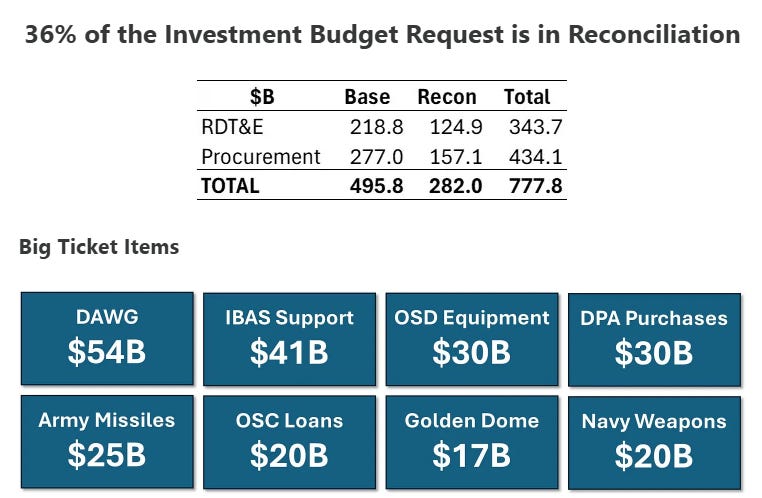
Senate Appropriations Hearing on Supplemental Funding
Secretary Hegseth’s written statement
The Department is requesting the following supplemental funding:
Sustaining Military Readiness: $21.3B to address emergent requirements, maintain global contingency operations, and protect critical national security interests.
$15.1B for core operational costs, funding military pay, and operational shortfalls in training and readiness accounts and other mission-related costs.
$2B to replace equipment lost or damaged during combat operations.
$1.7B to continue to grow our military personnel end strength, including medical staff, amidst record breaking recruitment numbers.
Acquiring Critical Capabilities: $45.9B in targeted funding to rapidly strengthen our military forces by expanding production lines, advancing high-priority development, and accelerating the delivery of critical capabilities and munitions to the Warfighter.
$21B accelerates the acquisition of high-demand munitions through multi-year procurement, expands domestic production capacity, and fortifies supply chain resilience to sustain high-intensity operations of high-demand munitions (MAC, Solid Rocket Motors, JDAM-LR, Hypersonics, and LCCM-GL).
$13.3B to advance essential operational and security support for the joint force to deploy and sustain its combat power. This funding supports key priorities, such as JIATF-401 for National Capital Region support and classified force protection.
$11.6B to build digital and battlefield dominance through targeted investments in drones, space-based target tracking and resilient satellite networks, advanced computing, joint cyber defenses, and survivability enhancements and MQ-9 platforms.
It is imperative that Americans understand that the character of war is changing. Advances in technology are fundamentally and irreversibly changing the way we fight which necessitates the capital to properly arm America’s military.
Rapid advancements in AI and autonomous systems deliver critical technological advantages to our national defense and simultaneously introduce unprecedented strategic vulnerabilities and uncertainty across the world, to include here at home.
Conflict is never confined neatly to the land, sea, and air domains. The modern battlefield stretches from the seabed to cislunar space, cyberspace, and the information domain – all at the same time. Our nation must be prepared to fight and win across all of them, all the time, and all at once.
America’s armed forces need $1.5T to meet the military challenges of the future so that we can deliver a safer, more prosperous United States of America.
STATEMENT OF ADMINISTRATION POLICY
This is in response to the House’s NDAA.
Opposes reporting requirements for the new Battleship.
Opposes restrictions on using foreign shipyards.
Opposes any delays for the GD4A’s Space-Based Interceptor effort.
Opposes restricting the WH’s ability to modifying geographic combatant commands.
Opposes restrictions on ordering submarine tenders.
Opposes NDAA’s attempt at centralizing efforts for joint experimentation and training ranges in R&E.
Opposes provision to allow CO’s to limit progress payments which precludes them from motivating a contractor to correct poor performance.
Our Take: These are just a few of the items, many of which we agree with from our NDAA analysis. If you want to understand what issues will arise between the executive and congressional branches in this year’s NDAA, this is worth a quick read.
See our NDAA and budget posts for the latest insights and analysis.

The Future of Defense Technology | Tyler Sweatt
Paramify
Navy Intel to Defense Tech: Autonomy, Drones, Taiwan Security | Ellen Chang
Wenchi Yu
Acquisition Reform That Sticks: Why It Feels Different This Time | Chris Bishop
Fed Gov Today
Defense Acquisition Speed and Cost Per Effect Problem | Church Hutton
All Quiet on the Second Front
Defense Acquisition Reform and Building Relationships | Noam Oz
The Startup Defense
Building a Stronger Defense Industrial Base | Farooq Mitha
Emerging Tech Horizons
Building Electromagnetic Superintelligence | Pratap Ranade
Mission Matters

NCMA World Congress
NCMA • Jul 26-29 • Orlando, FL
Life Cycle Industry Days
Air Force • Jul 27-29 • Dayton, OH
DIA TECHINT
AFCEA • Jul 28-29 • Chantilly, VA
Air and Space Summit
Potomac Officers Club • Jul 30 • McLean, VA
Drone Dominance and Airspace Sovereignty One Year Later
American Drone Leadership Summit • Jul 31 • Washington DC
Space and Missile Defense Symposium
Aug 11-13 • Huntsville, AL
TechNet Augusta 2026
AFCEA • Aug 17-20 • Augusta, GA
MODSIM World
NTSA • Aug 18-19 • Alexandria, VA
Fed SuperNova
Aug 18-20 • Austin, TX
ONR sBAA Industry Day
Aug 20 • Washington DC area
SmallSat Conference
Aug 23-26 • Salt Lake City, UT
DIB Accelerator 2026
ASW(IBP) • Aug 25-27 • Philadelphia, PA
Space Warfighting Forum
NDIA • Aug 25-27 • Colorado Springs, CO
Prodacity
Rise8 • Aug 25-27 • Nashville, TN
Intelligence and National Security Summit
AFCEA • Aug 26-27 • Bethesda, MD
See our Events Page for all the other events over the next year.