

How to Avoid or Minimize CRs
Addressing the root causes of Continuing Resolutions.


Continuing Resolutions (CRs) are when Congress fails to pass a budget by the start of the Fiscal Year (Oct 1) so they pass an interim budget “to keep the lights on” until they can agree upon and pass the full budget.
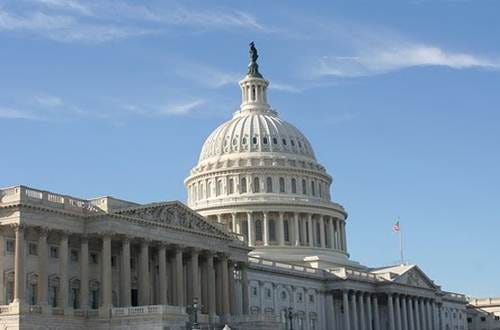
Defense is one of the 12 appropriations bills that Congress must pass each year to fund the government. These bills are often grouped into a single omnibus appropriation bill.
Since 2010, the DoD has operated under a CR for 13 of the last 14 fiscal years. These CRs average 122 days. That means for four months, a third of the fiscal year, every year except one, DoD operates with considerable fiscal risk.
DoD leaders annually decry the severe impacts of CRs. Congress held a hearing to bring greater visibility to the impact of CRs and GAO conducted a telling study. The issues include:
Significant ambiguity in programs, operations, and organizations budgets.
Delays in contracts and investments until budgets are secure, which drive a shorter window to award contracts and execute appropriated funds.
Inability to start new efforts which impacts modernization and delays use of time-constrained funding.
Impacts to military personnel training, family moves, and recruitment are greatly impacted.
Billions in lost buying power as funds are not able to be awarded in a timely manner.
Detriments to the industrial base, which continues to shrink 5% annually. A recent NDIA report noted budget instability a top risk/concern for industry.
Undermines faith in the military both domestically and abroad.
Gen Brown perfectly summed up the challenge: “CRs slow us down from being able to have trust and confidence with our Airmen, trust and confidence with industry, and trust and confidence with allies and partners to be able to provide the capability we’re going to require as we move forward.”
While Congress and DOD fully appreciate the severe negative impacts CRs have on our national security, why is no one addressing the root causes? This post seeks to unpack some of the root causes and offer recommendations to address them.
Late in - Late Out
Congress struggles to pass a budget on time in part due to delays in receiving the President’s budget request. The President is required to submit their annual budget request to Congress by the first Monday in February - yet rarely does.
In a President’s first year, there is often a grace period given they were just inaugurated on Jan 20 and the budget was formed by the previous administration. So, every four or eight years, it is reasonable to give the new president a few extra weeks (often many months) to make adjustments to align with their priorities and initiatives. This year the president is submitting the FY24 budget a little over four weeks late.
The budget formulation process is a complex, multi-year process that includes not only the DoD, but OMB and other stakeholder organizations before submitting to Congress.
So how can we address the root causes to enable the President to submit the budget request on time?
Size, Scope, and Structure
The FY22 defense budget was over 30,000 pages, delivered via hard copy to Congress.

For context that is six full copier paper boxes. While conveying how you’re going to spend $800B of taxpayer money on defense requires sufficient detail, it takes a lot of time and energy for DoD to develop 30,000 pages of budget documents, OMB to review it, then the four defense congressional committees to spend months combing over it to make adjustments in the authorization and appropriations bills.
Even with 30,000 pages, Congressional staffs complain it lacks the fidelity of details to make informed budget decisions. Some programs obscure schedule details to avoid being criticized for delays to intermediate milestones. They also may limit the level of details in the description fields to provide greater flexibility when conditions change. Some programs may have provided more detail in the past, then when faced with negative repercussions, limited the details in future budget submissions. Conversely Congressional staffs get frustrated by the lack of detail to provide proper oversight.
There was discussion and interest in redesigning the J-Books, particularly the format and structure of the investment accounts, yet for some reason action wasn’t taken. Collaboratively updating the structure to balance streamlining and fidelity would enable greater speed and success in passing a budget on time.
Too many Program Elements (PEs) and Budget Line Items (BLIs). The FY23 defense budget included $140B in RDT&E and $162B in Procurement for a total of $302B in investment funds. These were divided among 1,710 PEs/BLIs. The median size of these budget accounts was $38M. In fact, nearly 400 RDT&E accounts are below $20M! If they were merged into a single PE, it would be ~$3B - on par the B-21.
Consolidating the small PEs/BLIs while still providing Congress sufficient visibility into the details would save thousands of pages in the budget documents. There are plenty of other benefits to PE/BLI consolidation, but from purely a timing issue for minimizing CRs, this is key.
As others have stressed, there are $100-200B of non-defense items embedded in the defense budget. Shifting those to one of the other 11 appropriations bills reduces the size and complexity of the defense budget.
Not Timely
Given the long timelines to develop and lock down the budget, everyone understands the budgets reviewed over the Summer (and Fall) do not always reflect the current priorities and certainly don’t capture the current state of programs. This then drives significant discussions between Congressional and DoD staffs, hearings, and meetings with members, DoD executives, and industry. Staffer day briefings go further in-depth in program health, status, and budget justifications but often face a tension of defending the President’s Budget despite the shifts.
When unpacking the Planning, Programming, and Budgeting steps in the PPBE process, there are many lengthy processes and handoffs between OSD and the Services, along with many other stakeholders. From OSD issuing top down direction to the Services and Agencies providing budget submissions, to making final adjustments takes significant time, energy, and manpower. Conducting a value stream mapping of the major processes will uncover the process flows, purpose, impact, and issues. It can identify opportunities to streamline processes which can shorten the 2-3 year lead time in budget development. Leaner processes reduce the timeframes for changes to derail budget plans and lead to more efficient and effective budget execution.
Not Informed
Reducing the number of BLIs will help improve navigating the complex budget as will improvements to how DoD shares data with congressional staffers more dynamically (see ADVANA initiative). However, the greatest source of knowledge to inform the budget requests is access to the Pentagon folks who devised the strategies and are actively involved in executing them as well as the vendors that are developing the product. As DoD continues to experiment with the application of commercial technologies and new operational concepts, the need for greater dialogue with congressional staff from DoD operators, acquirers and vendors will be needed. However, in the compressed timeframes of today’s budget cycle, combined with incredibly lean congressional staff offices, there is little schedule remaining to have this more in-depth dialogue.
This could be resolved with the collective adoption of portfolio management (combined PEs) and a biennial budget. Yes, it has been tried (briefly) before but with the CR trend it is time to try again. This approach would ensure that DoD has the flexibility to continue key national security investments while providing greater insight to congressional staff and members on planned investments. This approach would replace staid staffer day briefings (on alternate years) with more dynamic interactions in the field, with contractors and with the acquisition community. The result would be more informed recommendations to congressional decision makers.
Politics
This is Washington DC, where politics influences everything, especially the must pass defense budget (and NDAA). There are heated debates on defense vs non-defense budget levels; hiding non-defense funding in the DoD’s budget; appropriating funds based on congressional districts, states, and donors; White House vs Congress priority disputes; and using the budget timelines in negotiations for other policy objectives. This post won’t go into fixing politics but recognizes it’s a major factor in CRs.
One fix however, given the urgency of the competition with China and Congressional recognition of the challenge, is to adopt a defense appropriations-only bill that allows floor debate exclusively on defense matters without disruption from more contentious domestic agenda items. This approach would be consistent with many congressional member desires for greater transparency on budget bills.
Summary
Most in the DoD, Congress, and Industry want to avoid or minimize CRs. This requires Congress passing a budget on time. For Congress to pass the budget on time requires receiving the budget request on time. For Congress to review, adjust, and approve the budget in a timely manner requires leaning the 30,000 pages and 1,700 accounts while providing more timely and effective details on investments.